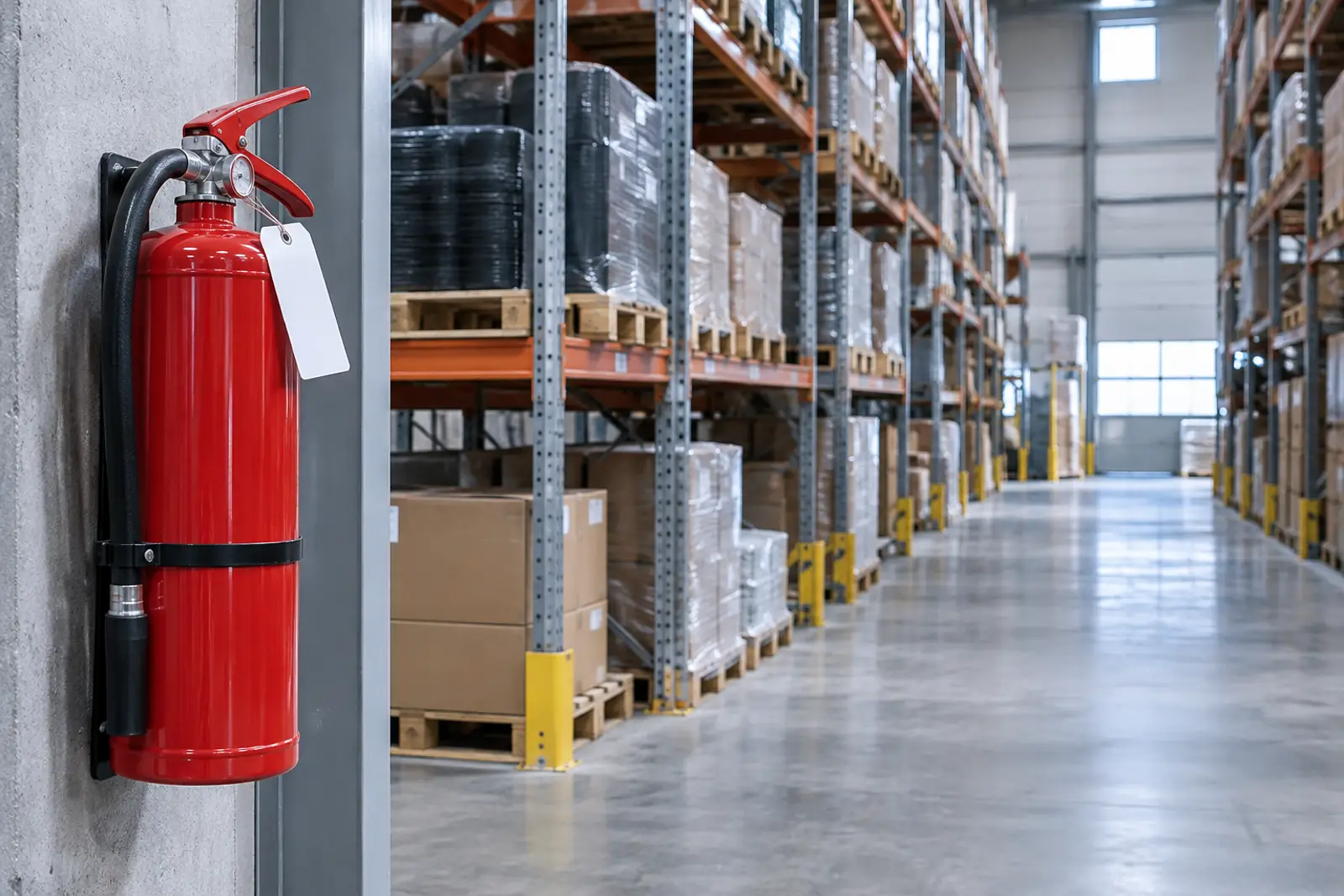
OSHA Fire Safety Citations, FY2021 to FY2025: OSHA Fire Extinguisher Inspection Requirements and Exit Rules Ranked
- Primary data
- U.S. Department of Labor OSHA Violation and Inspection bulk files (data.dol.gov), coded by Fire Life and Safety
- Data period
- Inspections opened FY2021 to FY2025 (October 1, 2020 to September 30, 2025)
- Latest release used
- 2026-10-27
- Next release
- DOL refreshes the bulk files daily; this index is rebuilt after each fiscal year closes
- Geography
- United States: Federal OSHA and OSHA-approved State Plans
- Sources
- 17 (16 Tier 1)
In 330,773 OSHA and State Plan inspections opened FY2021 to FY2025, the most cited fire rules were extinguisher access (1910.157(c)(1), 3,192 violations), blocked exit routes (2,469) and the osha fire extinguisher inspection requirements for monthly checks (2,378) and annual maintenance (1,849). Fire violations drew $61.3 million in initial penalties, $42.1 million after reductions.
How the index is built
Fire citation index
FormulaRank subparagraphs (first two paragraph levels) by count of non-deleted violations, inspections opened FY2021 to FY2025
Inputs: fact rows 1 to 6 and 43 to 62 (fact sheet rows)
Result: 1910.157(c)(1) ranks 1st with 3,192; 1910.37(a)(3) 2nd with 2,469; 1910.157(e)(2) 3rd with 2,378
Access and upkeep rules outrank equipment design rules. The index tells employers which paragraphs inspectors write up most, not which hazards cause the most harm.
Limitations: Deeper paragraph levels are pooled into their parent; OSHA paragraph coding by compliance officers varies.
Penalty reduction, initial to current
Formula1 minus (sum of current penalties / sum of initial penalties), x 100
Inputs: fact rows 7 to 42 (fact sheet rows)
Result: 31.3% across all coded fire standards; 34.0% for extinguishers; $19,187,641 removed
About a third of proposed fire penalty dollars come off through informal settlements, contests and adjustments.
Limitations: Current penalties for FY2025 cases can still change; nominal dollars.
Extinguisher citations per 1,000 inspections
Formula1910.157 violations / inspections opened in the fiscal year x 1,000, by jurisdiction
Inputs: fact rows 63 to 82 (fact sheet rows)
Result: Federal 16.22 (FY2021), 20.5 (FY2024), 15.52 (FY2025); State Plans excluding WA, CA, OR, MI 57.65, 83.72, 73.82
Extinguisher citations track the number and type of inspections more than any change in the rule, which has not changed in the period.
Limitations: Inspection mix differs by jurisdiction: construction is 51.5% of federal and 36.5% of State Plan inspections.
State Plan to federal ratio
FormulaState Plan rate (excluding WA, CA, OR, MI) / Federal rate
Inputs: tables/pooled_rates.csv (fact sheet rows)
Result: 4.08 for all employers (73.48 / 18.0); 2.8 for private employers (44.16 / 15.75)
State Plans write extinguisher items far more often per inspection, partly because they inspect public workplaces, which run at 180.3 per 1,000.
Limitations: Classification of State Plan offices is derived from the reporting office code.
Leading sector per standard group
FormulaNAICS 2022 sector with the most violations in each group
Inputs: tables/naics_by_group.csv (fact sheet rows)
Result: Manufacturing leads extinguishers (22.9%), exit routes (23.9%) and flammable liquids (44.4%); Construction leads 1926.150 to 1926.152 (95.9%); Public Administration leads other Subpart L (69.9%)
Fire citations follow where inspectors go and where fixed fire equipment is expected.
Limitations: NAICS is the inspected establishment's code at inspection.
Rank among all federally cited sections
FormulaRank of section by violations among all sections cited in federal inspections opened FY2021 to FY2025
Inputs: scripts/01_extract.py output all_violations_by_section.csv (fact sheet rows)
Result: 1910.37 ranks 21st and 1910.157 ranks 23rd
Fire rules sit just outside OSHA's annual Top 10 but are cited thousands of times.
Limitations: Five pooled years versus OSHA's single-year list.
Federal versus State Plan median penalty, 1910.157
FormulaFederal median initial penalty / State Plan median initial penalty (items with a penalty)
Inputs: tables/federal_vs_state.csv (fact sheet rows)
Result: $4,610 / $850 = 5.4
State Plans cite extinguishers more often but at much lower amounts per item.
Limitations: State Plans set their own penalty schedules.
The fire citation index: 20 subparagraphs ranked by violations
Four subparagraphs account for 42.2% of the 23,414 fire violations in our five-year window. Two of the top four are extinguisher upkeep rules, not equipment failures.
We read every non-deleted violation in the Department of Labor's OSHA violation file (DOL bulk file, 2026-10-27), kept items citing 29 CFR 1910.36 to 1910.39, 1910.106, 1910.155 to 1910.165 and 1926.150 to 1926.152, and joined them to the inspection file to assign a fiscal year, jurisdiction and industry. The result covers 23,414 violations in 14,586 inspections opened from FY2021 to FY2025.
1910.157(c)(1) leads with 3,192 violations. 1910.37(a)(3), exit routes free and unobstructed, follows with 2,469. The monthly visual inspection rule 1910.157(e)(2) ranks third with 2,378 and the annual maintenance rule 1910.157(e)(3) ranks fourth with 1,849. Exit marking, 1910.37(b)(2), is fifth with 1,699.
Violations in inspections opened FY2021 to FY2025, Federal OSHA and State Plans
Source: FLS analysis of U.S. Department of Labor OSHA Violation and Inspection bulk files (file date 2026-10-27)
| Rank | Subparagraph | What it requires (summary) | Violations FY2021 to FY2025 | Serious % | Federal | State Plan | Median initial penalty | Median current penalty |
|---|---|---|---|---|---|---|---|---|
| 1 | 1910.157(c)(1) | Provide extinguishers; mount, locate and identify them so they are readily accessible | 3,192 | 39.6 | 1,027 | 2,165 | $2,318 | $1,480 |
| 2 | 1910.37(a)(3) | Exit routes free and unobstructed | 2,469 | 61.2 | 1,367 | 1,102 | $5,296 | $3,574 |
| 3 | 1910.157(e)(2) | Monthly visual inspection of portable extinguishers | 2,378 | 30.0 | 596 | 1,782 | $700 | $586 |
| 4 | 1910.157(e)(3) | Annual maintenance check, with the date recorded | 1,849 | 38.3 | 510 | 1,339 | $2,500 | $1,607 |
| 5 | 1910.37(b)(2) | Each exit clearly visible and marked with an Exit sign | 1,699 | 46.2 | 549 | 1,150 | $2,125 | $1,200 |
| 6 | 1910.36(d)(1) | Exit route doors open from the inside without keys, tools or special knowledge | 772 | 73.2 | 350 | 422 | $4,250 | $3,000 |
| 7 | 1910.157(g)(1) | Education program on extinguisher use where extinguishers are provided | 686 | 52.6 | 232 | 454 | $2,818 | $1,861 |
| 8 | 1926.150(c)(1) | Construction sites: fire extinguishers and small hose lines | 681 | 37.9 | 184 | 497 | $750 | $585 |
| 9 | 1910.36(g)(2) | Exit access at least 28 inches wide | 590 | 52.2 | 265 | 325 | $4,755 | $3,134 |
| 10 | 1910.37(b)(5) | Doors that could be mistaken for exits marked Not an Exit | 578 | 48.3 | 209 | 369 | $2,800 | $2,207 |
| 11 | 1910.37(b)(6) | Exit signs illuminated and distinctive in color | 574 | 46.5 | 239 | 335 | $2,943 | $2,491 |
| 12 | 1910.37(a)(4) | Sprinklers, alarms, fire doors and exit lighting kept in working order | 547 | 65.3 | 147 | 400 | $4,900 | $4,500 |
| 13 | 1910.38(b) | Emergency action plan in writing (oral plan allowed at 10 or fewer employees) | 545 | 48.6 | 149 | 396 | $2,805 | $1,786 |
| 14 | 1910.37(b)(4) | Directional signs where the way to the exit is not apparent | 410 | 53.2 | 236 | 174 | $5,643 | $3,936 |
| 15 | 1910.106(e)(6) | Industrial plants: control of ignition sources near flammable vapors | 392 | 88.8 | 200 | 192 | $4,931 | $3,000 |
| 16 | 1910.157(c)(4) | Extinguishers fully charged, operable and kept in their designated places | 382 | 40.8 | 154 | 228 | $3,536 | $2,390 |
| 17 | 1910.157(g)(2) | Extinguisher education at initial employment and at least annually | 356 | 50.3 | 96 | 260 | $2,486 | $1,356 |
| 18 | 1910.106(e)(2) | Industrial plants: incidental storage and use of flammable liquids | 354 | 83.3 | 136 | 218 | $3,978 | $2,766 |
| 19 | 1910.37(b)(1) | Exit routes adequately lighted | 275 | 78.2 | 68 | 207 | $2,740 | $2,194 |
| 20 | 1910.106(d)(2) | Approved containers and portable tanks for flammable liquids | 249 | 79.9 | 55 | 194 | $1,700 | $1,148 |
Violations are non-deleted cited items in inspections opened FY2021 to FY2025. Medians cover items with a penalty above $0. Requirement summaries are paraphrased from eCFR text as of 2026-10-23.
Source: [1][2][5][6] U.S. Department of Labor, Occupational Safety and Health Administration (DOL Open Data Portal); U.S. Department of Labor, Occupational Safety and Health Administration (DOL Open Data Portal); eCFR, Office of the Federal Register; eCFR, Office of the Federal Register
The index counts cited items, not inspections. An inspection that cites the same subparagraph twice adds two items, which is why 1910.157(c)(1) shows 3,192 violations in 3,182 inspections.
Violation (cited item): One row in the OSHA violation file: a standard cited on a citation, with its own type (serious, other-than-serious, repeat, willful), initial penalty and current penalty.
OSHA fire extinguisher inspection requirements: what 1910.157 citations are for
Under the osha fire extinguisher inspection requirements, employers must visually inspect extinguishers monthly and complete an annual maintenance check with a recorded date. Those two rules produced 4,227 violations in five years.
The federal rule is short. 29 CFR 1910.157(e)(2) says portable extinguishers, or hose used in their place, shall be visually inspected monthly. 1910.157(e)(3) requires an annual maintenance check and requires the employer to record the annual maintenance date and keep that record for one year after the last entry or the life of the shell, whichever is less (eCFR, 29 CFR 1910.157, current as of 2026-10-23). The monthly rule text does not list checklist items or require a written monthly log.
- 1910.157(c)(1): provide, mount, locate and identify extinguishers so they are readily accessible: 3,192 violations, 39.6% serious.
- 1910.157(e)(2): monthly visual inspection: 2,378 violations, 30.0% serious, median initial penalty $700.
- 1910.157(e)(3): annual maintenance check and record: 1,849 violations, 38.3% serious, median initial penalty $2,500.
- 1910.157(g)(1): education program where extinguishers are provided for employee use: 686 violations, 52.6% serious.
- 1910.157(c)(4): fully charged, operable and in the designated place: 382 violations.
- 1910.157(g)(2): education at initial employment and at least annually: 356 violations.
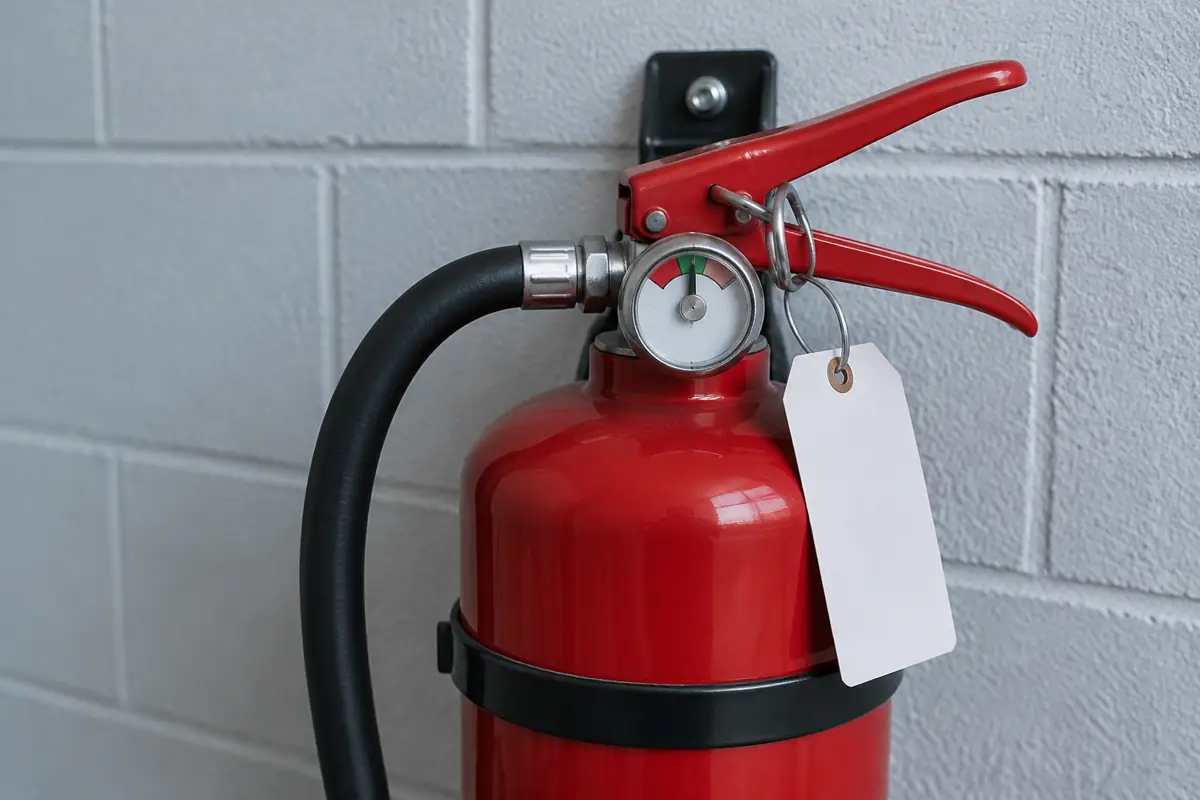
Monthly inspection and annual maintenance items together total 4,227 violations, 45.7% of the 9,258 extinguisher violations in the window. For field procedures behind these rules, see our fire extinguisher inspection guide.
Penalty dollars: what OSHA proposes and what remains on the record
Fire violations carried $61.3 million in initial penalties and $42.1 million in current penalties. Most extinguisher items carried no penalty at all.
Across all coded fire standards, initial penalties totaled $61,336,140 and current penalties $42,148,499, a reduction of 31.3% or $19,187,641. Extinguisher items fell 34.0%, from $9,378,971 to $6,188,813. Exit route items fell 31.1%, from $41,795,228 to $28,808,863.
| Standard group | Violations | Inspections cited | Serious % | Repeat or willful % | Initial penalties (total) | Current penalties (total) | Reduction initial to current % | Items with $0 initial penalty % |
|---|---|---|---|---|---|---|---|---|
| Exit routes and emergency plans (1910.36 to 1910.39) | 9,712 | 7,090 | 56.4 | 3.2 | $41,795,228 | $28,808,863 | 31.1 | 52.2 |
| Portable fire extinguishers (1910.157) | 9,258 | 6,879 | 38.7 | 1.9 | $9,378,971 | $6,188,813 | 34.0 | 71.7 |
| Flammable liquids (1910.106) | 2,148 | 1,567 | 80.5 | 0.9 | $6,822,967 | $4,653,398 | 31.8 | 42.8 |
| Construction fire protection (1926.150 to 1926.152) | 1,200 | 1,082 | 43.8 | 1.8 | $1,979,060 | $1,477,357 | 25.4 | 42.9 |
| Other fire protection, Subpart L (1910.155 to 1910.165) | 1,096 | 720 | 76.6 | 2.6 | $1,359,913 | $1,020,068 | 25.0 | 81.7 |
| All coded fire standards | 23,414 | 14,586 | 52.0 | 2.4 | $61,336,140 | $42,148,499 | 31.3 | 59.9 |
Nominal dollars. Current penalty = amount after settlement, contest or adjustment as recorded on 2026-10-27.
Source: [1] U.S. Department of Labor, Occupational Safety and Health Administration (DOL Open Data Portal)
Items with a penalty above $0, inspections opened FY2021 to FY2025
Source: FLS analysis of DOL OSHA Violation bulk file (2026-10-27)
Medians are computed only over items with a penalty above $0, because OSHA often records a grouped penalty on one line and $0 on related lines. 71.7% of extinguisher items had a $0 initial penalty. Among federal serious extinguisher items with a penalty, the middle half of initial penalties ran from $2,765 to $6,453, with a median of $4,839; 38.4% of the 1,041 federal serious extinguisher items carried $0.
| Violation type | Rule | Minimum | Maximum | Unit |
|---|---|---|---|---|
| Serious | 29 CFR 1903.15(d)(3) | $0 | $16,550 | per violation |
| Other-than-serious | 29 CFR 1903.15(d)(4) | $0 | $16,550 | per violation |
| Repeated | 29 CFR 1903.15(d)(2) | $0 | $165,514 | per violation |
| Willful | 29 CFR 1903.15(d)(1) | $11,823 | $165,514 | per violation |
| Failure to abate | 29 CFR 1903.15(d)(5) | $0 | $16,550 | per day |
Amounts for penalties proposed after 2025-01-15. No 2026 adjustment was made. State Plans set their own amounts.
Source: [8][10][11] eCFR, Office of the Federal Register; U.S. Department of Labor, Federal Register; U.S. Department of Labor, Federal Register
The ceilings in 29 CFR 1903.15(d) apply to penalties proposed after January 15, 2025: $16,550 per serious or other-than-serious violation and $165,514 per willful or repeated violation, with a willful minimum of $11,823 (eCFR, 29 CFR 1903.15). The Department of Labor made no 2026 adjustment (91 FR 31358, 2026-05-27).
Serious or other-than-serious: how fire hazards are classified
Flammable liquid and fire brigade items are mostly serious. Extinguisher items are mostly other-than-serious.
Share of violations, inspections opened FY2021 to FY2025
Source: FLS analysis of DOL OSHA Violation bulk file (2026-10-27)
80.5% of flammable liquid (1910.106) violations were serious, against 56.4% for exit routes and emergency plans and 38.7% for extinguishers. Repeat or willful items were rare: 2.4% of all coded fire violations.
Serious violation: Under section 17(k) of the Occupational Safety and Health Act, a violation where there is a substantial probability that death or serious physical harm could result from a condition or practice the employer knew or could have known of with reasonable diligence (OSH Act section 17, U.S. Code via Cornell LII).
Fire brigade rules in 1910.156 behave differently. 1910.156(d), annual inspection of fire fighting equipment, drew 242 violations, all in State Plan inspections, and 97.9% were serious. OSHA's State Plans page notes that state and local government workers are not covered by Federal OSHA, so public fire departments appear only where a State Plan inspects them (OSHA State Plans).
Federal OSHA versus State Plans: four times the extinguisher citation rate
State Plans that cite federal standard numbers record extinguisher violations at 4.08 times the federal rate. Public sector inspections and inspection mix explain part of the gap, not all of it.
OSHA lists 22 State Plans covering private and public workers and 7 covering state and local government workers only (OSHA State Plans, archived 2026-10-17). We marked an inspection as State Plan when the reporting office code has 5 as its third digit. That code matched OSHA's State Plan list in our checks: in states without a State Plan, nearly all inspections carried another code.
| Jurisdiction and employer type | Inspections FY2021 to FY2025 | 1910.157 violations | 1910.157 per 1,000 inspections | Fire violations | Fire violations per 1,000 inspections |
|---|---|---|---|---|---|
| Federal | 155,373 | 2,797 | 18.0 | 8,390 | 54.0 |
| State plan | 175,400 | 6,461 | 36.84 | 15,024 | 85.66 |
| State plan excl. WA, CA, OR, MI | 86,791 | 6,377 | 73.48 | 14,757 | 170.03 |
| Federal, private employers | 151,727 | 2,389 | 15.75 | 7,554 | 49.79 |
| State plan excl. WA, CA, OR, MI, private employers | 68,099 | 3,007 | 44.16 | 7,449 | 109.38 |
| State plan excl. WA, CA, OR, MI, state and local government | 18,691 | 3,370 | 180.3 | 7,308 | 390.99 |
| All | 330,773 | 9,258 | 27.99 | 23,414 | 70.79 |
State Plan offices identified by reporting_id digit 3 = 5. WA, CA, OR and MI cite mostly state code numbers.
Source: [1][2][13] U.S. Department of Labor, Occupational Safety and Health Administration (DOL Open Data Portal); U.S. Department of Labor, Occupational Safety and Health Administration (DOL Open Data Portal); OSHA (osha.gov page, archived copy by Internet Archive on 2026-10-17)
Federal OSHA cited 1910.157 at 18.0 violations per 1,000 inspections. State Plans excluding Washington, California, Oregon and Michigan cited it at 73.48 per 1,000, a ratio of 4.08. Limiting both sides to private employers narrows the ratio to 2.8 (44.16 versus 15.75). State Plan inspections of state and local government workplaces ran at 180.3 per 1,000. Construction makes up 51.5% of federal inspections and 36.5% of State Plan inspections, and construction draws few extinguisher citations.
29 CFR 1910.157 violations per 1,000 inspections opened, by jurisdiction
Source: FLS analysis of DOL OSHA Violation and Inspection bulk files (2026-10-27)
| Standard group | Federal violations | Federal serious % | Federal median initial | Federal median current | State Plan violations | State Plan serious % | State Plan median initial | State Plan median current |
|---|---|---|---|---|---|---|---|---|
| Exit routes and emergency plans (1910.36 to 1910.39) | 4,108 | 57.3 | $6,250 | $4,000 | 5,604 | 55.9 | $2,100 | $1,400 |
| Portable fire extinguishers (1910.157) | 2,797 | 37.2 | $4,610 | $2,678 | 6,461 | 39.4 | $850 | $700 |
| Flammable liquids (1910.106) | 836 | 81.0 | $6,620 | $4,173 | 1,312 | 80.3 | $1,518 | $1,052 |
| Construction fire protection (1926.150 to 1926.152) | 504 | 62.9 | $3,511 | $2,678 | 696 | 30.0 | $375 | $300 |
| Other fire protection, Subpart L (1910.155 to 1910.165) | 145 | 53.1 | $7,172 | $5,000 | 951 | 80.2 | $2,400 | $1,538 |
| All coded fire standards | 8,390 | 53.2 | $5,628 | $3,526 | 15,024 | 51.3 | $1,300 | $900 |
Medians cover items with a penalty above $0.
Source: [1][2] U.S. Department of Labor, Occupational Safety and Health Administration (DOL Open Data Portal); U.S. Department of Labor, Occupational Safety and Health Administration (DOL Open Data Portal)
Which industries draw OSHA fire citations
Manufacturing leads in volume for three of the five standard groups. Public sector workplaces lead in extinguisher citations per inspection.
| Standard group | Rank | NAICS sector (2022) | Violations | Share of group % |
|---|---|---|---|---|
| Exit routes and emergency plans (1910.36 to 1910.39) | 1 | Manufacturing | 2,317 | 23.9 |
| Exit routes and emergency plans (1910.36 to 1910.39) | 2 | Retail Trade | 1,433 | 14.8 |
| Exit routes and emergency plans (1910.36 to 1910.39) | 3 | Public Administration | 1,167 | 12.0 |
| Portable fire extinguishers (1910.157) | 1 | Manufacturing | 2,116 | 22.9 |
| Portable fire extinguishers (1910.157) | 2 | Public Administration | 1,390 | 15.0 |
| Portable fire extinguishers (1910.157) | 3 | Retail Trade | 776 | 8.4 |
| Flammable liquids (1910.106) | 1 | Manufacturing | 954 | 44.4 |
| Flammable liquids (1910.106) | 2 | Construction | 243 | 11.3 |
| Flammable liquids (1910.106) | 3 | Other Services (except Public Administration) | 180 | 8.4 |
| Construction fire protection (1926.150 to 1926.152) | 1 | Construction | 1,151 | 95.9 |
| Construction fire protection (1926.150 to 1926.152) | 2 | Manufacturing | 14 | 1.2 |
| Construction fire protection (1926.150 to 1926.152) | 3 | Administrative and Support and Waste Management and Remediation Services | 8 | 0.7 |
| Other fire protection, Subpart L (1910.155 to 1910.165) | 1 | Public Administration | 766 | 69.9 |
| Other fire protection, Subpart L (1910.155 to 1910.165) | 2 | Manufacturing | 97 | 8.9 |
| Other fire protection, Subpart L (1910.155 to 1910.165) | 3 | Retail Trade | 44 | 4.0 |
Sector of the inspected establishment, NAICS 2022 two-digit titles.
Source: [1][2][16] U.S. Department of Labor, Occupational Safety and Health Administration (DOL Open Data Portal); U.S. Department of Labor, Occupational Safety and Health Administration (DOL Open Data Portal); U.S. Census Bureau
NAICS 2022 sectors with the most 1910.157 violations, FY2021 to FY2025
Source: FLS analysis of DOL OSHA Violation and Inspection bulk files; Census NAICS 2022 titles
Manufacturing accounts for 2,116 extinguisher violations, 22.9% of the total, and 954 flammable liquid violations, 44.4%. Per inspection, Public Administration leads at 123.56 extinguisher violations per 1,000 inspections, followed by Utilities at 93.95. Construction, the most inspected sector, runs at 4.87 under 1910.157 because construction sites are cited under 1926.150 instead: 1,151 of the 1,200 construction fire protection violations came from construction establishments.
Transportation and Warehousing recorded 575 extinguisher violations, 40.67 per 1,000 inspections. Facility managers can compare these figures with our warehouse fire safety guide.
State-by-state extinguisher citation rates
Rates range from 219.15 per 1,000 inspections in Connecticut to 1.61 in South Dakota, driven largely by public sector programs and inspection mix.
1910.157 violations per 1,000 inspections opened FY2021 to FY2025; WA, CA, OR and MI omitted because their State Plans cite state code numbers
Source: FLS analysis of DOL OSHA Violation and Inspection bulk files (2026-10-27)
Show all 53 rows
| State | Inspections FY2021 to FY2025 | 1910.157 violations | 1910.157 per 1,000 inspections | Majority jurisdiction |
|---|---|---|---|---|
| CT | 3,760 | 824 | 219.15 | Federal |
| VI | 575 | 116 | 201.74 | Federal |
| NM | 971 | 142 | 146.24 | State plan |
| TN | 7,521 | 984 | 130.83 | State plan |
| ME | 1,544 | 188 | 121.76 | Federal |
| HI | 2,580 | 297 | 115.12 | State plan |
| AZ | 2,735 | 309 | 112.98 | State plan |
| PR | 5,186 | 470 | 90.63 | State plan |
| MD | 6,326 | 454 | 71.77 | State plan |
| AK | 2,036 | 146 | 71.71 | State plan |
| VA | 10,028 | 662 | 66.02 | State plan |
| NJ | 10,677 | 557 | 52.17 | Federal |
| NC | 9,672 | 501 | 51.8 | State plan |
| NV | 5,582 | 190 | 34.04 | State plan |
| NY | 15,232 | 466 | 30.59 | Federal |
| IL | 13,503 | 404 | 29.92 | Federal |
| KY | 4,564 | 116 | 25.42 | State plan |
| IA | 3,065 | 76 | 24.8 | State plan |
| GA | 7,183 | 174 | 24.22 | Federal |
| VT | 892 | 21 | 23.54 | State plan |
| DE | 1,108 | 25 | 22.56 | Federal |
| AL | 4,008 | 86 | 21.46 | Federal |
| PA | 11,399 | 229 | 20.09 | Federal |
| LA | 2,165 | 39 | 18.01 | Federal |
| RI | 1,639 | 28 | 17.08 | Federal |
| TX | 19,900 | 339 | 17.04 | Federal |
| AR | 1,233 | 20 | 16.22 | Federal |
| FL | 11,753 | 185 | 15.74 | Federal |
| MA | 7,902 | 121 | 15.31 | Federal |
| MS | 1,582 | 24 | 15.17 | Federal |
| NH | 1,671 | 25 | 14.96 | Federal |
| DC | 770 | 11 | 14.29 | Federal |
| SC | 2,121 | 29 | 13.67 | State plan |
| WV | 1,411 | 19 | 13.47 | Federal |
| WY | 761 | 10 | 13.14 | State plan |
| OH | 10,954 | 140 | 12.78 | Federal |
| UT | 4,205 | 49 | 11.65 | State plan |
| WI | 7,264 | 77 | 10.6 | Federal |
| OK | 2,711 | 27 | 9.96 | Federal |
| IN | 4,720 | 47 | 9.96 | State plan |
| CO | 4,908 | 41 | 8.35 | Federal |
| ID | 1,500 | 12 | 8.0 | Federal |
| MN | 6,600 | 52 | 7.88 | State plan |
| CA | 33,386 | 212 | 6.35 | State plan (state code numbering) |
| KS | 2,914 | 17 | 5.83 | Federal |
| NE | 1,931 | 10 | 5.18 | Federal |
| MO | 4,481 | 23 | 5.13 | Federal |
| MT | 1,265 | 6 | 4.74 | Federal |
| MI | 18,128 | 84 | 4.63 | State plan (state code numbering) |
| OR | 13,274 | 53 | 3.99 | State plan (state code numbering) |
| ND | 1,184 | 4 | 3.38 | Federal |
| WA | 26,272 | 79 | 3.01 | State plan (state code numbering) |
| SD | 1,241 | 2 | 1.61 | Federal |
States and territories with at least 500 inspections opened FY2021 to FY2025. Rates for WA, CA, OR and MI understate fire citations because their State Plans cite state code numbers.
Source: [1][2][13] U.S. Department of Labor, Occupational Safety and Health Administration (DOL Open Data Portal); U.S. Department of Labor, Occupational Safety and Health Administration (DOL Open Data Portal); OSHA (osha.gov page, archived copy by Internet Archive on 2026-10-17)
Connecticut (219.15 per 1,000) and New Mexico (146.24) lead. Connecticut's State Plan covers only state and local government workers, and 715 of Connecticut's 824 extinguisher violations came from State Plan inspections of local government workplaces. Large federal states sit lower: Texas at 17.04 and Florida at 15.74. Rates for Washington (3.01), California (6.35), Oregon (3.99) and Michigan (4.63) reflect only the federal share of their inspections plus the few State Plan items written under 29 CFR numbers.
FY2021 to FY2025: extinguisher citations peaked in FY2024
Extinguisher violations rose 63.5% from FY2021 to FY2024 and fell 13.9% in FY2025 as federal inspections dropped.
| Fiscal year (inspection opened) | Inspections | Fire violations | 1910.157 violations | 1910.157 per 1,000 inspections, Federal | 1910.157 per 1,000, all State Plans | 1910.157 per 1,000, State Plans excl. WA, CA, OR, MI | Fire share of all violations % |
|---|---|---|---|---|---|---|---|
| FY2021 | 55,939 | 3,742 | 1,360 | 16.22 | 30.59 | 57.65 | 3.45 |
| FY2022 | 65,218 | 4,649 | 1,773 | 16.94 | 36.96 | 73.82 | 3.72 |
| FY2023 | 69,177 | 5,169 | 1,987 | 19.93 | 37.33 | 77.73 | 3.78 |
| FY2024 | 71,736 | 5,292 | 2,223 | 20.5 | 40.77 | 83.72 | 3.86 |
| FY2025 | 68,703 | 4,562 | 1,915 | 15.52 | 37.6 | 73.82 | 3.41 |
Fiscal year of the inspection open date. FY2025 cases opened by 2025-09-30.
Source: [1][2] U.S. Department of Labor, Occupational Safety and Health Administration (DOL Open Data Portal); U.S. Department of Labor, Occupational Safety and Health Administration (DOL Open Data Portal)
Extinguisher violations grew from 1,360 in FY2021 to 2,223 in FY2024, then fell to 1,915 in FY2025. The federal rate moved from 16.22 per 1,000 inspections in FY2021 to 20.5 in FY2024 and 15.52 in FY2025, while federal inspections fell 12.6% between FY2024 and FY2025. Fire standards held between 3.41% and 3.86% of all violations each year from FY2022 to FY2025. Exit lighting and marking rules are explained in our emergency lighting inspection guide.
What this index measures and what it does not
This is a federal workplace safety dataset. It does not measure local fire code enforcement, fire incidents or workplace fire deaths.
OSHA citations record what a compliance officer found during a workplace inspection. A city fire inspection is a separate program under the adopted fire code, and an extinguisher defect can appear in both systems. Our city fire code violations report covers the local side. Workplace fire deaths are a separate topic and are not counted here.
The most recent comparable published count we found is from FY2011, when Safety+Health reported 1,430 federal 1910.157 violations from OSHA's older IMIS system (Safety+Health). That figure uses a different system and year and is context only.
Key findings
- 1910.157(c)(1), the duty to provide extinguishers and mount, locate and identify them so they are readily accessible, was cited 3,192 times in inspections opened FY2021 to FY2025, the most of any fire subparagraph (United States, Federal OSHA and State Plans).[1][5]
- Blocked or obstructed exit routes, 1910.37(a)(3), were cited 2,469 times over FY2021 to FY2025, and 61.2% of those items were classified serious.[1][6]
- The monthly visual inspection requirement, 1910.157(e)(2), drew 2,378 violations over FY2021 to FY2025; 30.0% were serious and the median initial penalty for items with a penalty was $700.[1][5]
- The annual maintenance requirement, 1910.157(e)(3), drew 1,849 violations over FY2021 to FY2025 with a median initial penalty of $2,500 for items with a penalty.[1][5]
- Monthly inspection and annual maintenance items together total 4,227 violations, 45.7% of all 1910.157 violations in FY2021 to FY2025.[1]
- Across all coded fire standards, initial penalties of $61,336,140 fell to $42,148,499 current penalties, a 31.3% reduction (inspections opened FY2021 to FY2025, nominal dollars).[1]
- Exit route and emergency planning items (1910.36 to 1910.39) account for $28,808,863 of current fire penalties, 68.4% of the total, over FY2021 to FY2025.[1]
- Only 38.7% of extinguisher violations were classified serious in FY2021 to FY2025, compared with 80.5% for flammable liquids (1910.106) and 56.4% for exit routes.[1]
- 71.7% of extinguisher items carried a $0 initial penalty, compared with 59.9% across all coded fire standards (FY2021 to FY2025).[1]
- Federal OSHA cited 1910.157 at 18.0 violations per 1,000 inspections over FY2021 to FY2025; State Plans that cite federal standard numbers did so at 73.48 per 1,000.[1][2][13]
- Among private employers only, the State Plan extinguisher rate was 44.16 per 1,000 inspections against 15.75 for Federal OSHA, 2.8 times higher (FY2021 to FY2025).[1][2]
- The median initial penalty for an extinguisher item with a penalty was $4,610 in federal inspections and $850 in State Plan inspections (FY2021 to FY2025).[1][2]
- Manufacturing accounts for 2,116 extinguisher violations (22.9%), 2,317 exit route violations (23.9%) and 954 flammable liquid violations (44.4%) over FY2021 to FY2025.[1][2][16]
- Extinguisher violations rose from 1,360 in FY2021 to 2,223 in FY2024, then fell to 1,915 in FY2025.[1][2]
Summary for decision makers
- Fire protection standards produced 23,414 violations in 14,586 inspections opened from FY2021 to FY2025, out of 641,207 violations in 330,773 inspections.
- Portable extinguishers (29 CFR 1910.157) and exit routes plus emergency plans (1910.36 to 1910.39) account for 81.0% of fire violations.
- The monthly visual inspection rule, 1910.157(e)(2), ranks third with 2,378 violations; the annual maintenance rule, 1910.157(e)(3), ranks fourth with 1,849.
- Initial fire penalties totaled $61,336,140; current penalties total $42,148,499, a 31.3% reduction after settlements and contests.
- Exit route and emergency planning items carry 68.4% of current fire penalty dollars even though extinguisher items are nearly as numerous.
- State Plans that cite federal standard numbers record 73.48 extinguisher violations per 1,000 inspections, 4.08 times the federal rate of 18.0.
- Manufacturing is the leading sector for extinguisher, exit route and flammable liquid citations; Public Administration has the highest extinguisher rate at 123.56 per 1,000 inspections.
Questions people ask
What are the OSHA fire extinguisher monthly inspection requirements?
29 CFR 1910.157(e)(2) requires portable extinguishers to be visually inspected monthly. In inspections opened FY2021 to FY2025, Federal OSHA and State Plans cited this paragraph 2,378 times, 30.0% as serious.
Is there an OSHA fire extinguisher inspection checklist?
The federal rule does not set a checklist. 1910.157(e)(2) requires a monthly visual inspection, and 1910.157(e)(3) requires an annual maintenance check with the date recorded and kept for one year after the last entry or the life of the shell, whichever is less (eCFR, current 2026-10-23).
How much is an OSHA fine for fire extinguishers?
For extinguisher items with a penalty in FY2021 to FY2025, the median initial penalty was $4,610 in federal inspections and $850 in State Plan inspections. The federal maximum for a serious violation is $16,550 for penalties proposed after January 15, 2025.
Which industries get the most OSHA fire citations?
Manufacturing leads, with 2,116 extinguisher violations, 2,317 exit route violations and 954 flammable liquid violations in FY2021 to FY2025. Public Administration has the highest extinguisher rate at 123.56 per 1,000 inspections.
Do State Plans cite fire extinguishers more than federal OSHA?
Yes. State Plans that cite federal standard numbers recorded 73.48 extinguisher violations per 1,000 inspections over FY2021 to FY2025, against 18.0 for Federal OSHA. Among private employers the gap is 44.16 versus 15.75.
For journalists and researchers
If you cite only a few, cite these
- 1910.157(c)(1) was the most cited OSHA fire subparagraph in FY2021 to FY2025, with 3,192 violations.[1]
- Initial OSHA fire penalties of $61,336,140 fell 31.3% to $42,148,499 (inspections opened FY2021 to FY2025).[1]
- Federal OSHA cited portable extinguishers at 18.0 per 1,000 inspections over FY2021 to FY2025.[1][2]
Most quotable statistics
- OSHA and State Plan inspectors cited fire protection standards 23,414 times in inspections opened from FY2021 to FY2025.[1][2]
- The monthly fire extinguisher inspection rule, 29 CFR 1910.157(e)(2), was cited 2,378 times in FY2021 to FY2025, the third most cited fire subparagraph.[1]
- Fire violations from FY2021 to FY2025 inspections drew $61.3 million in initial penalties; $42.1 million remains after reductions, a 31.3% cut.[1]
- State Plans that cite federal standard numbers write extinguisher violations at 73.48 per 1,000 inspections, 4.08 times the federal rate of 18.0 (FY2021 to FY2025).[1][2]
- 71.7% of OSHA extinguisher violation items in FY2021 to FY2025 carried a $0 initial penalty.[1]
- Exit route and emergency plan items hold 68.4% of current OSHA fire penalty dollars from FY2021 to FY2025 inspections.[1]
Press summary
A Fire Life and Safety analysis of the Department of Labor's OSHA enforcement files finds 23,414 fire protection violations in 330,773 Federal OSHA and State Plan inspections opened from FY2021 to FY2025. The most cited fire subparagraph is 29 CFR 1910.157(c)(1), the duty to provide and mount accessible fire extinguishers, with 3,192 violations, followed by obstructed exit routes with 2,469. The osha fire extinguisher inspection requirements for monthly checks and annual maintenance drew 2,378 and 1,849 violations. Fire violations carried $61.3 million in initial penalties and $42.1 million after reductions, a 31.3% cut. Exit route items hold 68.4% of current penalty dollars. State Plans that cite federal standard numbers record extinguisher violations at 73.48 per 1,000 inspections, 4.08 times the federal rate. Manufacturing leads three of five standard groups by volume. The data, tables and code are published under CC BY 4.0.
Suggested headlines
- OSHA cited fire extinguisher access 3,192 times in five years
- Monthly extinguisher checks rank third among OSHA fire citations
- OSHA fire penalties fall 31.3% from proposal to current amount
- State Plans cite extinguishers four times as often as Federal OSHA
- Exit route items carry 68.4% of OSHA fire penalty dollars
How to cite this report
Fire Life and Safety. (2026). OSHA Fire Safety Citations, FY2021 to FY2025: OSHA Fire Extinguisher Inspection Requirements and Exit Rules Ranked. Retrieved from https://firelifeandsafety.com/reports/osha-fire-safety-citations/
Reuse license
Data and tables are licensed CC BY 4.0. Attribution: “Source: Fire Life and Safety, OSHA Fire Safety Citations, FY2021 to FY2025: OSHA Fire Extinguisher Inspection Requirements and Exit Rules Ranked” with a link to this page.
Download the data
Every table in this report is available as a CSV under CC BY 4.0. The fact sheet lists each value with its source URL and access date.
- derived_metrics.csv (CSV)
- fact_sheet.csv (CSV)
- t1_index.csv (CSV)
- t2_groups.csv (CSV)
- t3_trend.csv (CSV)
- t4_jurisdiction.csv (CSV)
- t5_penalties_by_jurisdiction.csv (CSV)
- t6_sectors.csv (CSV)
- t8_states.csv (CSV)
- t9_penalty_caps.csv (CSV)
Frequently asked questions
What is the most cited OSHA fire protection standard?
By subparagraph, 1910.157(c)(1) on providing and mounting portable extinguishers, with 3,192 violations in inspections opened FY2021 to FY2025. By section, exit routes in 1910.37 had 6,806 violations and 1910.157 had 9,258.
How often does OSHA cite the monthly extinguisher inspection rule?
1910.157(e)(2) was cited 2,378 times in FY2021 to FY2025, with a peak of 571 in FY2024.
How often does OSHA cite the annual extinguisher maintenance rule?
1910.157(e)(3) was cited 1,849 times in FY2021 to FY2025, with 433 in FY2024 and 411 in FY2025.
Is a missed monthly extinguisher inspection a serious violation?
Usually not. 30.0% of 1910.157(e)(2) items in FY2021 to FY2025 were classified serious; most were other-than-serious.
What is the maximum OSHA penalty in 2026?
The 2025 amounts still apply: $16,550 per serious or other-than-serious violation and $165,514 per willful or repeated violation, because the Department of Labor made no 2026 inflation adjustment (91 FR 31358, 2026-05-27).
Are OSHA penalties reduced after citation?
Often. Current fire penalties of $42,148,499 are 31.3% below the $61,336,140 initially proposed for inspections opened FY2021 to FY2025.
Are fire protection standards on OSHA's Top 10 list?
No fire standard is on the FY2025 federal Top 10. Over FY2021 to FY2025, 1910.37 ranks 21st and 1910.157 23rd among sections cited by Federal OSHA in our count.
Which exit route rules are cited most?
1910.37(a)(3), exit routes free and unobstructed, with 2,469 violations, then 1910.37(b)(2), exit signs, with 1,699, and 1910.36(d)(1), exit doors that open from the inside, with 772 (FY2021 to FY2025).
Do construction sites get cited under 1910.157?
Rarely. Construction sites are cited under 1926.150, whose paragraph (c)(1) on extinguishers and small hose lines drew 681 violations in FY2021 to FY2025; construction runs at 4.87 extinguisher citations per 1,000 inspections under 1910.157.
Does this report name cited employers?
No. The index is aggregate only. It reports 23,414 violations by standard, year, jurisdiction, sector and state, without establishment names.
Methodology
Data: the U.S. Department of Labor OSHA Violation and Inspection bulk files from the DOL Open Data Portal (data.dol.gov), both last modified 2026-10-27 and downloaded the same day without an API key. The older enforcedata.dol.gov catalog now redirects to data.dol.gov. OSHA's own query pages (osha.gov/ords/imis) returned a CAPTCHA to automated requests and were not used. The raw zip files are saved unmodified in raw/.
Selection: inspections opened from October 1, 2020 to September 30, 2025 (FY2021 to FY2025) with an inspection scope other than D (no inspection conducted), 330,773 in total. Violations marked deleted were dropped. A violation was coded as fire protection when its standard field begins with 1910.36, 1910.37, 1910.38, 1910.39, 1910.106, 1910.155 to 1910.165 or 1926.150 to 1926.152. Fiscal year follows the inspection open date, as on OSHA's own frequently cited standards pages.
Jurisdiction: an inspection is State Plan when the third digit of its reporting office code is 5. In states without a State Plan, nearly all inspections carried a code other than 5, and private sector inspections in public-only State Plan states such as Connecticut also carried other codes, which matches OSHA's State Plan list. Washington, California and most of Oregon and Michigan cite state rule numbers, so their fire citations are largely invisible to a 29 CFR filter; State Plan rates are therefore shown with and without them.
Measures: counts are cited items. Serious, other-than-serious, repeat and willful shares use the viol_type codes S, O, R and W. Penalty totals and medians use the initial_penalty and current_penalty fields in nominal dollars; medians exclude items at $0 because grouped violations carry one penalty. Sector uses the first two digits of the establishment NAICS code with Census 2022 sector titles. State uses the site state. Requirement summaries are paraphrased from eCFR text current as of 2026-10-23; no regulation text is reproduced at length.
Limitations: citations measure enforcement activity, not hazard prevalence; they depend on where inspectors go, and federal inspections are more construction-heavy (51.5%) than State Plan inspections (36.5%). Penalties for recent cases can still change through contest or settlement. The data dictionary does not spell out viol_type letters; we read them as the categories in 29 U.S.C. 666 and 29 CFR 1903.15. No employer is named. Conflicting figures: where OSHA's published Top 10 (single year, federal only) differs from our pooled ranks, both are shown with their scope.
This report is a reference summary of public enforcement data. It is not legal advice; requirements depend on the standard as adopted by your State Plan or local fire code. Last updated 2026-10-27. Scripts in scripts/ rebuild every table from the raw files.
This report presents published data with its limitations. It is not legal, engineering, financial or investment advice. Requirements depend on the code edition your state and local fire marshal have adopted; confirm with your authority having jurisdiction.
Sources, ranked by quality
Tier 1: primary and official sources (16)
- [1] U.S. Department of Labor, Occupational Safety and Health Administration (DOL Open Data Portal). OSHA Violation bulk file (OSHA_violation.zip, 14 CSV chunks). All years; file last modified 2026-10-27; this report uses inspections opened 2020-10-01 to 2025-09-30. Accessed 2026-10-27.
- [2] U.S. Department of Labor, Occupational Safety and Health Administration (DOL Open Data Portal). OSHA Inspection bulk file (OSHA_inspection.zip, 6 CSV chunks). All years; file last modified 2026-10-27. Accessed 2026-10-27.
- [3] U.S. Department of Labor Open Data Portal. Violation dataset (id 10338): description and data dictionary. Metadata updated 2026-06-03. Accessed 2026-10-27.
- [4] U.S. Department of Labor Open Data Portal. Inspection dataset (id 10334): description and data dictionary. Metadata updated 2026-06-03. Accessed 2026-10-27.
- [5] eCFR, Office of the Federal Register. 29 CFR 1910.157 Portable fire extinguishers. eCFR current as of 2026-10-23. Accessed 2026-10-27.
- [6] eCFR, Office of the Federal Register. 29 CFR Part 1910 Subpart E, Exit Routes and Emergency Planning (1910.33 to 1910.39). eCFR current as of 2026-10-23. Accessed 2026-10-27.
- [7] eCFR, Office of the Federal Register. 29 CFR Part 1910 Subpart L, Fire Protection (1910.155 to 1910.165). eCFR current as of 2026-10-23. Accessed 2026-10-27.
- [8] eCFR, Office of the Federal Register. 29 CFR 1903.15 Proposed penalties. Amounts for penalties proposed after 2025-01-15. Accessed 2026-10-27.
- [9] eCFR, Office of the Federal Register. 29 CFR Part 1926 Subpart F, Fire Protection and Prevention (1926.150 to 1926.152). eCFR current as of 2026-10-23. Accessed 2026-10-27.
- [10] U.S. Department of Labor, Federal Register. Department of Labor Federal Civil Penalties Inflation Adjustment Act Annual Adjustments for 2026 (91 FR 31358). Published and effective 2026-05-27. Accessed 2026-10-27.
- [11] U.S. Department of Labor, Federal Register. Federal Civil Penalties Inflation Adjustment Act Annual Adjustments for 2025 (90 FR 1854). Effective 2025-01-15. Accessed 2026-10-27.
- [12] OSHA (osha.gov page, archived copy by Internet Archive on 2026-09-12; osha.gov blocked automated access). Top 10 Most Frequently Cited Standards, Fiscal Year 2025. FY2025; page updated 2026-04-15. Accessed 2026-10-27.
- [13] OSHA (osha.gov page, archived copy by Internet Archive on 2026-10-17). State Plans. As of 2026-10-17. Accessed 2026-10-27.
- [14] eCFR, Office of the Federal Register. 29 CFR 1910.106 Flammable liquids. eCFR current as of 2026-10-23. Accessed 2026-10-27.
- [15] Legal Information Institute, Cornell Law School (statute text). 29 U.S. Code 666, Civil and criminal penalties (OSH Act section 17). Current statute. Accessed 2026-10-27.
- [16] U.S. Census Bureau. 2022 NAICS 2 to 6 digit codes. NAICS 2022. Accessed 2026-10-27.
Tier 3: journalism and expert commentary (1)
- [17] Safety+Health magazine, National Safety Council. Beyond OSHA's Top 10. FY2011 IMIS data. Accessed 2026-10-27.