Restaurant Fire Inspection Checklist: Hoods, Suppression and Extinguishers
A restaurant fire inspection checklist covers the kitchen hood and ducts, the wet chemical suppression system, Class K and other extinguishers, exits and emergency lighting, and the records for each. Most citations come from overdue hood cleaning, an expired suppression tag or blocked exits.
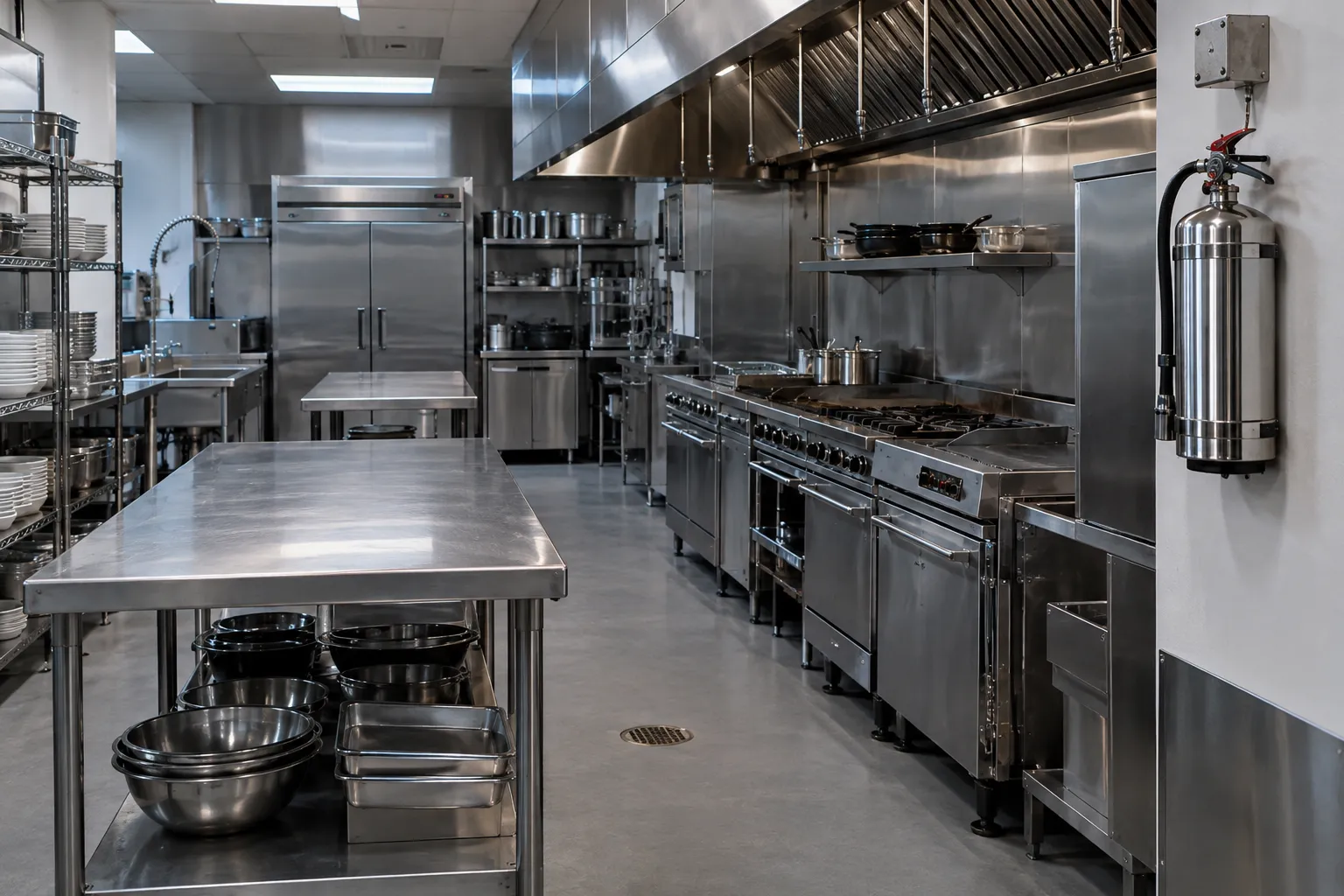
Systems in a typical restaurant
| System | Usual frequency | Who does it |
|---|---|---|
| Hood and duct cleaning | Monthly to annually by cooking volume | Certified hood cleaning company |
| Wet chemical suppression | Every 6 months | Licensed or certified technician |
| Fire extinguishers (incl. Class K) | Monthly check, annual service | Staff monthly; technician annually |
| Emergency and exit lighting | Monthly and annual tests | Staff or electrician |
| Fire alarm (if installed) | Annually | Licensed alarm company |
| Sprinklers (if installed) | Quarterly to 5 years | Licensed sprinkler contractor |
| Grease trap or interceptor | Set by local utility | Licensed hauler |
Compliance calendar
Every month
- Extinguisher checks
- Exit light function test
January and July
- Suppression system service
- Hood cleaning (moderate volume)
April and October
- Extra hood cleaning if your volume is high (quarterly)
Once a year
- Extinguisher maintenance
- Alarm test
- Full-duration emergency lighting test
As set by the utility
- Grease trap pumping
Get this calendar for your building
How cooking volume sets hood cleaning frequency
| Cooking volume | Typical examples | Frequency |
|---|---|---|
| Solid fuel | Wood or charcoal fired ovens and grills | Monthly |
| High volume | 24-hour kitchens, charbroiling, wok cooking | Quarterly |
| Moderate volume | Most full-service restaurants | Every 6 months |
| Low volume | Churches, seasonal camps, low-use kitchens | Annually |
The example calendar above assumes a moderate-volume kitchen. The inspection calendar we send adjusts the dates to your cooking volume and systems.
What the inspector checks
- Hood cleaning sticker current, with the date and company
- Suppression system tag current; nozzles capped and aimed at appliances
- Manual pull station for the suppression system reachable
- Class K extinguisher near the cooking line
- Exits clear, doors open from inside without a key, exit signs lit
- Records binder available
Records binder
Keep the last hood cleaning reports, suppression service reports, extinguisher logs, alarm and sprinkler reports if present, and proof that deficiencies were fixed.
Restaurants: common questions
How often does a restaurant need a fire inspection?
Your local fire marshal sets the schedule; many inspect restaurants yearly.
Who is responsible for hood cleaning in a leased restaurant?
Usually the tenant operating the kitchen; check your lease.
What fails a restaurant fire inspection most often?
Overdue hood cleaning, expired suppression tags, blocked exits and missing extinguisher records.
Do food trucks follow the same rules?
Many jurisdictions apply similar hood and suppression rules to mobile kitchens. Ask your fire marshal before you open.
Does changing my menu change my hood cleaning schedule?
It can. Adding charbroiling, woks or solid fuel can move you to a more frequent schedule.
Can my staff clean the hood?
Daily surface cleaning, yes. The full hood and duct cleaning is done by a qualified company.
Requirements depend on the code edition your state and local fire marshal have adopted. Confirm with your authority having jurisdiction.
Sources
- Minnesota Department of Health: Protection of Kitchen Cooking Equipment
- Marysville Fire District: Restaurant Owner's Guide to Exhaust Hood Cleaning
- Portland Fire and Rescue FIR 8.08
- NFPA 96 standard page
- NFPA 17A standard page
- 29 CFR 1910.157 (eCFR)