School fire inspection checklist
This school fire inspection checklist covers the fire drills, alarms, sprinklers, extinguishers, exits and records that a fire marshal checks in schools and daycares. The International Fire Code treats schools and day care as high-risk groups with monthly drills, and states add their own schedules. Alarm and sprinkler systems still need yearly licensed service.
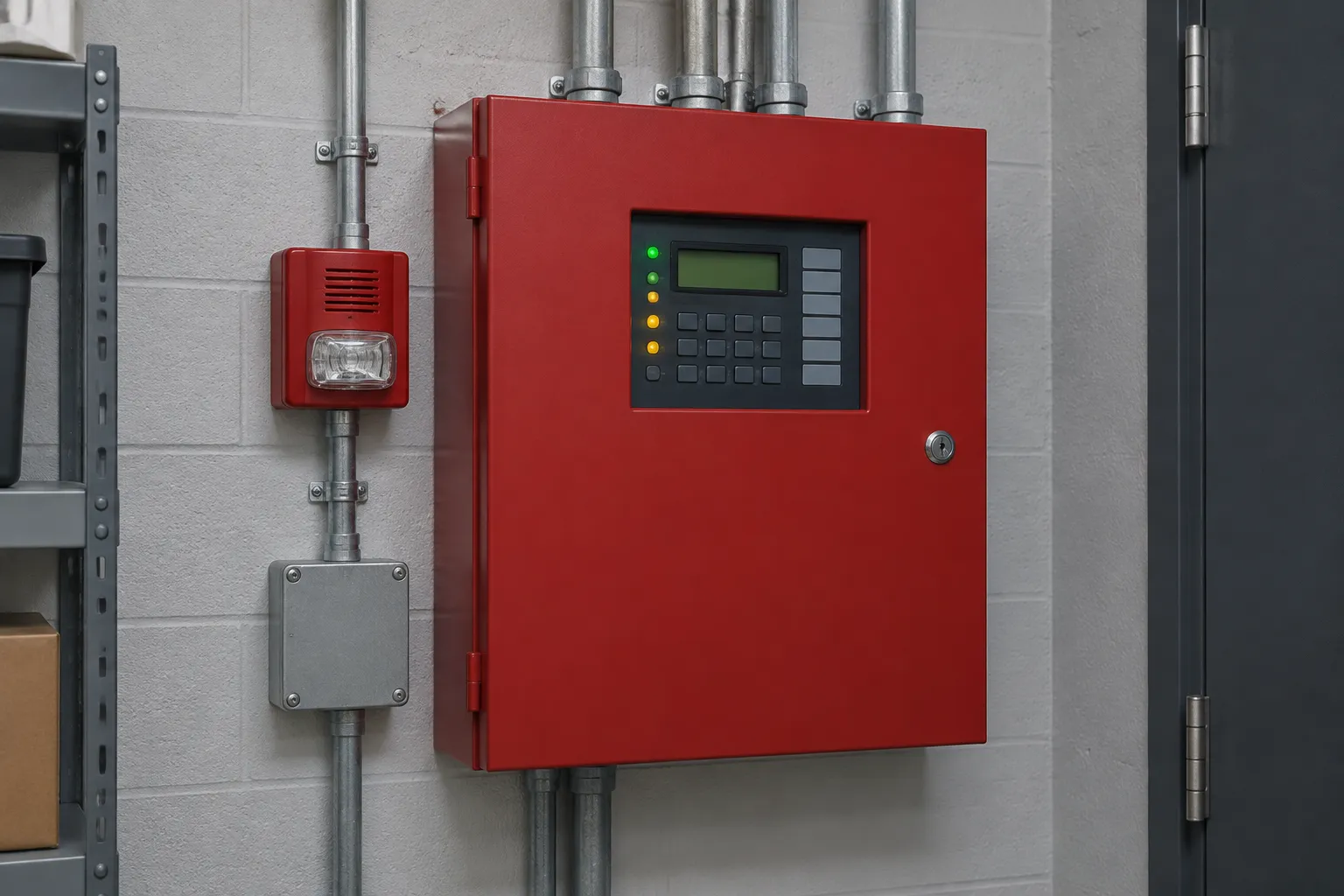
Systems in a typical school or daycare
| System | Usual frequency | Who does it |
|---|---|---|
| Fire alarms | Inspect and test at least yearly; confirm with your fire marshal | Licensed alarm company |
| Fire sprinklers | Weekly or monthly valve and gauge checks, quarterly alarm tests, annual inspection, five-year internal checks | Staff for visual checks; licensed sprinkler contractor for tests |
| Fire extinguishers | Monthly visual check; annual maintenance with a current tag | Staff monthly; licensed company yearly |
| Emergency lighting and exit signs | Confirm the monthly and annual test routine with your fire marshal | Facilities staff or electrician |
| Kitchen hood suppression (cafeteria) | Semiannual service is common; confirm with your fire marshal | Licensed suppression company |
| Backflow preventer on the fire line | Often once a year; set by your water utility | Certified backflow tester |
Compliance calendar
Every month
- Hold a fire evacuation drill in every month school is in session where your state or the IFC requires it, with all occupants taking part, and log it.
- Look at each extinguisher and check sprinkler gauges and valves.
- Walk exits and corridors: doors open, nothing stored, exit signs lit.
Every quarter
- Have your sprinkler contractor test waterflow alarms and inspect the fire department connection.
- Confirm the alarm panel shows no trouble signals.
Every 6 months
- Test sprinkler supervisory signals if your contractor schedules them twice a year.
- Service cafeteria hood suppression if your fire marshal expects semiannual service.
Once a year
- Annual fire alarm inspection and test.
- Annual sprinkler inspection and main drain test.
- Annual extinguisher maintenance and tags.
- Review the fire safety and evacuation plan with staff.
- Test the backflow preventer if your water utility requires it.
Longer cycles
- Run the five-year internal pipe inspection, gauge replacement or calibration and valve interior checks that NFPA 25 sets for sprinkler systems.
Get this calendar for your building
Fire drill frequency for schools and daycare
The International Fire Code lists education occupancies and day care among the groups that drill monthly, with all occupants taking part. The University of Colorado summary of the 2009 code confirms that table, and also notes that other groups such as business occupancies drill less often. Your state may adopt a newer edition or set its own schedule. Examples:
- Georgia: a drill within the first 10 days of the school year, a second within 30 days, then monthly while school is in session. Some months may be replaced by other safety drills, per the state’s schedule. Georgia cites Section 404.2 of the IFC for the fire safety and evacuation plan and electronic drill reporting.
- Texas: full fire evacuation drills in four periods: within 10 school days of the start of the year, between November and winter break, within 10 school days after winter break, and between spring break and the end of the year. Keep records on site for three years. A local fire code may require more.
- Florida: district school boards must set emergency drill policies with public safety agencies, follow State Board of Education rules, and keep drill records.
Daycares and child care centers are usually licensed by a state agency that sets its own drill schedule. Ask your licensing office.
Who is responsible: district, school, operator or landlord
Public schools: the district typically holds the alarm and sprinkler contracts, and the principal runs drills. Charter schools and daycares in leased space: the lease decides who maintains base-building systems, but the operator is the one cited for missed drills and blocked exits. Make one person the fire safety coordinator and write their name in the plan.
Occupancy, plans and permits
Posted occupancy limits apply to gyms, auditoriums and cafeterias. Chairs set out beyond the posted number are a common citation. Keep an approved fire safety and evacuation plan, update it when rooms change use, and tell the fire marshal before adding portable classrooms, a new cooking line or a stage.
What the inspector checks
- Drill records show the required number of drills for the year and the required timing.
- Exit doors open without a key from inside and are not chained or blocked.
- Corridors and stairwells have no storage.
- Exit signs and emergency lights work.
- Extinguishers are mounted, charged and tagged within the last year.
- Fire alarm and sprinkler reports are current.
- Kitchen hood and suppression are serviced, if the school cooks on site.
- Posted occupancy limits are accurate, and nothing blocks sprinkler heads.
Records binder
Keep drill reports, the fire safety and evacuation plan, annual alarm and sprinkler reports, extinguisher tags, hood service tags, and the last fire marshal inspection report. Texas requires drill records on district forms to be kept on site for three years, and the fire marshal may ask to see them. Use three years as a safe default elsewhere and confirm with your state.
Schools and daycares: common questions
How often must schools hold fire drills?
The IFC model is monthly for schools and day care. States vary: Georgia requires early-year drills then monthly, Texas requires four drills in set periods, and Florida requires districts to set drill policies. Check your state.
Who inspects school fire safety?
The local fire marshal or the state fire marshal, depending on your state. Texas, for example, points schools to the State Fire Marshal rules unless a local fire code applies.
Do daycares need fire drills?
Yes in most states, often monthly, set by the licensing agency. Ask your state child care licensing office for the exact schedule.
How long should drill records be kept?
Texas requires three years on site. Use three years as a default and confirm your state.
Do schools need yearly alarm and sprinkler inspections?
Most fire marshals expect yearly service by a licensed company, with quarterly sprinkler alarm checks. Confirm with your fire marshal.
Does a school need a written emergency plan?
The IFC calls for an approved fire safety and evacuation plan for education occupancies. Georgia cites IFC 404.2. OSHA also requires a written plan for employers when an OSHA standard calls for one.
Requirements depend on the code edition your state and local fire marshal have adopted. Confirm with your authority having jurisdiction.
Sources
- University of Colorado Fire and Life Safety: Fire drill code requirements (cites 2009 IFC)
- Georgia Office of Insurance and Safety Fire Commissioner: school fire drill schedule
- Texas Department of Insurance State Fire Marshal: School fire drills
- Florida Statutes 1006.07 District school board duties on student discipline and school safety
- Rimkus: Commercial sprinkler system inspection guide (secondary, summarizes NFPA 25)
- Koorsen Fire and Security: Fire marshal inspection checklist (secondary)
- OSHA 29 CFR 1910.38 Emergency action plans