Fire Extinguisher Inspection: How Often, Who Does It and What to Record
A fire extinguisher inspection is due every month, and a qualified technician must maintain each unit every year. Some types also need internal maintenance every six years and a hydrostatic pressure test every 5 or 12 years. The monthly check is quick enough for trained staff to do.
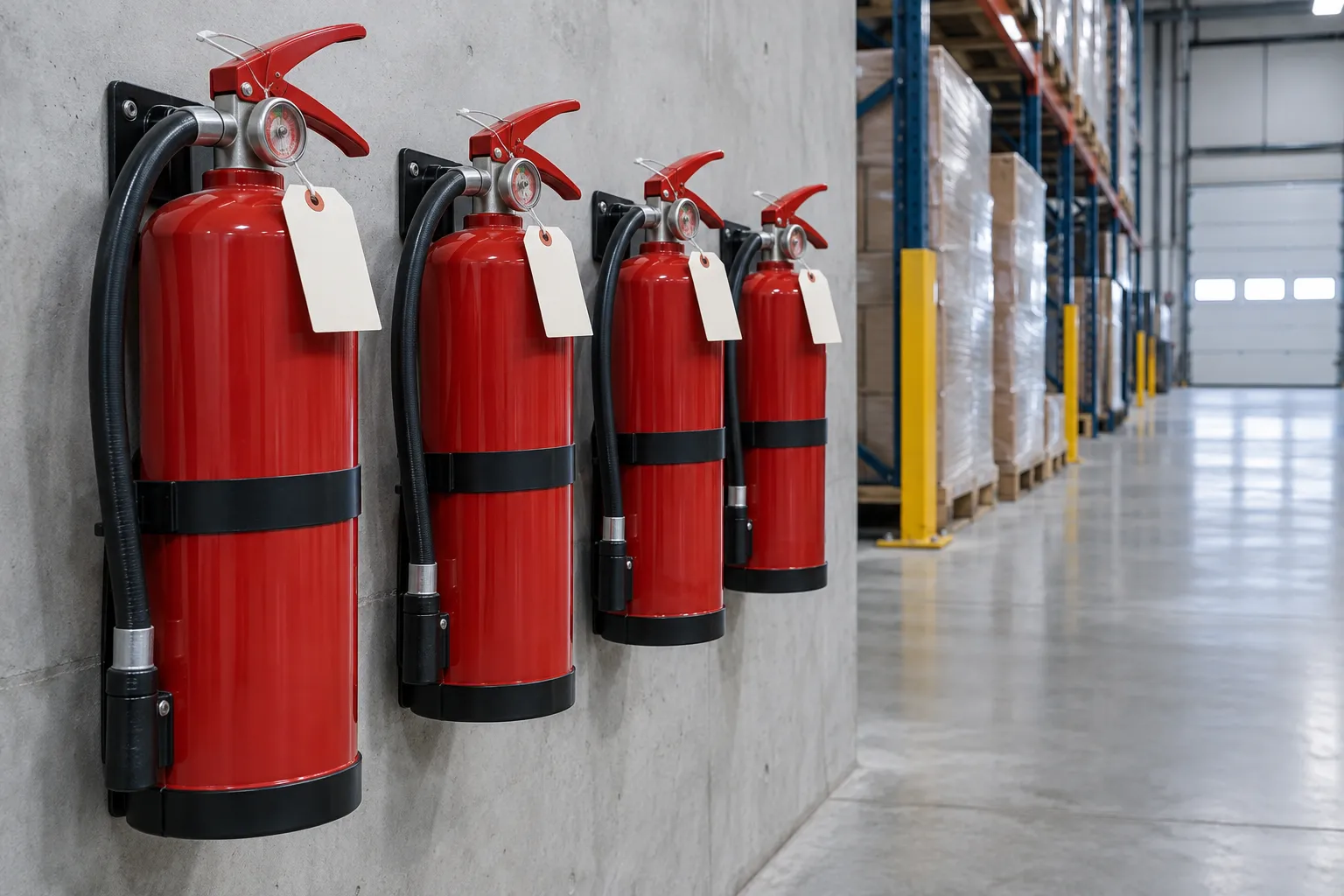
Fire extinguishers inspection, testing and maintenance
Monthly inspection
A monthly inspection is a quick visual check anyone trained can do. It confirms the extinguisher is where it should be and ready to use.
- In its marked location and not blocked
- Pressure gauge in the green, or weight correct for CO2 units
- Pin and tamper seal in place
- No dents, corrosion, leaks or a clogged nozzle
- Operating instructions facing out and readable
- Date and initials recorded on the tag or log
Annual maintenance
Once a year a qualified technician examines each extinguisher inside and out, fixes problems and attaches a new service tag. In many states this person must hold a state license or certification; see your state page.
Six-year internal maintenance and hydrostatic tests
Longer cycles depend on the extinguisher type. Your technician tracks them from the date stamped on the cylinder.
| Extinguisher type | Internal maintenance | Hydrostatic test |
|---|---|---|
| Stored-pressure dry chemical (ABC, BC) | Every 6 years | Every 12 years |
| Carbon dioxide (CO2) | Not applicable | Every 5 years |
| Water and foam | Annually | Every 5 years |
| Wet chemical (Class K) | Annually | Every 5 years |
| Clean agent | Every 6 years | Every 12 years |
Records your fire marshal will ask for
Keep the monthly log and the annual service tag on each unit, plus the technician’s service reports and any hydrostatic test certificates. Keep them where staff can produce them during an inspection. Your state or fire marshal may set how long you keep them.
What the inspector checks
- Every extinguisher is visible, reachable and mounted at the right height
- Current annual tag from a licensed or certified technician
- Monthly checks recorded
- Class K extinguisher near commercial cooking appliances
- Right type and number for the hazard and floor area
Placement basics
Extinguishers must be spaced so no one walks too far to reach one, and kitchens with commercial cooking need a Class K extinguisher near the appliances. Exact distances depend on the hazard class and the code edition your state adopted, so confirm them with your technician or fire marshal.
Fire extinguishers: common questions
Can I do the monthly fire extinguisher inspection myself?
Yes, in most places a trained staff member can do the monthly visual check. Annual maintenance needs a qualified technician.
What does the tag on a fire extinguisher mean?
It records the last annual maintenance, who did it and when. A missing or expired tag is a common citation.
When should a fire extinguisher be replaced?
When it fails a hydrostatic test, is damaged, or is a model that can no longer be serviced. Your technician will flag it.
Do OSHA rules apply to my business?
OSHA's portable extinguisher rule applies to workplaces where extinguishers are provided for employees to use. Read the scope section of 29 CFR 1910.157 or ask your safety advisor.
How many fire extinguishers does my building need?
It depends on floor area, hazard class and travel distance. Your fire marshal or technician sets the count.
What kind of extinguisher does a commercial kitchen need?
A Class K wet chemical extinguisher near the cooking line, in addition to the hood suppression system.
How long should I keep extinguisher records?
Keep them at least until the next inspection cycle; your state or fire marshal may require longer.
What happens if an extinguisher fails inspection?
The inspector notes a deficiency with a deadline to fix it, usually by servicing or replacing the unit.
Requirements depend on the code edition your state and local fire marshal have adopted. Confirm with your authority having jurisdiction.
Sources
- 29 CFR 1910.157 (eCFR)
- Minnesota Department of Health: Maintenance and Testing of Portable Fire Extinguishers
- University of Colorado Fire and Life Safety: inspection periods for portable extinguishers
- NFPA 10 standard page