Apartment fire inspection checklist
This apartment fire inspection checklist covers the shared fire alarm, sprinklers, extinguishers, exit lighting and fire lanes that owners, property managers and HOA boards must keep on schedule. Annual service visits by licensed companies are the backbone, with monthly walk-throughs in between. Tenants and unit owners handle only what is inside their own unit.
Systems in a typical apartment building or HOA
| System | Usual frequency | Who does it |
|---|---|---|
| Fire alarms and smoke alarms | Common-area system tested and inspected at least yearly; in-unit alarms replaced by their listed lifespan (about 10 years) | Licensed alarm company; manager or owner for in-unit alarms |
| Fire sprinklers | Monthly and quarterly checks, annual inspection, five-year internal checks | Licensed sprinkler contractor |
| Fire extinguishers | Monthly visual check; annual maintenance with a current tag | Staff monthly; licensed extinguisher company yearly |
| Emergency lighting and exit signs | Confirm the monthly and annual test routine with your fire marshal | Maintenance staff or electrician |
| Fire pumps (taller or larger buildings) | Weekly or monthly run test, annual flow test | Pump contractor; staff for run tests |
| Backflow preventer on the fire line | Often once a year; set by your water utility | Certified backflow tester |
Compliance calendar
Every month
- Walk every corridor and stairwell: exits clear, doors close and latch, exit signs lit.
- Look at each common-area extinguisher: in place, gauge in the green, seal intact.
- Check sprinkler gauges and that sprinkler control valves are open and locked.
- Run the electric fire pump for at least 10 minutes if you have one.
Every quarter
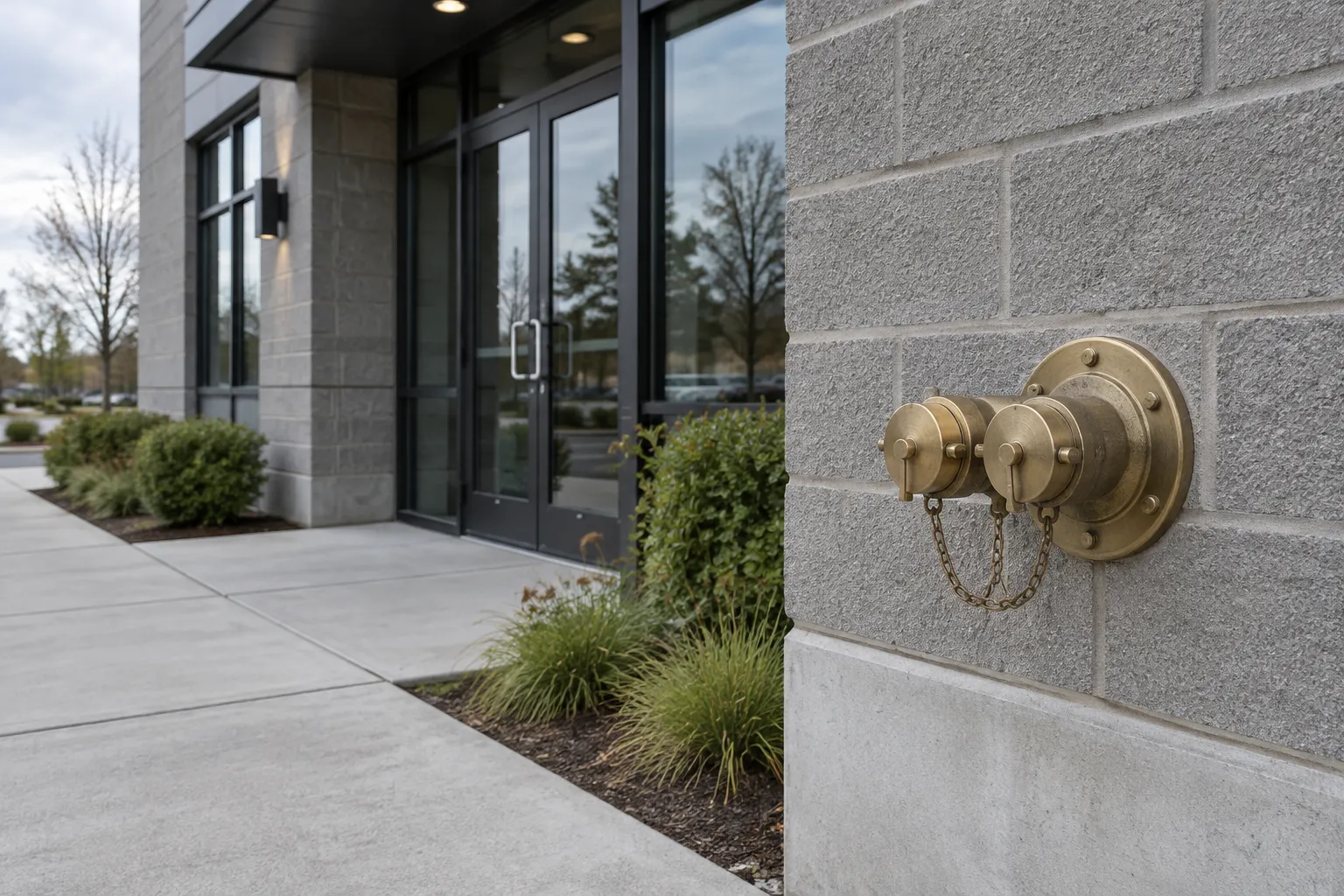
- Have the sprinkler contractor test the waterflow alarm and inspect the fire department connection.
- Confirm the fire alarm panel shows no trouble signals.
Every 6 months
- Test sprinkler waterflow and valve supervisory signals if your contractor runs them twice a year.
Once a year
- Schedule the fire alarm inspection and test, and keep the report.
- Schedule the annual sprinkler inspection and main drain test.
- Have each extinguisher serviced and tagged.
- Run the annual fire pump flow test if you have a pump.
- Test the backflow preventer if your water utility requires it.
- Check the age of smoke alarms and replace any past their listed life.
Longer cycles
- Run the five-year internal pipe inspection, gauge replacement or calibration and valve interior checks that NFPA 25 sets for sprinkler systems.
Get this calendar for your building
Who is responsible: owner, HOA or resident
For a rental building, the owner or the manager the owner hires is responsible for the shared fire systems and for keeping working smoke alarms in each unit. A tenant who disables an alarm does not move the legal duty off the owner in most jurisdictions, so ask your fire marshal how your city treats it.
For a condo or HOA, your governing documents decide. The Community Associations Institute notes that the board often must maintain central fire, smoke and sprinkler systems even when some detectors sit inside a unit, and that annual inspections of those systems are sometimes required by local law. Items fully inside a unit, such as a dryer vent that serves only that unit, are normally the owner’s concern.
- Owner or association: alarm panel, sprinkler risers, fire pump, extinguishers in common areas, exit lighting, fire lanes.
- Unit owner or tenant: not blocking in-unit sprinkler heads, not disabling alarms, keeping the unit’s exits clear, reporting problems.
What a fire marshal checks in apartments
Many fire departments run a yearly program for apartments. Vancouver, Washington, for example, lists clear driveways and fire lanes with visible address numbers, working exit signs and emergency lighting, unobstructed exits, working smoke and carbon monoxide alarms within their 10-year life, serviced extinguishers and protection systems, and clean dryer vents. Your city may differ. Ask for its apartment pre-inspection checklist.
Permits, occupancy and records for boards
Apartment buildings rarely need a yearly fire permit, but changes do. Adding a unit, converting a space, installing a commercial kitchen in a clubhouse, or storing fuel can each need plans and a permit. Keep every inspection report in a single binder or shared folder. Insurers and lenders often ask for proof of current alarm and sprinkler inspections.
What the inspector checks
- Fire lanes and driveways are clear, and address numbers are visible from the street.
- Corridors and stairwells are free of storage, strollers and furniture.
- Exit signs and emergency lights work.
- Common-area extinguishers are mounted, charged and tagged within the last year.
- Fire alarm panel is free of trouble signals and has a current inspection report.
- Sprinkler heads are not painted, damaged or blocked.
- Smoke and carbon monoxide alarms are present and inside their listed life.
- Dryer vents and trash rooms are clean.
Records binder
Keep the annual fire alarm report, quarterly and annual sprinkler reports, extinguisher service tags and vendor receipts, fire pump test logs, backflow test reports, and the dates smoke alarms were installed or replaced. For an HOA, store copies with the board’s permanent records so they survive a change of management company. OSHA requires employers to record the annual extinguisher maintenance date and keep it for one year after the last entry or the life of the shell, whichever is less; apply the same habit to your own files and keep reports longer if your insurer asks.
Apartments and HOAs: common questions
Who is responsible for fire inspections in an apartment building?
The owner, or the manager the owner hires, is responsible for the common systems and for in-unit smoke alarms. Local law decides how much of that a tenant can be held to.
Is the HOA responsible for fire sprinklers in a condo?
Often yes when the system is a central one, even if some devices sit inside a unit. Read your declaration and bylaws, and ask the board's attorney if they are unclear.
How often does a fire marshal inspect apartments?
Many departments aim for yearly. Some inspect less often or only on complaint. Ask your local fire department.
How long do smoke alarms last?
Many fire departments, including Vancouver (WA), look for smoke and CO alarms within their 10-year lifespan. Check the date printed on the alarm.
What records should an HOA keep?
Alarm, sprinkler, extinguisher, pump and backflow reports, plus alarm replacement dates. Keep them in the board's permanent files.
Who pays for a failed inspection fix?
The owner or association pays for common systems. Charges to a tenant for damage they caused depend on the lease and state law.
Requirements depend on the code edition your state and local fire marshal have adopted. Confirm with your authority having jurisdiction.
Sources
- Community Associations Institute: Who is responsible for inside maintenance
- Vancouver (WA) Fire Marshal's Office: Fire inspections
- Rimkus: Commercial sprinkler system inspection guide (secondary, summarizes NFPA 25)
- Koorsen Fire and Security: Fire pump testing and inspection requirements (secondary)
- OSHA 29 CFR 1910.157 Portable fire extinguishers