Smoke Detector Laws by State: What Each Statute Requires (2026)
- Primary data
- Fire Life and Safety coded registry of state smoke alarm statutes (51 jurisdictions)
- Data period
- Law in force as opened 2026-10-27
- Latest release used
- 2026-10-27
- Next release
- Quarterly review; next check 2027-01
- Geography
- 50 U.S. states and the District of Columbia
- Sources
- 28 (25 Tier 1)
Smoke detector laws by state vary widely. Of 47 jurisdictions we verified from statute text, 36 have a statewide smoke alarm statute and 11 have none. Only 16 cover every existing home, 10 require 10-year sealed batteries, 12 act at sale, and none requires interconnected alarms in existing one- and two-family homes.
The coded map of smoke detector laws by state
The highest scores sit in the Northeast, the Mid-Atlantic, the upper Midwest and the West Coast. Eight of the 11 states with no statewide statute are in the South or the Mountain West, and six Southern states (Florida, North Carolina, South Carolina, Tennessee, Texas, Virginia) regulate rentals only.
0 to 100; higher means the statewide statute reaches more homes and assigns more duties
Source: Fire Life and Safety coding of state statutes opened 2026-10-27 (registry.csv). Blank tiles: not verified (NH, OK, RI, HI).
Each state was coded on nine questions from the statute text we opened on 2026-10-27, then scored from 0 to 100. Massachusetts scores highest at 75.0 because its statute covers every one- and two-family home, adds a seller duty at transfer, and its fire rules require photoelectric, 10-year sealed alarms in older homes at sale. California, Maine, Maryland and New York follow at 70.0.
Coverage score: 2 points if the statute covers existing owner-occupied homes (1 if only at sale or another trigger), plus 1 point each for rentals, a 10-year sealed battery rule, a photoelectric rule, interconnection in existing homes, a landlord duty, a tenant duty, a point-of-sale rule and a stated penalty; partial codes earn half. The sum is multiplied by 10.
A low score does not mean homes in that state lack alarm rules. Alabama, for example, has adopted the International Fire Code, which the Alabama Fire College says requires working smoke alarms in homes. The score measures what the legislature wrote into statute. Our separate tracker of fire code adoption by state shows which code editions are in force.
Show all 51 rows
| State | Statute | Applies to | 10-year sealed battery (year) | Photoelectric | Interconnection in existing homes | Landlord duty | Tenant duty | Point of sale | Penalty | Last amended | Coverage score | Statute URL opened |
|---|---|---|---|---|---|---|---|---|---|---|---|---|
| Alabama | none found | No statewide statute found | No | No | No | No | No | No | n/a | n/s | 0.0 | https://www.alabamafirecollege.org/renters-landlords-do-you-know-what-your-smoke-alarm-responsibilities-are/ |
| Alaska | AS 18.70.095; AS 34.03.100(a)(7) | All dwellings incl. owner-occupied | No | No | No | Yes | Yes | No | not stated | n/s | 50.0 | https://codes.findlaw.com/ak/title-18-health-safety-housing-human-rights-and-public-defender/ak-st-sect-18-70-095/ |
| Arizona | A.R.S. 36-1637 | Limited (new construction or certain buildings) | No | No | No | Yes | Yes | No | not stated | n/s | 25.0 | https://www.azleg.gov/ars/36/01637.htm |
| Arkansas | none found | No statewide statute found | No | No | No | No | No | No | n/a | n/s | 0.0 | https://codes.findlaw.com/ar/title-18-property/ar-code-sect-18-17-502/ |
| California | Cal. Health & Safety Code 13113.7, 13113.8, 13114 | All dwellings incl. owner-occupied | Yes (2014) | No | No | Yes | No | Yes | infraction, maximum fine $200 per offense (13113.7(e)) | 2014 | 70.0 | https://california.public.law/codes/ca_health_and_safety_code_section_13113.7 |
| Colorado | none found | No statewide statute found | No | No | No | No | No | No | n/a | n/s | 0.0 | https://colorado.public.law/statutes/crs_38-12-505 |
| Connecticut | Conn. Gen. Stat. 29-292, 29-453 | Rentals plus sale or other trigger | No | No | No | No | No | Yes | not stated | n/s | 25.0 | https://codes.findlaw.com/ct/title-29-public-safety-and-state-police/ct-gen-st-sect-29-453/ |
| Delaware | 16 Del. C. 6631 to 6637 | All dwellings incl. owner-occupied | No | No | Partial | Yes | Yes | No | $100 to $500 per offense (owner or tenant); same for tampering | 2010 | 65.0 | https://delcode.delaware.gov/title16/c066/sc04/index.html |
| District of Columbia | D.C. Code 6-751.02 | All dwellings incl. owner-occupied | No | No | No | Yes | No | No | not stated in section opened | n/s | 40.0 | https://codes.findlaw.com/dc/division-i-government-of-district/dc-code-sect-6-751-02/ |
| Florida | Fla. Stat. 553.883; 83.51(2)(b) | Rental housing only | Yes (2014) | No | No | Yes | No | No | not stated | 2025 | 30.0 | http://www.leg.state.fl.us/statutes/index.cfm?App_mode=Display_Statute&URL=0500-0599/0553/Sections/0553.883.html |
| Georgia | O.C.G.A. 25-2-40 | All dwellings incl. owner-occupied | No | No | No | No | Yes | No | occupant who fails to maintain: warning, then fine up to $25 | 2001 | 50.0 | https://codes.findlaw.com/ga/title-25-fire-protection-and-safety/ga-code-sect-25-2-40/ |
| Hawaii | HRS chapter 132 (text not opened) | Not verified | n/a | n/a | n/a | n/a | n/a | n/a | n/a | n/s | https://www.capitol.hawaii.gov/hrscurrent/Vol02_Ch0121-0200D/HRS0132/ | |
| Idaho | Idaho Code 6-320(a)(6) | Rental housing only | No | No | No | Yes | Yes | No | tenant action for damages; tenant may install and deduct cost if not installed within 72 hours of certified notice | n/s | 40.0 | https://codes.findlaw.com/id/title-6-actions-in-particular-cases/id-st-sect-6-320/ |
| Illinois | 425 ILCS 60/3 (Smoke Detector Act) | All dwellings incl. owner-occupied | Yes | No | No | Yes | Yes | No | not stated in section 3 | n/s | 60.0 | https://codes.findlaw.com/il/chapter-425-fire-safety/il-st-sect-425-60-3/ |
| Indiana | IC 22-11-18-3.5 | All dwellings incl. owner-occupied | No | No | No | Yes | Yes | No | not stated in section | n/s | 50.0 | https://codes.findlaw.com/in/title-22-labor-and-safety/in-code-sect-22-11-18-3-5/ |
| Iowa | Iowa Code 10A.518 (formerly 100.18) | All dwellings incl. owner-occupied | No | No | No | Yes | Yes | No | simple misdemeanor | 2023 | 60.0 | https://www.legis.iowa.gov/docs/code/10A.518.pdf |
| Kansas | K.S.A. 31-160 to 31-164 | All dwellings incl. owner-occupied | No | No | No | Yes | Yes | No | nonclass nonperson misdemeanor, fine up to $25 (K.S.A. 31-163) | 1998 | 60.0 | https://ksrevisor.gov/statutes/chapters/ch31/031_001_0062.html |
| Kentucky | none found | No statewide statute found | No | No | No | No | No | No | n/a | n/s | 0.0 | https://apps.legislature.ky.gov/record/26rs/hb474.html |
| Louisiana | La. R.S. 40:1581 | Rentals plus sale or other trigger | Yes | No | No | Yes | No | Yes | none; noncompliance does not stop a transfer or bar insurance claims | 2022 | 50.0 | https://legis.la.gov/Legis/Law.aspx?d=97690 |
| Maine | 25 M.R.S. 2464 | Rentals plus sale or other trigger | No | Yes | No | Yes | Yes | Yes | civil violation, forfeiture up to $500 per violation | 2009 | 70.0 | https://legislature.maine.gov/statutes/25/title25sec2464.html |
| Maryland | Md. Code, Public Safety 9-101 to 9-109 | All dwellings incl. owner-occupied | Yes (2018) | No | No | Yes | Yes | No | installation order, comply within 5 calendar days (PS 9-108) | 2025 | 70.0 | https://mgaleg.maryland.gov/mgawebsite/Laws/StatuteText?article=gps§ion=9-104&enactments=false |
| Massachusetts | M.G.L. c.148 s.26E, 26F; 527 CMR (Dec 1, 2016 rules) | All dwellings incl. owner-occupied | Yes (2016) | Yes | Partial | Yes | No | Yes | not stated; head of fire department enforces | 2016 | 75.0 | https://codes.findlaw.com/ma/part-i-administration-of-the-government-ch-1-182/ma-gen-laws-ch-148-sect-26e/ |
| Michigan | MCL 125.1504c; MCL 125.482a | All dwellings incl. owner-occupied | No | No | No | Yes | No | No | misdemeanor, fine up to $500 or 90 days, for class A multiple dwelling owners (125.482a) | n/s | 50.0 | https://codes.findlaw.com/mi/chapter-125-planning-housing-and-zoning/mi-comp-laws-125-1504c/ |
| Minnesota | Minn. Stat. 299F.362 | All dwellings incl. owner-occupied | No | No | No | Yes | Yes | No | State Fire Code penalty (299F.011 subd. 6); misdemeanor for willfully disabling an alarm that results in damage or injury | 2023 | 60.0 | https://www.revisor.mn.gov/statutes/cite/299F.362 |
| Mississippi | none found | No statewide statute found | No | No | No | No | No | No | n/a | n/s | 0.0 | https://codes.findlaw.com/ms/title-89-real-and-personal-property/ms-code-sect-89-8-23/ |
| Missouri | none found | No statewide statute found | No | No | No | No | No | No | n/a | n/s | 0.0 | https://codes.findlaw.com/mo/title-xxix-ownership-and-conveyance-of-property/mo-rev-st-441-234/ |
| Montana | Mont. Code Ann. 70-24-303(1)(g) | Rental housing only | No | No | No | Yes | Yes | No | not stated; landlord not liable for damages from detector failure | 2021 | 30.0 | https://mca.legmt.gov/bills/mca/title_0700/chapter_0240/part_0030/section_0030/0700-0240-0030-0030.html |
| Nebraska | Neb. Rev. Stat. 81-5,132 to 81-5,146 | Rentals plus sale or other trigger | No | No | No | Yes | Yes | Yes | not stated in sections opened; county attorney enforces | n/s | 50.0 | https://codes.findlaw.com/ne/chapter-81-state-administrative-departments/ne-rev-st-sect-81-5-142/ |
| Nevada | NRS 477.140 | Limited (new construction or certain buildings) | No | No | No | Yes | No | No | not stated in section | n/s | 15.0 | https://nevada.public.law/statutes/nrs_477.140 |
| New Hampshire | RSA 153:10-a (text not opened) | Not verified | n/a | n/a | n/a | n/a | n/a | n/a | n/a | n/s | https://gc.nh.gov/rsa/html/XII/153/153-10-a.htm | |
| New Jersey | N.J.S.A. 52:27D-198.1; N.J.A.C. 5:70 (10-year rule eff. Jan 1, 2019) | Rentals plus sale or other trigger | Yes (2019) | No | No | Yes | No | Yes | violation notices (DCA) | 2019 | 60.0 | https://codes.findlaw.com/nj/title-52-state-government-departments-and-officers/nj-st-sect-52-27d-198-1/ |
| New Mexico | none found | No statewide statute found | No | No | No | No | No | No | n/a | n/s | 0.0 | https://codes.findlaw.com/nm/chapter-47-property-law/nm-st-sect-47-8-20/ |
| New York | N.Y. Exec. Law 378(5-b); Mult. Dwell. Law 68; Gen. Bus. Law 399-ccc | All dwellings incl. owner-occupied | Yes (2019) | No | No | Yes | Yes | Yes | not stated in sections opened | 2026 | 70.0 | https://www.nysenate.gov/legislation/laws/EXC/378 |
| North Carolina | N.C. Gen. Stat. 42-42(a)(5), (5a) | Rental housing only | Yes (2013) | No | No | Yes | Yes | No | not stated in section | n/s | 40.0 | https://codes.findlaw.com/nc/chapter-42-landlord-and-tenant/nc-gen-st-sect-42-42/ |
| North Dakota | N.D.C.C. 23-13-15 | Rental housing only | No | No | No | Yes | Yes | No | class B misdemeanor for willful failure to install | n/s | 40.0 | https://ndlegis.gov/cencode/t23c13.pdf |
| Ohio | Ohio Rev. Code 3781.104 | Limited (new construction or certain buildings) | No | No | No | Partial | No | No | not stated | n/s | 10.0 | https://codes.findlaw.com/oh/title-xxxvii-health-safety-morals/oh-rev-code-sect-3781-104/ |
| Oklahoma | 74 O.S. 324.11 (text not opened) | Not verified | n/a | n/a | n/a | n/a | n/a | n/a | n/a | n/s | https://www.oscn.net/applications/oscn/DeliverDocument.asp?CiteID=95938 | |
| Oregon | ORS 479.250 to 479.300; ORS 90.320, 90.325 | Rentals plus sale or other trigger | Yes (1997) | No | No | Yes | Yes | Yes | not stated in sections opened | 2023 | 60.0 | https://oregon.public.law/statutes/ors_479.297 |
| Pennsylvania | none found | No statewide statute found | No | No | No | No | No | No | n/a | n/s | 0.0 | https://codes.findlaw.com/pa/title-35-ps-health-and-safety/pa-st-sect-35-1223-6/ |
| Rhode Island | R.I. Gen. Laws 23-28.35 (text not opened); 23-28.1-10 opened | Not verified | n/a | n/a | n/a | n/a | n/a | n/a | n/a | n/s | https://codes.findlaw.com/ri/title-23-health-and-safety/ri-gen-laws-sect-23-28-1-10/ | |
| South Carolina | S.C. Code 5-25-1310 to 5-25-1380 | Rental housing only | No | No | No | Yes | Yes | Yes | 15 days to cure on first offense; second offense misdemeanor, $50 to $200 or up to 30 days | 1994 | 50.0 | https://www.scstatehouse.gov/code/t05c025.php |
| South Dakota | none found | No statewide statute found | No | No | No | No | No | No | n/a | n/s | 0.0 | https://sdlegislature.gov/api/Statutes/43-32-6.1.html |
| Tennessee | Tenn. Code Ann. 68-102-151 | Rental housing only | No | No | No | Yes | Yes | No | Class A misdemeanor, each day a separate offense | n/s | 40.0 | https://codes.findlaw.com/tn/title-68-health-safety-and-environmental-protection/tn-code-sect-68-102-151/ |
| Texas | Tex. Prop. Code 92.251 to 92.264 | Rental housing only | No | No | No | Yes | No | No | landlord liable to tenant remedies if not installed at initial occupancy or not repaired within 7 days of written notice (92.259) | 2011 | 30.0 | https://texas.public.law/statutes/tex._prop._code_section_92.255 |
| Utah | none found | No statewide statute found | No | No | No | No | No | No | n/a | n/s | 0.0 | https://codes.findlaw.com/ut/title-57-real-estate/ut-code-sect-57-22-4/ |
| Vermont | 9 V.S.A. 2881, 2882 | Rentals plus sale or other trigger | No | Yes | No | No | No | Yes | not stated | n/s | 30.0 | https://codes.findlaw.com/vt/title-9-commerce-and-trade/vt-st-tit-9-sect-2882/ |
| Virginia | Va. Code 55.1-1220(A)(8); 36-99.5 | Rental housing only | No | No | No | Yes | Yes | No | landlord liable for tenant's actual damages from failure to exercise ordinary care | 2019 | 40.0 | https://law.lis.virginia.gov/vacode/title55.1/chapter12/section55.1-1220/ |
| Washington | RCW 43.44.110 | Rentals plus sale or other trigger | No | No | No | Yes | Yes | Yes | fine up to $200 (owner, seller or tenant); $5,000 owner fine if a fire then harms a tenant | 2019 | 60.0 | https://app.leg.wa.gov/RCW/default.aspx?cite=43.44.110 |
| West Virginia | W. Va. Code 15A-10-12 (formerly 29-3-16a) | All dwellings incl. owner-occupied | No | No | No | Yes | Yes | No | installation order issued after a fire investigation | n/s | 60.0 | https://codes.findlaw.com/wv/chapter-15a-department-of-homeland-security/wv-code-sect-15a-10-12/ |
| Wisconsin | Wis. Stat. 101.145, 101.645 | All dwellings incl. owner-occupied | No | No | No | Yes | Yes | No | forfeiture up to $50 per day (101.145(5)) | n/s | 60.0 | https://codes.findlaw.com/wi/employment-compensation-and-mining-ch-101-to-109/wi-st-101-145/ |
| Wyoming | none found | No statewide statute found | No | No | No | No | No | No | n/a | n/s | 0.0 | https://codes.findlaw.com/wy/title-1-code-of-civil-procedure/wy-st-sect-1-21-1203/ |
Codes: Yes, No, Partial. Coverage score formula in the analysis section. URLs are the pages we opened on 2026-10-27; 'n/s' means the page showed no amendment year. Not legal advice.
Source: [1][2][3][9][10][17] FindLaw (Internet Brands); Public.Law; Arizona State Legislature; Maine Legislature, Office of the Revisor of Statutes; Maryland General Assembly; Washington State Legislature
Owner-occupied homes, rentals, or only homes being sold
Rental housing is the most common target. 31 coded jurisdictions cover rentals in full, but only 16 reach an owner-occupied house that is not being sold or remodeled.
50 states and DC by broadest coverage found
Source: Fire Life and Safety statute coding, 2026-10-27 (registry.csv)
9 states regulate only rental housing: Florida, Idaho, Montana, North Carolina, North Dakota, South Carolina, Tennessee, Texas and Virginia. 8 more cover rentals and catch owner-occupied homes when they change hands, such as Washington (sold on or after July 1, 2019), Nebraska (pre-1982 homes at sale or remodel) and Vermont (single-family homes at sale).
Number of coded jurisdictions (of 47) answering Yes
Source: Fire Life and Safety statute coding, 2026-10-27 (t2.csv)
| Requirement | Yes | Partial | No | Not verified |
|---|---|---|---|---|
| Covers existing owner-occupied homes | 16 | 8 | 23 | 4 |
| Covers rental housing | 31 | 4 | 12 | 4 |
| 10-year sealed battery requirement | 10 | 0 | 37 | 4 |
| Photoelectric requirement | 3 | 0 | 44 | 4 |
| Interconnection required in existing homes | 0 | 2 | 45 | 4 |
| Landlord duty to install or test | 32 | 1 | 14 | 4 |
| Tenant duty (test, batteries, report) | 24 | 0 | 23 | 4 |
| Point-of-sale or transfer rule | 12 | 0 | 35 | 4 |
| Penalty or enforcement stated in statute | 19 | 0 | 28 | 4 |
Denominator: 47 coded jurisdictions (36 with a statute plus 11 with none found). 4 jurisdictions not verified.
Source: [1][2][9][10] FindLaw (Internet Brands); Public.Law; Maine Legislature, Office of the Revisor of Statutes; Maryland General Assembly
Arizona and Nevada show how narrow some statutes are. A.R.S. 36-1637 applies to new residential units and to existing units only when a permitted remodel touches a sleeping area. NRS 477.140 covers apartment buildings with at least three units and hotels with at least six guest rooms, not houses.
Ten-year sealed battery mandates and when they took effect
10 jurisdictions require 10-year sealed batteries in some form, but no two rules use the same trigger. Some regulate what stores may sell, others apply at sale, at replacement, or to landlords only.
Rules with a stated effective year; Illinois and Louisiana undated
Source: state statutes and fire marshal rules opened 2026-10-27 (t7.csv)
Oregon was first among the rules we could date: ORS 479.297, enacted in 1997, requires solely battery-operated ionization alarms sold in the state to be packaged with a 10-year battery. Seven of the 8 dated rules took effect from 2013 to 2019.
| State | Citation | Effective year | What triggers the 10-year sealed battery rule |
|---|---|---|---|
| Oregon | ORS 479.250 to 479.300; ORS 90.320, 90.325 | 1997 | ORS 479.297: solely battery-operated ionization alarms sold in Oregon must be packaged with a 10-year battery and a hush feature; enacting act 1997 c.647 (amended 1999) |
| North Carolina | N.C. Gen. Stat. 42-42(a)(5), (5a) | 2013 | 42-42(a)(5a): after December 31, 2012, a landlord installing or replacing an alarm must install a tamper-resistant 10-year lithium battery alarm (hardwired with battery backup and qualifying combination units exempt) |
| California | Cal. Health & Safety Code 13113.7, 13113.8, 13114 | 2014 | H&S 13114(b)(2): commencing July 1, 2014, battery-only alarms approved by the State Fire Marshal must have a nonreplaceable battery lasting at least 10 years |
| Florida | Fla. Stat. 553.883; 83.51(2)(b) | 2014 | enacting act ch. 2014-154 (statute text gives no date) |
| Massachusetts | M.G.L. c.148 s.26E, 26F; 527 CMR (Dec 1, 2016 rules) | 2016 | State Fire Marshal FireFactors: from Dec 1, 2016 new battery alarms in pre-1975 one- and two-family homes (checked at sale) must have 10-year sealed batteries |
| Maryland | Md. Code, Public Safety 9-101 to 9-109 | 2018 | PS 9-104(d)(2)-(3): all existing occupancies upgraded by Jan 1, 2018; battery units must be sealed, tamper resistant, long-life with hush button |
| New Jersey | N.J.S.A. 52:27D-198.1; N.J.A.C. 5:70 (10-year rule eff. Jan 1, 2019) | 2019 | NJ DCA Division of Fire Safety: from Jan 1, 2019 homes built before Jan 1, 1977 need 10-year sealed battery alarms, checked before sale or change of occupancy |
| New York | N.Y. Exec. Law 378(5-b); Mult. Dwell. Law 68; Gen. Bus. Law 399-ccc | 2019 | GBL 399-ccc bans sale of battery-only alarms with removable batteries (10-year non-removable required); current text dated 2019-04-05 on NY Senate OpenLegislation, section first listed 2016-01-01 |
| Illinois | 425 ILCS 60/3 (Smoke Detector Act) | not stated in text opened | Section 3(e): battery detectors must use a self-contained, non-removable, long-term battery when newly installed, older than 10 years or failing; effective year not shown on the copy opened |
| Louisiana | La. R.S. 40:1581 | not stated in text opened | statute requires ten-year sealed lithium alarm at sale or lease; history Acts 2009 No. 163, Acts 2022 No. 458 |
Scope differs: product sales bans (New York, Oregon ionization units), rules at sale (Massachusetts, New Jersey, Louisiana), landlord replacements (North Carolina), alterations (Florida), or all battery units (Maryland, California listing).
Source: [2][4][8][10][21][24][25] Public.Law; Florida Legislature; Louisiana State Legislature; Maryland General Assembly; New York State Senate, Open Legislation; New Jersey Department of Community Affairs; Massachusetts Department of Fire Services
| Effective year | Rules taking effect | Cumulative rules in force | States |
|---|---|---|---|
| 1997 | 1 | 1 | Oregon |
| 2013 | 1 | 2 | North Carolina |
| 2014 | 2 | 4 | California, Florida |
| 2016 | 1 | 5 | Massachusetts |
| 2018 | 1 | 6 | Maryland |
| 2019 | 2 | 8 | New Jersey, New York |
Illinois and Louisiana have 10-year rules in force but the copies we opened do not show an effective year; they are excluded from this series.
Source: [2][4][10][21][24][25] Public.Law; Florida Legislature; Maryland General Assembly; New York State Senate, Open Legislation; New Jersey Department of Community Affairs; Massachusetts Department of Fire Services
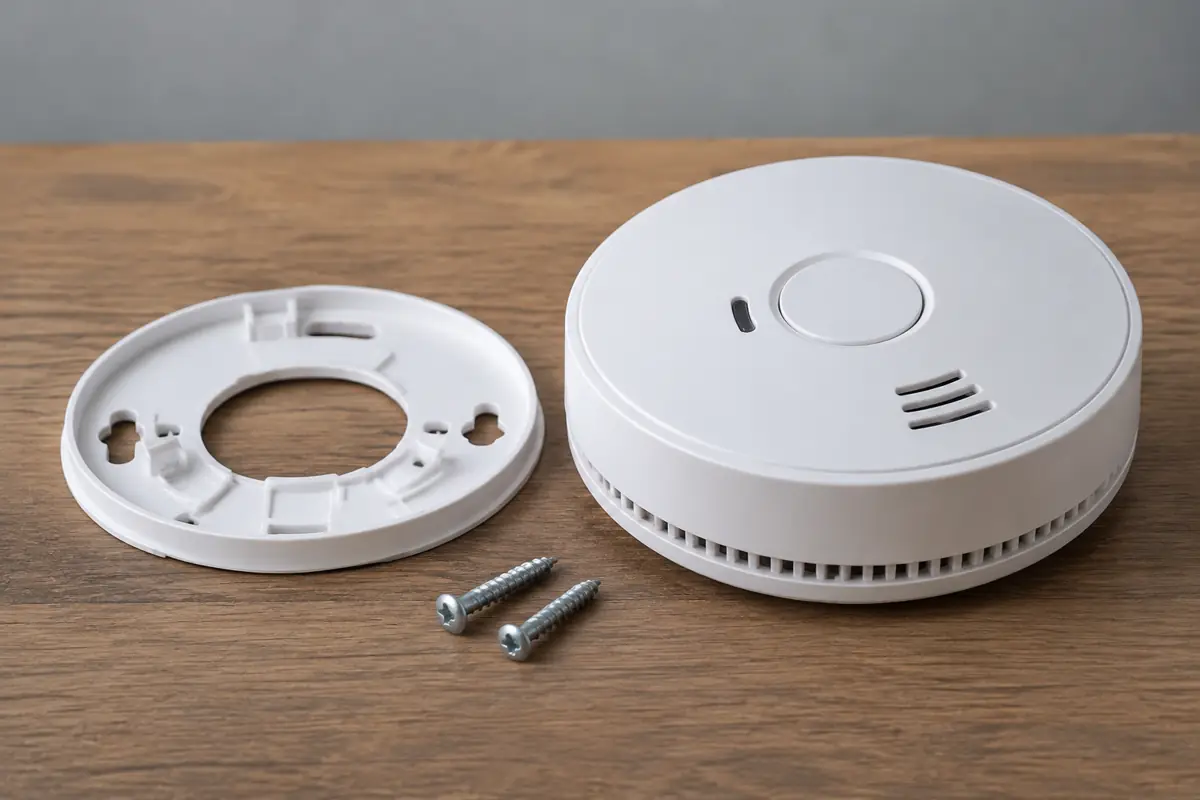
Recalled alarms are a separate issue from the statute. Our smoke alarm and extinguisher recall registry lists the units the Consumer Product Safety Commission has recalled.
Who installs, who tests: landlord and tenant duties
Most statutes that address rentals split the work the same way: the landlord installs and hands over a working alarm, the tenant tests it and replaces batteries. 32 jurisdictions put a duty on the landlord and 24 on the tenant.
Illinois is typical. The owner supplies and installs all required detectors and makes sure batteries work at move-in; the tenant tests, replaces batteries and reports problems in writing (425 ILCS 60/3). Oregon requires tenants to test landlord-provided alarms at least once every six months (ORS 90.325). Texas puts the start-of-tenancy test on the landlord and says the landlord need not supply batteries afterward (Prop. Code 92.258).
| State | Section | Duty | Deadline | Unit |
|---|---|---|---|---|
| Maryland | Public Safety 9-106(e) | landlord repairs or replaces after written notice | 5 | calendar days |
| Wisconsin | 101.145(3)(c), 101.645(3) | owner makes detector functional after written notice | 5 | days |
| Indiana | IC 22-11-18-3.5(e) | owner replaces or repairs after written notice | 7 | working days |
| Texas | Prop. Code 92.259(a)(2) | tenant remedies if not installed, inspected or repaired within 7 days of written notice | 7 | days |
| North Carolina | G.S. 42-42(a)(5) | landlord replaces or repairs after written notice | 15 | days |
| South Carolina | 5-25-1330(C) | owner repairs or replaces after written notice | 15 | days |
| Iowa | 10A.518(7) | owner or manager corrects after written notice, else tenant may repair and deduct | 30 | days |
Only states whose statute states a number of days are listed.
Source: [1][11][15][18][2] FindLaw (Internet Brands); Maryland General Assembly; Iowa Legislature; South Carolina Legislature; Public.Law
Several statutes protect landlords who follow the rules. Maine and Alaska say a landlord who did not know an alarm needed repair cannot have that failure used as evidence of negligence. Kansas makes an owner's failure to provide an alarm inadmissible in civil liability actions. Iowa lets an owner require a tenant with residency over 30 days to supply the battery.
Property and HOA managers can match these duties to the building checklist in our apartments and HOA guide. State pages for Florida, Texas, Georgia, North Carolina and New York add the local inspection rules.
Sale and transfer rules: affidavits, certificates and buyer installs
12 jurisdictions use the sale of a home to force compliance. The mechanism ranges from a one-page seller affidavit to a fire department inspection and certificate.
| State | Citation | Sale or transfer rule (summary of statute text) |
|---|---|---|
| California | Cal. Health & Safety Code 13113.7, 13113.8, 13114 | Alarm required in each dwelling intended for human occupancy. Owner tests and maintains; rental owners ensure alarms are operable at each new tenancy and fix reported deficiencies. Seller of a single-family dwelling gives the buyer a written statement of compliance (13113.8, since Jan 1, 1986). Permits over $1,000 for alterations trigger an alarm check (since Jan 1, 2014). A transfer is not invalidated by a missing seller statement; the exclusive remedy is actual damages up to $100 (13113.8(g)). |
| Connecticut | Conn. Gen. Stat. 29-292, 29-453 | At closing on a one- or two-family home or common interest unit, the transferor gives an affidavit that smoke (and CO) detection equipment is installed in or near each bedroom; affidavit text states that state law requires operable equipment in all properties. 29-292 directs the Fire Safety Code to require smoke detection in residential buildings and bars a certificate of occupancy without it. |
| Louisiana | La. R.S. 40:1581 | Existing one- or two-family dwellings at the time of sale or lease must contain at least an operable ten-year sealed lithium battery smoke detector (and a long-life sealed CO detector). |
| Maine | 25 M.R.S. 2464 | Owner installs in single-family homes completed after Jan 1, 1982 and every multifamily unit. Alarms installed or replaced within 20 feet of a kitchen or bathroom with tub or shower must be photoelectric. Landlord provides working alarms at each occupancy; tenant keeps batteries charged and tests. Buyer of a single-family home or multiapartment building acquired after Oct 31, 2009 installs within 30 days and certifies at closing. Landlord MAY use 10-year sealed alarms in single-family rentals (optional). |
| Massachusetts | M.G.L. c.148 s.26E, 26F; 527 CMR (Dec 1, 2016 rules) | All one- and two-family dwellings need detectors on each level, basement, base of stairs and outside each sleeping area; 3 to 5 unit buildings need interconnected detectors in common hallways and basements. Seller equips the home at sale or transfer (26F) and obtains a fire department certificate. Pre-1975 homes at sale: photoelectric alarms with hush feature. |
| Nebraska | Neb. Rev. Stat. 81-5,132 to 81-5,146 | Units built or remodeled since Jan 1, 1982 need detectors; older dwelling units, mobile homes and modular units must get them at remodeling or sale, as the seller's sole responsibility. In rentals the owner supplies, installs and tests; an occupant of one month or more tests, reports deficiencies in writing and replaces batteries. |
| New Jersey | N.J.S.A. 52:27D-198.1; N.J.A.C. 5:70 (10-year rule eff. Jan 1, 2019) | One- and two-household structures need an alarm on each level and outside each sleeping area (plus a portable extinguisher), enforced at sale or change of occupancy. Hardwired alarms required in homes built after Jan 1, 1977 under the construction code. |
| New York | N.Y. Exec. Law 378(5-b); Mult. Dwell. Law 68; Gen. Bus. Law 399-ccc | Every one- or two-family dwelling and condo or co-op unit must have an operable alarm audible in each bedroom; grantor gives an affidavit of compliance at conveyance. Owners of multiple dwellings install and replace at vacancy; tenants maintain (MDL 68, outside NYC). |
| Oregon | ORS 479.250 to 479.300; ORS 90.320, 90.325 | Rental dwelling units, lodging houses and hotels must have working alarms. Landlord provides a working alarm with working batteries at the start of each tenancy; tenant tests at least every six months, replaces batteries and reports problems in writing. No conveyance of a dwelling without an installed smoke alarm (479.260). |
| South Carolina | S.C. Code 5-25-1310 to 5-25-1380 | Article applies only to rental one- and two-family dwellings and manufactured housing. Owner supplies and installs detectors and gives testing instructions at move-in; tenant reports deficiencies in writing; owner repairs within 15 days. Title to a covered rental dwelling may not be conveyed unless detectors are installed and working; seller gives an affidavit at closing. |
| Vermont | 9 V.S.A. 2881, 2882 | New single-family homes and any single-family home transferred by sale or exchange must have photoelectric-only smoke detectors near bedrooms and on each level (plus CO detectors). Statute does not require owners to maintain detectors after installation. Rental and multi-unit rules sit in the fire code, not in the sections opened. |
| Washington | RCW 43.44.110 | Devices required in units occupied by non-owners since Dec 31, 1981, units built after Dec 31, 1980, and units sold on or after July 1, 2019 (seller provides at least one before the buyer occupies). Owner installs and makes the device operational before reoccupancy; tenant maintains it including batteries. Interconnection not required for repairs made solely as a condition of sale. |
Summaries of the statute text opened; check each statute for exemptions (family transfers, foreclosures, court orders).
Source: [1][2][8][9][17][18][20] FindLaw (Internet Brands); Public.Law; Louisiana State Legislature; Maine Legislature, Office of the Revisor of Statutes; Washington State Legislature; South Carolina Legislature; New York State Senate, Open Legislation
Massachusetts is the most procedural: the seller must equip the home (c.148 s.26F) and the local fire department inspects and issues a certificate of compliance, which state fire marshal guidance says will probably be required at closing. Maine reverses the duty: the buyer must install alarms within 30 days and certify at closing. California's remedy for a missing seller statement is capped at $100 in actual damages, and Louisiana and Washington say noncompliance does not stop the transfer.
States with no statewide smoke alarm statute
In 11 states we found no statute that requires smoke alarms in existing homes or rentals. That is 23.4 percent of the jurisdictions we could code.
| State | Result | What we opened | Note | URL opened |
|---|---|---|---|---|
| Alabama | no statewide statute found | none found | No statewide smoke alarm statute for existing homes or rentals found. The Alabama Fire College describes the landlord duty as the general building and housing code clause of Ala. Code 35-9A-204 plus the adopted International Fire Code; the section text does not name smoke alarms. | https://www.alabamafirecollege.org/renters-landlords-do-you-know-what-your-smoke-alarm-responsibilities-are/ |
| Arkansas | no statewide statute found | none found | No statewide smoke alarm statute for existing homes or rentals found. Ark. Code 18-17-502 (implied residential quality standards, leases after Nov 1, 2021) lists water, electricity, sewer, roof and heating but not smoke alarms. | https://codes.findlaw.com/ar/title-18-property/ar-code-sect-18-17-502/ |
| Colorado | no statewide statute found | none found | No statewide smoke alarm statute for existing homes or rentals found. C.R.S. 38-12-503 and 38-12-505 (warranty of habitability) do not mention smoke alarms; Colorado's statewide alarm statute (C.R.S. 38-45) covers carbon monoxide. | https://colorado.public.law/statutes/crs_38-12-505 |
| Hawaii | not verified | HRS chapter 132 (text not opened) | Hawaii legislature site returned HTTP 403; 2020 to 2022 bills proposed a seller smoke alarm duty in chapter 132 but enactment was not confirmed; not coded. | https://www.capitol.hawaii.gov/hrscurrent/Vol02_Ch0121-0200D/HRS0132/ |
| Kentucky | no statewide statute found | none found | No statewide smoke alarm statute for existing homes or rentals found. 2026 HB 474 would require functional detectors in all existing single-family and multifamily units at sale or lease (last action Jan 30, 2026: sent to House committee); 2024 HB 23 passed the House 79-16 and was last sent to the Senate Committee on Committees on Feb 21, 2024. | https://apps.legislature.ky.gov/record/26rs/hb474.html |
| Mississippi | no statewide statute found | none found | No statewide smoke alarm statute found. Miss. Code 89-8-23 (landlord duties) refers only to applicable building and housing codes. | https://codes.findlaw.com/ms/title-89-real-and-personal-property/ms-code-sect-89-8-23/ |
| Missouri | no statewide statute found | none found | No statewide smoke alarm statute found in RSMo chapter 441 (landlord-tenant); RSMo 320.083 concerns fire loss reporting to insurers. City codes set rental rules. | https://codes.findlaw.com/mo/title-xxix-ownership-and-conveyance-of-property/mo-rev-st-441-234/ |
| New Hampshire | not verified | RSA 153:10-a (text not opened) | Official site returned HTTP 403 to our fetcher and no mirror was reachable; not coded. | https://gc.nh.gov/rsa/html/XII/153/153-10-a.htm |
| New Mexico | no statewide statute found | none found | No statewide smoke alarm statute found. NMSA 47-8-20 (owner obligations) refers to minimum housing codes only. | https://codes.findlaw.com/nm/chapter-47-property-law/nm-st-sect-47-8-20/ |
| Oklahoma | not verified | 74 O.S. 324.11 (text not opened) | OSCN refused connections and no mirror was reachable; not coded. | https://www.oscn.net/applications/oscn/DeliverDocument.asp?CiteID=95938 |
| Pennsylvania | no statewide statute found | none found | No statewide smoke alarm statute for homes or rentals found. 35 P.S. 1223.6 requires interconnected alarms only in family child-care homes. | https://codes.findlaw.com/pa/title-35-ps-health-and-safety/pa-st-sect-35-1223-6/ |
| Rhode Island | not verified | R.I. Gen. Laws 23-28.35 (text not opened); 23-28.1-10 opened | Rhode Island legislature site refused connections. 23-28.1-10 (opened) says smoke and CO detector certificates issued by state or local authorities stay valid at least 120 days, which shows a certificate system exists, but the requirement itself was not opened; not coded. | https://codes.findlaw.com/ri/title-23-health-and-safety/ri-gen-laws-sect-23-28-1-10/ |
| South Dakota | no statewide statute found | none found | No statewide smoke alarm statute found in SDCL chapter 43-32 (residential leases). | https://sdlegislature.gov/api/Statutes/43-32-6.1.html |
| Utah | no statewide statute found | none found | No statewide smoke alarm statute found. Utah Code 57-22-4 (owner's duties under the Fit Premises Act) does not mention smoke alarms. | https://codes.findlaw.com/ut/title-57-real-estate/ut-code-sect-57-22-4/ |
| Wyoming | no statewide statute found | none found | No statewide smoke alarm statute found. Wyo. Stat. 1-21-1203 (owner's duties) does not mention smoke alarms. | https://codes.findlaw.com/wy/title-1-code-of-civil-procedure/wy-st-sect-1-21-1203/ |
No statute found means none in the code sections we opened; adopted fire codes and local ordinances still apply.
Source: [1][2][26][27][28] FindLaw (Internet Brands); Public.Law; Kentucky General Assembly; Kentucky General Assembly; Alabama Fire College
The gap is legislative, not necessarily practical. The Alabama Fire College says Alabama's adopted International Fire Code requires working smoke alarms in residential homes and that the landlord duty runs through the general building-code clause of the landlord-tenant act. Kentucky's legislature has seen repeated bills: 2024 HB 23 passed the House 79-16 and was last sent to a Senate committee in February 2024, and 2026 HB 474 sits in a House committee.
Ohio is coded as limited rather than absent: Ohio Rev. Code 3781.104 requires smoke detection only in existing apartment and condominium buildings taller than 75 feet. For fire death outcomes by state, see our separate fire deaths by state report, which this atlas does not duplicate.
How many smoke alarms a home needs under these statutes
Where a statute sets placement, the common minimum is one alarm on every level plus one outside each sleeping area. A few states also require one inside every bedroom.
- Kansas: at least one on every story of every single-family residence (K.S.A. 31-162).
- Illinois: within 15 feet of every sleeping room and on every story including basements (425 ILCS 60/3).
- Indiana: outside each sleeping area and on each additional story, including basements and habitable attics (IC 22-11-18-3.5).
- Texas rentals: one in each bedroom, one in the corridor serving bedrooms, and one on each level (Prop. Code 92.255).
- Maryland: one in each sleeping room in homes built on or after July 1, 2013, and one on each level in all homes (Public Safety 9-103, 9-104).
- Massachusetts: each level, the basement, the base of each stairway and outside each sleeping area (c.148 s.26E).
A two-story house with a basement and one sleeping area therefore needs at least three alarms under the Illinois and Indiana rules, and more under Texas rental rules if it has several bedrooms. For new construction, Maryland's statute already requires an alarm in each sleeping room plus interconnection (Public Safety 9-103); elsewhere the building code your state has adopted sets the rule.
Statute registry: smoke alarm laws in 50 states and DC
Checked quarterly and after each state legislative session. Last checked 2026-10-27. Entries are neutral records of public data; each links to its source record.
| State | Coded requirement | Date | Evidence | Source |
|---|---|---|---|---|
| Alabama | No statewide statute found; searched state code: No statewide smoke alarm statute for existing homes or rentals found. The Alabama Fire College describes the landlord duty as the general building and housing c | n/s | searched, none found | Record |
| Alaska | All dwellings incl. owner-occupied; 10-year battery N; landlord Y; tenant Y; sale rule N; score 50.0 (AS 18.70.095; AS 34.03.100(a)(7)) | n/s | statute text, mirror copy | Record |
| Arizona | Limited (new construction or certain buildings); 10-year battery N; landlord Y; tenant Y; sale rule N; score 25.0 (A.R.S. 36-1637) | n/s | statute text, official site | Record |
| Arkansas | No statewide statute found; searched state code: No statewide smoke alarm statute for existing homes or rentals found. Ark. Code 18-17-502 (implied residential quality standards, leases after Nov 1, 2021) list | n/s | searched, none found | Record |
| California | All dwellings incl. owner-occupied; 10-year battery Y 2014; landlord Y; tenant N; sale rule Y; score 70.0 (Cal. Health & Safety Code 13113.7, 13113.8, 13114) | 2014 | statute text, mirror copy | Record |
| Colorado | No statewide statute found; searched state code: No statewide smoke alarm statute for existing homes or rentals found. C.R.S. 38-12-503 and 38-12-505 (warranty of habitability) do not mention smoke alarms; Col | n/s | searched, none found | Record |
| Connecticut | Rentals plus sale or other trigger; 10-year battery N; landlord N; tenant N; sale rule Y; score 25.0 (Conn. Gen. Stat. 29-292, 29-453) | n/s | statute text, mirror copy | Record |
| Delaware | All dwellings incl. owner-occupied; 10-year battery N; landlord Y; tenant Y; sale rule N; score 65.0 (16 Del. C. 6631 to 6637) | 2010 | statute text, official site | Record |
| District of Columbia | All dwellings incl. owner-occupied; 10-year battery N; landlord Y; tenant N; sale rule N; score 40.0 (D.C. Code 6-751.02) | n/s | statute text, mirror copy | Record |
| Florida | Rental housing only; 10-year battery Y 2014; landlord Y; tenant N; sale rule N; score 30.0 (Fla. Stat. 553.883; 83.51(2)(b)) | 2025 | statute text, official site | Record |
Show all 51 records
| State | Coded requirement | Date | Evidence | Source |
|---|---|---|---|---|
| Georgia | All dwellings incl. owner-occupied; 10-year battery N; landlord N; tenant Y; sale rule N; score 50.0 (O.C.G.A. 25-2-40) | 2001 | statute text, mirror copy | Record |
| Hawaii | Not verified: HRS chapter 132 (text not opened) | n/s | not verified | Record |
| Idaho | Rental housing only; 10-year battery N; landlord Y; tenant Y; sale rule N; score 40.0 (Idaho Code 6-320(a)(6)) | n/s | statute text, mirror copy | Record |
| Illinois | All dwellings incl. owner-occupied; 10-year battery Y; landlord Y; tenant Y; sale rule N; score 60.0 (425 ILCS 60/3 (Smoke Detector Act)) | n/s | statute text, mirror copy | Record |
| Indiana | All dwellings incl. owner-occupied; 10-year battery N; landlord Y; tenant Y; sale rule N; score 50.0 (IC 22-11-18-3.5) | n/s | statute text, mirror copy | Record |
| Iowa | All dwellings incl. owner-occupied; 10-year battery N; landlord Y; tenant Y; sale rule N; score 60.0 (Iowa Code 10A.518 (formerly 100.18)) | 2023 | statute text, official site | Record |
| Kansas | All dwellings incl. owner-occupied; 10-year battery N; landlord Y; tenant Y; sale rule N; score 60.0 (K.S.A. 31-160 to 31-164) | 1998 | statute text, official site | Record |
| Kentucky | No statewide statute found; searched state code: No statewide smoke alarm statute for existing homes or rentals found. 2026 HB 474 would require functional detectors in all existing single-family and multifami | n/s | searched, none found | Record |
| Louisiana | Rentals plus sale or other trigger; 10-year battery Y; landlord Y; tenant N; sale rule Y; score 50.0 (La. R.S. 40:1581) | 2022 | statute text, official site | Record |
| Maine | Rentals plus sale or other trigger; 10-year battery N; landlord Y; tenant Y; sale rule Y; score 70.0 (25 M.R.S. 2464) | 2009 | statute text, official site | Record |
| Maryland | All dwellings incl. owner-occupied; 10-year battery Y 2018; landlord Y; tenant Y; sale rule N; score 70.0 (Md. Code, Public Safety 9-101 to 9-109) | 2025 | statute text, official site | Record |
| Massachusetts | All dwellings incl. owner-occupied; 10-year battery Y 2016; landlord Y; tenant N; sale rule Y; score 75.0 (M.G.L. c.148 s.26E, 26F; 527 CMR (Dec 1, 2016 rules)) | 2016 | statute text, mirror copy | Record |
| Michigan | All dwellings incl. owner-occupied; 10-year battery N; landlord Y; tenant N; sale rule N; score 50.0 (MCL 125.1504c; MCL 125.482a) | n/s | statute text, mirror copy | Record |
| Minnesota | All dwellings incl. owner-occupied; 10-year battery N; landlord Y; tenant Y; sale rule N; score 60.0 (Minn. Stat. 299F.362) | 2023 | statute text, official site | Record |
| Mississippi | No statewide statute found; searched state code: No statewide smoke alarm statute found. Miss. Code 89-8-23 (landlord duties) refers only to applicable building and housing codes. | n/s | searched, none found | Record |
| Missouri | No statewide statute found; searched state code: No statewide smoke alarm statute found in RSMo chapter 441 (landlord-tenant); RSMo 320.083 concerns fire loss reporting to insurers. City codes set rental rules | n/s | searched, none found | Record |
| Montana | Rental housing only; 10-year battery N; landlord Y; tenant Y; sale rule N; score 30.0 (Mont. Code Ann. 70-24-303(1)(g)) | 2021 | statute text, official site | Record |
| Nebraska | Rentals plus sale or other trigger; 10-year battery N; landlord Y; tenant Y; sale rule Y; score 50.0 (Neb. Rev. Stat. 81-5,132 to 81-5,146) | n/s | statute text, mirror copy | Record |
| Nevada | Limited (new construction or certain buildings); 10-year battery N; landlord Y; tenant N; sale rule N; score 15.0 (NRS 477.140) | n/s | statute text, mirror copy | Record |
| New Hampshire | Not verified: RSA 153:10-a (text not opened) | n/s | not verified | Record |
| New Jersey | Rentals plus sale or other trigger; 10-year battery Y 2019; landlord Y; tenant N; sale rule Y; score 60.0 (N.J.S.A. 52:27D-198.1; N.J.A.C. 5:70 (10-year rule eff. Jan 1, 2019)) | 2019 | statute text, mirror copy | Record |
| New Mexico | No statewide statute found; searched state code: No statewide smoke alarm statute found. NMSA 47-8-20 (owner obligations) refers to minimum housing codes only. | n/s | searched, none found | Record |
| New York | All dwellings incl. owner-occupied; 10-year battery Y 2019; landlord Y; tenant Y; sale rule Y; score 70.0 (N.Y. Exec. Law 378(5-b); Mult. Dwell. Law 68; Gen. Bus. Law 399-ccc) | 2026 | statute text, official site | Record |
| North Carolina | Rental housing only; 10-year battery Y 2013; landlord Y; tenant Y; sale rule N; score 40.0 (N.C. Gen. Stat. 42-42(a)(5), (5a)) | n/s | statute text, mirror copy | Record |
| North Dakota | Rental housing only; 10-year battery N; landlord Y; tenant Y; sale rule N; score 40.0 (N.D.C.C. 23-13-15) | n/s | statute text, official site | Record |
| Ohio | Limited (new construction or certain buildings); 10-year battery N; landlord P; tenant N; sale rule N; score 10.0 (Ohio Rev. Code 3781.104) | n/s | statute text, mirror copy | Record |
| Oklahoma | Not verified: 74 O.S. 324.11 (text not opened) | n/s | not verified | Record |
| Oregon | Rentals plus sale or other trigger; 10-year battery Y 1997; landlord Y; tenant Y; sale rule Y; score 60.0 (ORS 479.250 to 479.300; ORS 90.320, 90.325) | 2023 | statute text, mirror copy | Record |
| Pennsylvania | No statewide statute found; searched state code: No statewide smoke alarm statute for homes or rentals found. 35 P.S. 1223.6 requires interconnected alarms only in family child-care homes. | n/s | searched, none found | Record |
| Rhode Island | Not verified: R.I. Gen. Laws 23-28.35 (text not opened); 23-28.1-10 opened | n/s | not verified | Record |
| South Carolina | Rental housing only; 10-year battery N; landlord Y; tenant Y; sale rule Y; score 50.0 (S.C. Code 5-25-1310 to 5-25-1380) | 1994 | statute text, official site | Record |
| South Dakota | No statewide statute found; searched state code: No statewide smoke alarm statute found in SDCL chapter 43-32 (residential leases). | n/s | searched, none found | Record |
| Tennessee | Rental housing only; 10-year battery N; landlord Y; tenant Y; sale rule N; score 40.0 (Tenn. Code Ann. 68-102-151) | n/s | statute text, mirror copy | Record |
| Texas | Rental housing only; 10-year battery N; landlord Y; tenant N; sale rule N; score 30.0 (Tex. Prop. Code 92.251 to 92.264) | 2011 | statute text, mirror copy | Record |
| Utah | No statewide statute found; searched state code: No statewide smoke alarm statute found. Utah Code 57-22-4 (owner's duties under the Fit Premises Act) does not mention smoke alarms. | n/s | searched, none found | Record |
| Vermont | Rentals plus sale or other trigger; 10-year battery N; landlord N; tenant N; sale rule Y; score 30.0 (9 V.S.A. 2881, 2882) | n/s | statute text, mirror copy | Record |
| Virginia | Rental housing only; 10-year battery N; landlord Y; tenant Y; sale rule N; score 40.0 (Va. Code 55.1-1220(A)(8); 36-99.5) | 2019 | statute text, official site | Record |
| Washington | Rentals plus sale or other trigger; 10-year battery N; landlord Y; tenant Y; sale rule Y; score 60.0 (RCW 43.44.110) | 2019 | statute text, official site | Record |
| West Virginia | All dwellings incl. owner-occupied; 10-year battery N; landlord Y; tenant Y; sale rule N; score 60.0 (W. Va. Code 15A-10-12 (formerly 29-3-16a)) | n/s | statute text, mirror copy | Record |
| Wisconsin | All dwellings incl. owner-occupied; 10-year battery N; landlord Y; tenant Y; sale rule N; score 60.0 (Wis. Stat. 101.145, 101.645) | n/s | statute text, mirror copy | Record |
| Wyoming | No statewide statute found; searched state code: No statewide smoke alarm statute found. Wyo. Stat. 1-21-1203 (owner's duties) does not mention smoke alarms. | n/s | searched, none found | Record |
State-by-state findings
- 11 of 47 coded jurisdictions have no statewide smoke alarm statute for existing homes or rentals: Alabama, Arkansas, Colorado, Kentucky, Mississippi, Missouri, New Mexico, Pennsylvania, South Dakota, Utah and Wyoming (statutes checked 2026-10-27).[1][2][26][28]
- 16 jurisdictions require smoke alarms in every existing dwelling including owner-occupied homes, among them Alaska, California, Delaware, Illinois, Kansas, Maryland and Minnesota (2026).[1][2][6][10][13][16]
- Maryland required every existing residential occupancy to have alarms on each level by January 1, 2018, and battery units must be sealed long-life alarms with a hush button (Public Safety 9-104, 2026 text).[10]
- California has required battery-only alarms approved by the State Fire Marshal to carry a nonreplaceable battery lasting at least 10 years since July 1, 2014 (H&S 13114).[2]
- North Carolina landlords installing or replacing an alarm after December 31, 2012 must use a tamper-resistant 10-year lithium battery alarm unless the unit has hardwired alarms with battery backup (G.S. 42-42).[1]
- New York bans the sale of battery-only smoke alarms with removable batteries; the current text of General Business Law 399-ccc is dated April 5, 2019.[21]
- New Jersey requires 10-year sealed battery alarms in homes built before January 1, 1977, checked before sale or change of occupancy, under a rule effective January 1, 2019.[24]
- Louisiana requires an operable ten-year sealed lithium battery smoke detector in existing one- and two-family dwellings at the time of sale or lease (R.S. 40:1581, amended 2022).[8]
- 12 jurisdictions attach smoke alarm duties to the sale of a home, through a seller affidavit (New York, Connecticut, South Carolina), a fire department certificate (Massachusetts) or a buyer install-and-certify rule (Maine).[1][9][18][20][25]
- Washington has required at least one smoke detection device in every dwelling unit sold since July 1, 2019, with fines up to $200 and a $5,000 owner fine if a later fire injures a tenant (RCW 43.44.110).[17]
- Statutory repair deadlines after a tenant's written notice range from 5 days in Maryland and Wisconsin to 30 days in Iowa; the median of 7 stated deadlines is 7 days.[11][15][18][1]
- Only Maine, Vermont and Massachusetts require photoelectric alarms: Maine within 20 feet of kitchens and bathrooms, Vermont in all new and sold single-family homes, Massachusetts in pre-1975 homes at sale.[9][1][25]
- Kansas caps the fine for failing to place or maintain a smoke detector at $25, while Delaware fines owners or tenants $100 to $500 per offense (2026 statute text).[7][16]
Rankings and ratios we derived
Smoke alarm law coverage score
Formula10 x (2*E + R + T + Ph + I + L + Tn + S + Pen), each term 1 for Yes, 0.5 for Partial (E: 2 for Yes, 1 for Partial)
Inputs: registry.csv coded fields; fact sheet rows for each state coding (fact sheet rows)
Result: Mean 37.1, median 40.0, maximum 75.0 (Massachusetts); 11 states score 0
The score rewards statutes that reach owner-occupied homes and spell out duties. It is a measure of statutory reach, not of fire safety outcomes.
Limitations: Equal weights are a judgment call; adopted fire codes and local ordinances are not scored; mirror copies may lag official text.
Requirement counts
Formulacount of coded jurisdictions with each field = Yes
Inputs: t2.csv; derived_metrics d8, d10, d13 to d17, d20 (fact sheet rows)
Result: Landlord duty 32, rentals 31, tenant duty 24, penalty 19, existing homes 16, sale rule 12, 10-year battery 10, photoelectric 3, interconnection in existing homes 0
Statutes regulate the landlord relationship far more often than the hardware itself.
Limitations: Denominator is 47 coded jurisdictions; 4 not verified.
Ten-year sealed battery timeline
Formulacount of 10-year rules by stated effective year, cumulative
Inputs: t3.csv, t7.csv (fact sheet rows)
Result: 1 rule by 1997, 2 by 2013, 4 by 2014, 5 by 2016, 6 by 2018, 8 by 2019; Illinois and Louisiana undated
No new dated statewide 10-year rule appeared in the statutes we opened after 2019.
Limitations: Effective-year basis varies: statute text, agency notice, enacting act or revision date.
Share of jurisdictions with no statewide statute
Formulad2 / d18 x 100
Inputs: derived_metrics d2, d18 (fact sheet rows)
Result: 23.4 percent (11 of 47)
Roughly one in four verifiable jurisdictions leaves smoke alarms entirely to fire codes and local law.
Limitations: A statute outside the sections searched could exist.
Median repair deadline after tenant notice
Formulamedian of stated deadlines in t5
Inputs: t5.csv (fact sheet rows)
Result: 7 days across 7 states (5 to 30 days)
Where a deadline exists it is usually one week or less.
Limitations: Mixes calendar and working days; most statutes set no number.
Executive summary
- We coded 47 of 51 jurisdictions from statute text; 4 (New Hampshire, Oklahoma, Rhode Island, Hawaii) could not be verified because their code sites refused our requests.
- 36 jurisdictions have a statewide smoke alarm statute; 11 have none we could find, so smoke alarm rules there come from adopted fire codes and local ordinances.
- Only 16 statutes cover every existing home including owner-occupied houses; 8 more reach owner-occupied homes only at sale, remodel or another trigger.
- 31 coded jurisdictions cover rental housing in full and 32 assign the landlord a duty to install or test.
- 10 jurisdictions require 10-year sealed batteries in some form, 12 attach a rule to the sale of a home and 3 require photoelectric alarms.
- No statute we opened requires interconnected alarms in existing one- and two-family homes; interconnection is required only in newer construction or multifamily common areas.
- The mean coverage score is 37.1 out of 100 (median 40.0); among states that have a statute the mean is 48.5.
Questions people ask
how many fire alarms do i need
Under the statutes that set placement, plan on one smoke alarm on every level, including the basement, plus one outside each sleeping area: Illinois and Indiana use this minimum, and Kansas requires one on every story. Texas rental rules add one in each bedroom, and Maryland requires one in each sleeping room in homes built since July 1, 2013.
smoke alarm requirements by state
36 jurisdictions have a statewide statute and 11 have none we could find. The registry table lists each statute, whether it covers owner-occupied homes or rentals, and its battery, photoelectric, sale and penalty rules.
10 year smoke detector law
10 jurisdictions require 10-year sealed batteries in some form: California, Florida, Illinois, Louisiana, Maryland, Massachusetts, New Jersey, New York, North Carolina and Oregon. Triggers differ, from retail sales bans to rules at sale or at replacement.
Download the data
Every table in this report is available as a CSV under CC BY 4.0. The fact sheet lists each value with its source URL and access date.
- derived_metrics.csv (CSV)
- fact_sheet.csv (CSV)
- Statute registry: smoke alarm laws in 50 states and DC (CSV)
- Smoke alarm statutes coded for 50 states and DC (CSV)
- How many coded jurisdictions have each requirement (CSV)
- Ten-year sealed battery rules found in statute or state fire rules (CSV)
- Point-of-sale and transfer rules (CSV)
- Statutory repair deadlines after a tenant's written notice (CSV)
- Jurisdictions with no statewide statute found, or not verified (CSV)
- Ten-year sealed battery rules by effective year (CSV)
For journalists and researchers
If you cite only a few, cite these
- 11 of 47 verifiable jurisdictions have no statewide smoke alarm statute (2026).[1][2]
- 10 jurisdictions require 10-year sealed batteries; 16 cover every existing home (2026).[2][10][21]
- Mean smoke alarm law coverage score: 37.1 out of 100 (2026).[1]
Most quotable statistics
- 11 U.S. states have no statewide smoke alarm statute for existing homes or rentals (Fire Life and Safety statute coding, October 2026).[1][2]
- Only 16 of 47 verifiable jurisdictions require smoke alarms in every existing home, owner-occupied houses included (2026).[1][10][13]
- 10 jurisdictions require 10-year sealed battery smoke alarms in some form, and no dated statewide rule took effect after 2019 in the statutes we opened.[2][21][24]
- No statute we opened requires interconnected smoke alarms in existing one- and two-family homes (2026).[1][10]
- 12 jurisdictions tie smoke alarm compliance to the sale of a home, from seller affidavits to fire department certificates (2026).[1][20][25]
- Massachusetts has the highest smoke alarm law coverage score, 75.0 out of 100, in our 2026 coding.[1][25]
Press summary
A Fire Life and Safety review of smoke alarm statutes in all 50 states and the District of Columbia, opened on October 27, 2026, finds that 11 of 47 verifiable jurisdictions have no statewide smoke alarm statute for existing homes or rentals. Only 16 statutes reach every existing home including owner-occupied houses; most others regulate rental housing or act only when a home is sold. 10 jurisdictions require 10-year sealed batteries in some form, with dated rules taking effect from 1997 in Oregon to 2019 in New Jersey and New York. 12 jurisdictions tie compliance to a home sale. None requires interconnected alarms in existing one- and two-family homes. On a 100-point coverage score built from nine coded questions, Massachusetts ranks highest at 75.0 and the mean is 37.1. Four states could not be verified because their code websites refused access. The coded registry, statute URLs and raw copies are published under CC BY 4.0.
Suggested headlines
- 11 States Have No Statewide Smoke Alarm Law, Statute Review Finds
- Only 16 States Require Smoke Alarms in Every Existing Home
- Ten-Year Sealed Battery Smoke Alarm Rules Now Cover 10 Jurisdictions
- No State Requires Interconnected Smoke Alarms in Existing Homes
- Massachusetts Tops a New Index of State Smoke Alarm Laws
How to cite this report
Fire Life and Safety. (2026). Smoke Detector Laws by State: What Each Statute Requires (2026). Retrieved from https://firelifeandsafety.com/reports/smoke-detector-laws-by-state/
Reuse license
Data and tables are licensed CC BY 4.0. Attribution: “Source: Fire Life and Safety, Smoke Detector Laws by State: What Each Statute Requires (2026)” with a link to this page.
Frequently asked questions
Which states have no statewide smoke detector law?
We found no statewide statute for existing homes or rentals in Alabama, Arkansas, Colorado, Kentucky, Mississippi, Missouri, New Mexico, Pennsylvania, South Dakota, Utah and Wyoming (checked 2026-10-27). Adopted fire codes and city ordinances may still apply.
Which states require 10-year sealed battery smoke alarms?
10 jurisdictions: California (since July 1, 2014), Florida, Illinois, Louisiana, Maryland (by January 1, 2018), Massachusetts (December 1, 2016 rules), New Jersey (January 1, 2019), New York, North Carolina (landlords, after December 31, 2012) and Oregon.
Are landlords required to install smoke detectors?
In 32 of 47 coded jurisdictions the statute puts the installation or start-of-tenancy test on the landlord or owner. Texas, Florida, North Carolina, Tennessee and Virginia regulate rentals only.
Who replaces smoke detector batteries in a rental?
Usually the tenant, after a working battery at move-in. Illinois, Oregon, Washington and Delaware put battery replacement on the tenant; Texas says the landlord need not supply batteries after move-in; North Carolina exempts 10-year sealed units.
Do I need a smoke alarm certificate to sell a house?
In Massachusetts the local fire department issues a certificate of compliance before closing. New York, Connecticut and South Carolina require a seller affidavit, California a written statement, and Maine a buyer certification.
Do smoke alarms have to be interconnected in an existing home?
No statute we opened requires interconnection in existing one- and two-family homes. Maryland requires it in units built on or after January 1, 1989, and Illinois in units built or remodeled after December 31, 1987.
Which states require photoelectric smoke alarms?
Maine (alarms within 20 feet of a kitchen or bathroom with tub or shower), Vermont (new and sold single-family homes) and Massachusetts (pre-1975 homes at sale under the December 1, 2016 rules).
What is the penalty for not having a smoke detector?
Where stated: up to $25 in Kansas and Georgia, $100 to $500 per offense in Delaware, up to $500 in Maine, up to $200 in California and Washington, and a Class A misdemeanor in Tennessee. Wisconsin allows forfeitures up to $50 per day.
How fast must a landlord fix a broken smoke alarm?
Where the statute sets a deadline: 5 days in Maryland and Wisconsin, 7 working days in Indiana, 15 days in North Carolina and South Carolina, 30 days in Iowa. The median is 7 days.
Does Texas require smoke alarms in every bedroom?
For rentals, yes: Texas Property Code 92.255 requires at least one alarm in each separate bedroom, one in the corridor serving bedrooms and one on each level. Units occupied before September 1, 2011 may use battery alarms that are not interconnected.
Methodology
Scope. We looked for a statewide statute or state fire rule on smoke alarms in homes and rental housing for each of the 50 states and DC. Carbon monoxide rules are mentioned only where the same statute covers both. Fire alarm contractor licensing and commercial fire alarm systems are out of scope.
Sources. Every coded row cites the statute page we opened on 2026-10-27 and a raw copy is saved in raw/statutes. We used official legislature sites where they responded (Arizona, Florida, Kansas, Louisiana, Maine, Maryland, Minnesota, Montana, Iowa, Delaware, Washington, South Carolina, North Dakota, New York, Virginia). Where official sites blocked or timed out, we used FindLaw or Public.Law copies of the statute text and recorded the currency date shown on the page. NFPA and USFA summaries and manufacturer pages were used only as pointers.
Coding. Each jurisdiction was coded Yes, Partial or No on nine fields: existing owner-occupied homes, rental housing, 10-year sealed battery rule, photoelectric rule, interconnection in existing homes, landlord duty, tenant duty, point-of-sale rule and stated penalty. Partial means the rule applies only to a subset (for example multifamily common areas, or homes at sale). 'No statewide statute found' means the code sections we opened, typically the fire safety chapter and the landlord-tenant act, contain no smoke alarm requirement; adopted fire codes and local ordinances are not coded.
Verification gaps. New Hampshire (RSA 153:10-a), Oklahoma (74 O.S. 324.11), Rhode Island (R.I. Gen. Laws 23-28.35) and Hawaii (HRS chapter 132) could not be opened: their sites returned HTTP 403 or refused connections, and no mirror was reachable. They are shown as not verified and excluded from counts and scores. Illinois and Louisiana 10-year rules are in force but the copies opened do not show an effective year.
Derived metrics. The coverage score is 10 times the sum of the nine coded fields, with existing owner-occupied coverage weighted double. Counts, shares, the timeline and the median repair deadline are computed by scripts/build_data.py from scripts/coding.jsonl and written to derived_metrics.csv and the table CSVs.
Conflicts. Where manufacturer or blog summaries disagreed with statute text (for example, pages saying Arizona requires alarms in all dwellings), we followed the statute text and noted the gap in pages to beat. Where a mirror copy and a session-law history disagreed on dates, we used the date printed in the statute or agency notice.
Keywords. 'Smoke detector laws by state' and '10 year smoke detector law' do not appear in our Ahrefs exports; we used the plainest searcher phrasing. 'How many fire alarms do i need' does appear and is answered in the questions section.
Not legal advice. This report summarizes statutes as published on the date opened. It is not legal advice. Requirements depend on the fire and building code edition your state and local authority have adopted, and on local ordinances; confirm with your authority having jurisdiction or an attorney. Last updated 2026-10-27.
This report presents published data with its limitations. It is not legal, engineering, financial or investment advice. Requirements depend on the code edition your state and local fire marshal have adopted; confirm with your authority having jurisdiction.
Sources, ranked by quality
Tier 1: primary and official sources (25)
- [3] Arizona State Legislature. A.R.S. 36-1637 Smoke detectors; residential housing. Current statute. Accessed 2026-10-27.
- [4] Florida Legislature. Fla. Stat. 553.883 Smoke alarms in one-family and two-family dwellings and townhomes. 2026 Florida Statutes. Accessed 2026-10-27.
- [5] Florida Legislature. Fla. Stat. 83.51 Landlord's obligation to maintain premises. 2026 Florida Statutes. Accessed 2026-10-27.
- [6] Kansas Office of Revisor of Statutes. K.S.A. 31-162 Installation of smoke detectors required. Current statute. Accessed 2026-10-27.
- [7] Kansas Office of Revisor of Statutes. K.S.A. 31-163 Violations; penalties. Current statute. Accessed 2026-10-27.
- [8] Louisiana State Legislature. La. R.S. 40:1581 Smoke detectors; carbon monoxide detectors; one- or two-family dwellings. Current statute (Acts 2022, No. 458). Accessed 2026-10-27.
- [9] Maine Legislature, Office of the Revisor of Statutes. 25 M.R.S. 2464 Smoke detectors. Extracted 10/05/2026. Accessed 2026-10-27.
- [10] Maryland General Assembly. Md. Code, Public Safety 9-104. Current statute. Accessed 2026-10-27.
- [11] Maryland General Assembly. Md. Code, Public Safety 9-106. Current statute. Accessed 2026-10-27.
- [12] Maryland General Assembly. Md. Code, Public Safety 9-102. Current statute. Accessed 2026-10-27.
- [13] Minnesota Office of the Revisor of Statutes. Minn. Stat. 299F.362 Smoke alarm; installation; rules; penalty. Amended 2023. Accessed 2026-10-27.
- [14] Montana Legislature. Mont. Code Ann. 70-24-303. MCA 2025. Accessed 2026-10-27.
- [15] Iowa Legislature. Iowa Code 10A.518 Smoke detectors. Iowa Code 2026. Accessed 2026-10-27.
- [16] Delaware General Assembly. 16 Del. C. ch. 66, subch. IV Smoke Detectors (6631 to 6637). Current code. Accessed 2026-10-27.
- [17] Washington State Legislature. RCW 43.44.110 Smoke detection devices in dwelling units. Amended 2019. Accessed 2026-10-27.
- [18] South Carolina Legislature. S.C. Code Title 5, Chapter 25, Article 11 Smoke Detectors. Current code. Accessed 2026-10-27.
- [19] North Dakota Legislative Branch. N.D.C.C. 23-13-15 Smoke detection systems for residential rental property. Current Century Code. Accessed 2026-10-27.
- [20] New York State Senate, Open Legislation. N.Y. Executive Law 378 Standards for the uniform fire prevention and building code. Revision dated 2026-01-02. Accessed 2026-10-27.
- [21] New York State Senate, Open Legislation. N.Y. General Business Law 399-ccc Smoke detecting devices. Revision dated 2019-04-05. Accessed 2026-10-27.
- [22] Virginia General Assembly (LIS). Va. Code 55.1-1220 Landlord to maintain fit premises. Current code. Accessed 2026-10-27.
- [23] Virginia General Assembly (LIS). Va. Code 36-99.5 Smoke alarms for persons who are deaf or hard of hearing. Current code. Accessed 2026-10-27.
- [24] New Jersey Department of Community Affairs. New Jersey Division of Fire Safety adopts regulation requiring 10-year sealed battery smoke alarms. February 2019 release; rule effective January 1, 2019. Accessed 2026-10-27.
- [25] Massachusetts Department of Fire Services. FireFactors: Smoke Alarm Requirements When Selling a One- or Two-Family Residence as of December 2016. Rules effective December 1, 2016. Accessed 2026-10-27.
- [26] Kentucky General Assembly. Kentucky 2026 Regular Session, House Bill 474 (An act relating to residential safety). Last action January 30, 2026. Accessed 2026-10-27.
- [27] Kentucky General Assembly. Kentucky 2024 Regular Session, House Bill 23 (An act relating to smoke alarms). Last action February 21, 2024. Accessed 2026-10-27.
Tier 2: trade bodies, market research, company data (3)
- [1] FindLaw (Internet Brands). FindLaw Codes: state statute text (Alaska, Connecticut, D.C., Georgia, Idaho, Illinois, Indiana, Massachusetts, Michigan, Nebraska, New Jersey, New York MDL 68, North Carolina, Ohio, Tennessee, Vermont, West Virginia, Wisconsin and others; per-state URLs in registry.csv). Code text current as of dates shown per page, 2023 to 2026. Accessed 2026-10-27.
- [2] Public.Law. Public.Law statute mirrors (California H&S 13113.7, 13113.8, 13114; Oregon ORS 479 and 90; Nevada NRS 477.140; Texas Prop. Code 92; Colorado C.R.S. 38-12). Code text as published 2025 to 2026. Accessed 2026-10-27.
- [28] Alabama Fire College. Renters and landlords: do you know what your smoke alarm responsibilities are?. Undated guidance. Accessed 2026-10-27.