Fire Extinguisher Recalls and Smoke Alarm Recalls: 100 CPSC Records, 1977 to 2026
- Primary data
- CPSC Recalls API (saferproducts.gov Recall web service), full pull
- Data period
- Recall dates 1977-01-03 to 2026-06-25 (API holds 1973-06-08 to 2026-10-22)
- Latest release used
- 2026-10-22
- Next release
- CPSC updates recall data weekly
- Geography
- United States (Canada and Mexico figures shown separately)
- Sources
- 18 (18 Tier 1)
The CPSC recall database holds 100 records for fire extinguishers, smoke and CO alarms and other fire safety products from 1977 to 2026, covering about 108.0 million U.S. units. Fire extinguisher recalls make up 10 records and 43.95 million units. In 50 records, the product can fail to detect or alert to fire.
Registry: CPSC fire safety product recall records, 1977 to 2026
Checked monthly against the CPSC Recalls API (CPSC updates weekly). Last checked 2026-10-26. Entries are neutral records of public data; each links to its source record.
| Firm or brand (as named by CPSC) | Product and hazard (U.S. units) | Date | Evidence | Source |
|---|---|---|---|---|
| Bernzomatic | Bernzomatic Foam Fire Extinguishers: rupture, explosion or valve/nozzle separation (units not stated; Renewed recall notice) | 1977-01-03 | agency record | Record |
| Master Lock | Master battery-operated smoke alarms: fails to detect or alert to fire (32,000 U.S. units) | 1977-07-29 | agency record | Record |
| BRK Electronics | BRK AC-powered smoke detectors: fails to detect or alert to fire (units not stated; Second recall notice) | 1977-08-01 | agency record | Record |
| Pittway Corp. (BRK Electronics) | AMF AC-powered smoke detectors: fails to detect or alert to fire (115,000 U.S. units; Civil penalty settlement tied to recall) | 1978-11-06 | agency record | Record |
| Chloride Pyrotector | Archer battery-operated photoelectric smoke detectors: fails to detect or alert to fire (185,000 U.S. units) | 1981-08-03 | agency record | Record |
| Honeywell | Honeywell smoke detectors: fails to detect or alert to fire (770,000 U.S. units) | 1983-05-24 | agency record | Record |
| Electro Signal Lab (ESL) | ADT Smoke Alarms: fails to detect or alert to fire (500,000 U.S. units) | 1983-11-01 | agency record | Record |
| Badger-Powhatan (American LaFrance and BECO brands) | American LaFrance fire extinguishers: rupture, explosion or valve/nozzle separation (84,000 U.S. units) | 1991-05-30 | agency record | Record |
| BRK Electronics (BRK, First Alert, Family Gard) | BRK Electronics wired-in (AC-powered) smoke detectors: fails to detect or alert to fire (3,500,000 U.S. units) | 1992-09-04 | agency record | Record |
| Seatt Corporation (six brands) | Black & Decker Slim Line battery operated smoke detectors: fails to detect or alert to fire (120,000 U.S. units) | 1992-12-18 | agency record | Record |
Show all 100 records
| Firm or brand (as named by CPSC) | Product and hazard (U.S. units) | Date | Evidence | Source |
|---|---|---|---|---|
| Revco Products (Gas Sniffer) | Gas Sniffer carbon monoxide detectors: fails to detect or alert to carbon monoxide (10,043 U.S. units) | 1995-11-22 | agency record | Record |
| Sentrol (Moose) | Moose security control panels used with smoke detectors: trouble signal or monitoring link failure (5,000 U.S. units) | 1995-12-21 | agency record | Record |
| Sinostone (CPSC warning) | Sinostone Accusniffer SC-01 carbon monoxide (CO) detectors: fails to detect or alert to carbon monoxide (18,700 U.S. units; CPSC warning) | 1996-01-19 | agency record | Record |
| Stanley Solar & Stove (Home Gas Sentry; CPSC warning) | : fails to detect or alert to carbon monoxide (6,000 U.S. units; CPSC warning) | 1996-08-06 | agency record | Record |
| Chemetronics Caribe (Stargard) | Stargard AT dual contact heat detectors: fails to detect or alert to fire (12,000 U.S. units) | 1997-07-28 | agency record | Record |
| Central Sprinkler (Omega) | Omega brand fire sprinklers: fails to discharge, activate or supply water (8,400,000 U.S. units) | 1998-10-14 | agency record | Record |
| Kidde Safety (Nighthawk, Lifesaver) | Lifesavers carbon monoxide alarms: fails to detect or alert to carbon monoxide (1,000,000 U.S. units) | 1999-03-19 | agency record | Record |
| Interstate Engineering | MasterGuard heat detectors: fails to detect or alert to fire (40,000 U.S. units) | 1999-04-08 | agency record | Record |
| Mealane (Star) | Star fire sprinklers: fails to discharge, activate or supply water (1,000,000 U.S. units) | 1999-08-04 | agency record | Record |
| The Colbra Group and distributors (FIRE CAP) | FIRE CAP fire and smoke suppressant: product can intensify a fire (136,000 U.S. units) | 2000-02-08 | agency record | Record |
| 99 Cents Only Stores (Firestopper brand) | "Firestopper" fire extinguishers: rupture, explosion or valve/nozzle separation (26,000 U.S. units) | 2000-05-18 | agency record | Record |
| Universal Security Instruments | Smoke alarms: fails to detect or alert to fire; also a capacitor can burn out, releasing smoke and melting the cover (34,000 U.S. units) | 2000-05-25 | agency record | Record |
| BRK Brands (First Alert) | First Alert fire extinguishers: fails to discharge, activate or supply water (600,000 U.S. units) | 2000-09-27 | agency record | Record |
| Lithonia Lighting | ELM and ELM2 emergency lights: device overheats (fire hazard) (1,200,000 U.S. units) | 2001-04-13 | agency record | Record |
| Central Sprinkler | Central fire sprinklers with O-ring seals: fails to discharge, activate or supply water (35,000,000 U.S. units) | 2001-07-19 | agency record | Record |
| Brookdale International Systems (EVAC-U8) | EVAC-U8 emergency escape smoke hoods: escape hood protection or claims defect (27,400 U.S. units) | 2002-06-11 | agency record | Record |
| Invensys Building Systems (Siebe actuators) | Siebe actuators: fire/smoke damper fails to close (560,000 U.S. units) | 2002-10-02 | agency record | Record |
| Thomas & Betts (Lightalarms, Emergi-Lite, Dynaray) | Emergency Exit Signs: device overheats (fire hazard) (31,000 U.S. units) | 2003-02-05 | agency record | Record |
| Fire-Lite Alarms (Fire-Lite, Notifier) | Fire-Lite and Notifier brand power supplies used with building alarm systems: fails to detect or alert to fire (2,600 U.S. units) | 2003-03-11 | agency record | Record |
| American Household (Star ME-1, made by Chemetron) | Star ME-1 dry fire sprinklers: fails to discharge, activate or supply water (60,000 U.S. units) | 2003-04-25 | agency record | Record |
| Sprinkler Corporation of Milwaukee (Star ME-1; CPSC warning) | Star ME-1 dry fire sprinklers: fails to discharge, activate or supply water (400,000 U.S. units; CPSC warning) | 2003-04-25 | agency record | Record |
| Central Sprinkler | Central fire sprinklers with O-ring seals: fails to discharge, activate or supply water (35,000,000 U.S. units; Recall update) | 2003-05-28 | agency record | Record |
| GE Interlogix (ESL) | ESL Smoke Detectors: fails to detect or alert to fire (14,000 U.S. units) | 2003-09-03 | agency record | Record |
| Essex PB&R (Plus 10) | Plus 10® Fire Escape Hoods: escape hood protection or claims defect (2,000 U.S. units) | 2003-09-08 | agency record | Record |
| Fire Control Instruments | Audio Evacuation Unit: fails to detect or alert to fire (276 U.S. units) | 2003-10-30 | agency record | Record |
| Notifier | Fire Alarm Control Panel: fails to detect or alert to fire (6,000 U.S. units) | 2003-10-30 | agency record | Record |
| GE Security (ESL SafeAir) | Carbon Monoxide (CO) Alarms: fails to detect or alert to carbon monoxide (74,000 U.S. units) | 2004-02-12 | agency record | Record |
| GE Security (ESL) | Smoke Detector Systems: fails to detect or alert to fire (246,800 U.S. units) | 2004-12-22 | agency record | Record |
| Kidde | Kidde 10 lb. industrial dry chemical fire extinguishers with black plastic Zytel® nylon va: rupture, explosion or valve/nozzle separation (470,000 U.S. units) | 2005-07-26 | agency record | Record |
| Strike First Corporation of America (SFC America) | Dry Chemical Fire Extinguishers: fails to discharge, activate or supply water (50,900 U.S. units) | 2006-02-07 | agency record | Record |
| Brookdale International Systems (EVAC-U8, EVAC+) | EVAC-U8™ and EVAC+™ Emergency Escape Smoke Hoods: escape hood protection or claims defect (290,000 U.S. units) | 2006-04-20 | agency record | Record |
| BRK Brands (First Alert) | First Alert® ONELINK™ Battery-Powered Smoke and Combination Smoke/Carbon Monoxide (CO) Ala: battery drain or end-of-life signal defect (145,890 U.S. units) | 2006-05-02 | agency record | Record |
| Tyco Fire & Security | Tyco Fire & Security Smoke Detectors: fails to detect or alert to fire (128,000 U.S. units) | 2006-05-19 | agency record | Record |
| Tyco Fire & Security | Tyco Fire & Security Fire Detection Systems: fails to detect or alert to fire (128,000 U.S. units) | 2006-05-19 | agency record | Record |
| ITT Water Technology (Goulds, Bell & Gossett, Red Jacket) | Goulds Pumps®, Bell & Gossett® and Red Jacket Water Products Brand Pumps for Fire Suppress: fails to discharge, activate or supply water (18,300 U.S. units) | 2006-08-23 | agency record | Record |
| ITT Water Technology | Goulds Pumps®, Bell & Gossett® and Red Jacket Water Products® Brand Pumps for Fire Suppres: fails to discharge, activate or supply water (3,000 U.S. units; Recall expansion) | 2006-10-25 | agency record | Record |
| Ansul | K-GUARD®, SENTRY® and FLAG FIRE® Model Fire Extinguishers: fails to discharge, activate or supply water (154,000 U.S. units) | 2006-11-13 | agency record | Record |
| Gamewell-FCI | Gamewell-FCI Electronic Control Boards by Honeywell: trouble signal or monitoring link failure (700 U.S. units) | 2007-01-31 | agency record | Record |
| Digital Security Controls | Digital Security Controls FSA and FSB Series Smoke Detectors: fails to detect or alert to fire (32,000 U.S. units) | 2007-03-22 | agency record | Record |
| Cooper Lighting | Contractor's Choice FasTest™ High Capacity Emergency Lighting Units: emergency light fails to illuminate (3,200 U.S. units) | 2007-05-09 | agency record | Record |
| Globe Fire Sprinkler | Globe Model J Series Dry Fire Sprinklers: fails to discharge, activate or supply water (300,000 U.S. units) | 2007-06-12 | agency record | Record |
| Gamewell-FCI | Gamewell-FCI 600 Series SmartScan Fire Alarm Control Panels: fails to detect or alert to fire (1,100 U.S. units) | 2007-07-27 | agency record | Record |
| Gamewell-FCI | Gamewell-FCI 7100 Series Fire Alarm Control Panel: trouble signal or monitoring link failure (3,000 U.S. units) | 2008-04-09 | agency record | Record |
| Maple Chase (FireX) | FireX Branded 10000 Series Carbon Monoxide (CO) Alarms and 12000 Series CO/Smoke Combo Ala: fails to detect or alert to carbon monoxide (280,000 U.S. units) | 2008-05-15 | agency record | Record |
| Cooper Lighting | Sure-Lite and "AtLite" Exit and Emergency Lights: emergency light fails to illuminate (9,000 U.S. units) | 2008-08-12 | agency record | Record |
| Watts Water Technologies | EDP 3112 Rotor and Shaft Assemblies: fails to discharge, activate or supply water (15 U.S. units) | 2008-11-20 | agency record | Record |
| Notifier | Notifier Fire Alarm Control Panels: fails to detect or alert to fire (2,000 U.S. units) | 2008-12-30 | agency record | Record |
| Kidde | Kidde XL Fire Extinguishers: fails to discharge, activate or supply water (167,000 U.S. units) | 2009-03-12 | agency record | Record |
| Kidde | Kidde Model PI2000 Dual Sensor Smoke Alarms: fails to detect or alert to fire (94,000 U.S. units) | 2009-07-09 | agency record | Record |
| Fire-Lite Alarms | Fire Alarm Control Panel: fails to detect or alert to fire (530 U.S. units) | 2010-10-05 | agency record | Record |
| Tyco Safety Products Westminster (Simplex) | Simplex Fire Alarm Control Panel: trouble signal or monitoring link failure (540 U.S. units) | 2011-02-08 | agency record | Record |
| Best Lighting Products | LHQM LED Exit Signs with Emergency Lights: emergency light fails to illuminate (450 U.S. units) | 2011-08-09 | agency record | Record |
| ADT | CO 1224T Carbon Monoxide (CO) detectors: battery drain or end-of-life signal defect (20,000 U.S. units) | 2011-10-20 | agency record | Record |
| Bosch Security Systems | Fire Alarm Control Panel: fails to detect or alert to fire (330 U.S. units) | 2012-02-15 | agency record | Record |
| Gems Sensors | Gems 3100 Pressure Detectors/Transducers: fails to discharge, activate or supply water (25,000 U.S. units) | 2012-04-24 | agency record | Record |
| Bosch Security Systems | Bosch GV4 Fire Alarm Control Panels: fails to detect or alert to fire (2,000 U.S. units) | 2014-01-16 | agency record | Record |
| System Sensor | System Sensor reflected beam smoke detectors: fails to detect or alert to fire (610 U.S. units) | 2014-01-28 | agency record | Record |
| Nest Labs | Nest Protect: Smoke + CO Alarm: fails to detect or alert to fire (440,000 U.S. units) | 2014-05-21 | agency record | Record |
| Lithonia Lighting (Acuity Brands) | Quantum® ELM and ELM2 two-light emergency fixture: device overheats (fire hazard) (1,700,000 U.S. units) | 2014-05-28 | agency record | Record |
| UTC Fire & Security (ESL, Interlogix) | ESL and Interlogix brand 400/500 series smoke detectors: fails to detect or alert to fire (141,000 U.S. units) | 2014-08-13 | agency record | Record |
| WilliamsRDM | The StoveTop FireStop® Microhood™ Fire Suppressors: fails to discharge, activate or supply water (103,000 U.S. units) | 2014-08-21 | agency record | Record |
| Kidde | Kidde hard-wired smoke and combination smoke/carbon monoxide (CO) alarms: fails to detect or alert to fire (1,200,000 U.S. units) | 2014-09-11 | agency record | Record |
| Siemens | SBGA-34 Audible Fire Alarm Base: fails to detect or alert to fire (9,000 U.S. units) | 2014-09-18 | agency record | Record |
| Tyco Fire Protection (Simplex) | Simplex 4100ES Fire Alarm Control Panel: fails to detect or alert to fire (750 U.S. units) | 2014-11-20 | agency record | Record |
| System Sensor | i4 Series System Sensor combination carbon monoxide (CO)/smoke detectors: fails to detect or alert to carbon monoxide (1,450 U.S. units) | 2015-02-11 | agency record | Record |
| Kidde | Kidde plastic valve disposable fire extinguishers: fails to discharge, activate or supply water (4,600,000 U.S. units) | 2015-02-12 | agency record | Record |
| Bosch Security Systems | Radion wireless smoke alarms: fails to detect or alert to fire (950 U.S. units) | 2015-09-09 | agency record | Record |
| Sure Signal Products | Heat-activated fire alarm: fails to detect or alert to fire (375,000 U.S. units) | 2015-10-29 | agency record | Record |
| Gamewell-FCI | Gamewell-FCI fire alarm panels (ILI-MB-E3 and ILI-S-E3): fails to detect or alert to fire (1,000 U.S. units) | 2016-03-31 | agency record | Record |
| Signal Communications (National Time) | Fire alarm pull stations: fails to detect or alert to fire (3,500 U.S. units) | 2016-08-03 | agency record | Record |
| Kidde | Kidde NightHawk combination smoke/carbon monoxide (CO) alarms: battery drain or end-of-life signal defect (3,600,000 U.S. units) | 2016-11-10 | agency record | Record |
| Honeywell (SWIFT) | SWIFT wireless gateway sold with fire alarm systems: fails to detect or alert to fire (900 U.S. units) | 2017-05-12 | agency record | Record |
| Kidde | Kidde fire extinguishers with plastic handles: fails to discharge, activate or supply water; also nozzle can detach with enough force to pose an impact hazard (37,800,000 U.S. units) | 2017-11-02 | agency record | Record |
| Kidde | Kidde dual-sensor (photoelectric and ionization) smoke alarms – models PI2010 and PI9010: fails to detect or alert to fire (452,000 U.S. units) | 2018-03-21 | agency record | Record |
| Lifetone Technology | Bedside Fire Alarm and Clock: fails to detect or alert to fire (10,000 U.S. units) | 2018-11-08 | agency record | Record |
| Honeywell (Gamewell-FCI, Notifier) | "-IV" Intelligent photoelectric smoke sensors sold with fire alarm systems: fails to detect or alert to fire (22,000 U.S. units) | 2019-06-21 | agency record | Record |
| Universal Security Instruments | Battery powered smoke and fire alarms: fails to detect or alert to fire (180,000 U.S. units) | 2019-07-10 | agency record | Record |
| WilliamsRDM | WilliamsRDM StoveTop FireStop Rangehood and Microhood Automatic Cooktop Fire Suppressors: fails to discharge, activate or supply water (9,300 U.S. units) | 2019-12-06 | agency record | Record |
| Edwards | Edwards Mechanical Heat Detectors: fails to detect or alert to fire (85,000 U.S. units) | 2020-06-17 | agency record | Record |
| Potter Electric | Potter Electric Addressable Pull Stations Single/Dual Action: fails to detect or alert to fire (735 U.S. units) | 2021-02-24 | agency record | Record |
| Kidde | Kidde TruSense Smoke Alarms and Combination Smoke/Carbon Monoxide Alarms: fails to detect or alert to fire (226,000 U.S. units) | 2021-05-06 | agency record | Record |
| Universal Security Instruments | 2-in-1 Photoelectric Smoke & Fire + Carbon Monoxide Alarms: fails to detect or alert to carbon monoxide (8,000 U.S. units) | 2022-03-31 | agency record | Record |
| BQQZHZ (CPSC warning; sold on Amazon.com) | BQQZHZ Combination Smoke and Carbon Monoxide Detectors: fails to detect or alert to fire (25,000 U.S. units; CPSC warning) | 2023-05-18 | agency record | Record |
| Honeywell (System Sensor) | System Sensor L-series low frequency Sounders and Strobes for residential apartments and c: fails to detect or alert to fire (29,000 U.S. units) | 2024-03-14 | agency record | Record |
| Haikouhuidishangmaoyouxiangongsi (CHZHVAN) | CHZHVAN Combination Smoke and Carbon Monoxide Detectors: fails to detect or alert to fire (6,800 U.S. units) | 2024-05-16 | agency record | Record |
| New Cosmos USA (DeNova Detect) | DeNova Detect Brand Combination Natural Gas and Carbon Monoxide Alarms: fails to detect or alert to carbon monoxide (26,360 U.S. units) | 2024-11-14 | agency record | Record |
| Three61 (Samurai) | Samurai Mini Smoke Alarms: fails to detect or alert to fire (328,000 U.S. units) | 2025-01-16 | agency record | Record |
| Apollo America (sold by Vivint) | Apollo America 51000-600 Combination Smoke and Carbon Monoxide Detectors: fails to detect or alert to fire (50,000 U.S. units) | 2025-06-05 | agency record | Record |
| TIANJINSHIHAOWEIXINSHENGJIDIANANZHUANGGONGCHENG (LShome) | 3-Pack Smoke Detector Fire Alarms: fails to detect or alert to fire (11,000 U.S. units) | 2026-02-12 | agency record | Record |
| Treatlife Technology | Treatlife Smoke and Carbon Monoxide (CO) Detectors: fails to detect or alert to fire (20 U.S. units) | 2026-06-25 | agency record | Record |
Fire extinguisher recalls: 10 records and 43.95 million U.S. units
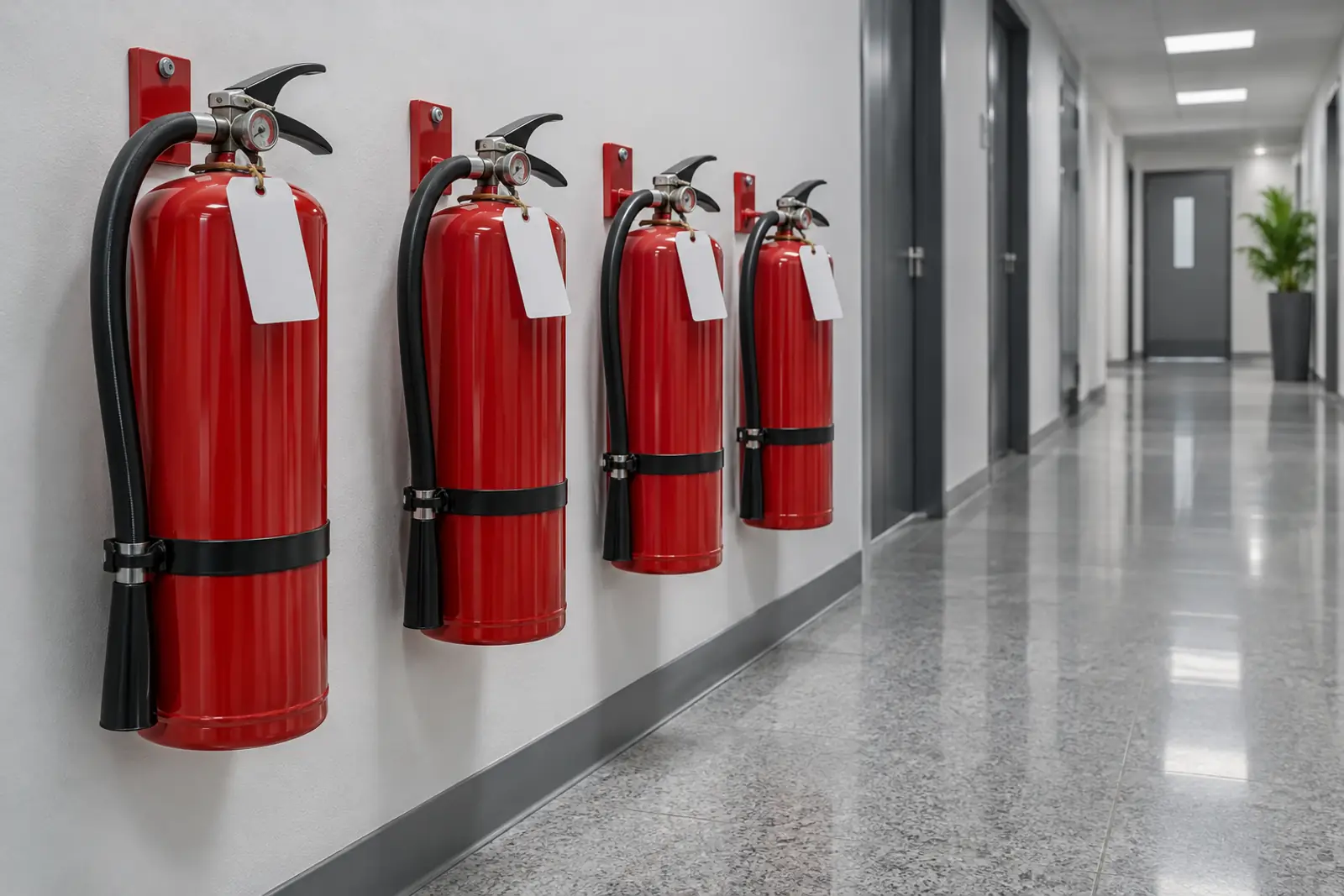
Ten CPSC records cover portable fire extinguishers. Two Kidde recalls, in 2017 and 2015, account for most of the units, and the 2017 record says it re-covers models from the 2009 and 2015 recalls.
The CPSC Recall API lists 10 portable fire extinguisher records between 1977 and 2017, with 43,951,900 stated U.S. units (CPSC Recalls API, pulled 2026-10-26).
The Kidde plastic-handle recall of November 2, 2017 (18-022) covers about 37.8 million U.S. units, plus 2.7 million in Canada and 6,730 in Mexico (CPSC recall 18-022). The record lists 134 plastic-handle models made from 1973 to 2017, approximately 391 reports of failed or limited activation or nozzle detachment, approximately 16 injuries, approximately 91 property damage reports and a 2014 death in a car fire.
The Kidde disposable extinguisher recall of February 12, 2015 (15-079) covers about 4.6 million U.S. units and 175,000 in Canada, with 11 reports of failure to discharge as expected (CPSC recall 15-079).
Commercial extinguishers appear in the record too. Kidde 10 lb industrial dry chemical units (05-589, July 26, 2005, about 470,000 units) could have their nylon valves separate from the steel cylinder during the 6-year recharge service or shortly afterwards, with 3 injuries in the reports. Ansul K-GUARD, SENTRY and FLAG FIRE wet chemical and water units (07-507, November 13, 2006, about 154,000) could fail to discharge if a dropped unit cracked its pick-up tube.
Millions of units
Source: U.S. Consumer Product Safety Commission, Recalls API and recall pages, pulled 2026-10-26
| Date | Firm or brand (as named by CPSC) | Product type | Primary hazard | U.S. units | Share of all counted units |
|---|---|---|---|---|---|
| 2017-11-02 | Kidde | Portable fire extinguishers | Fails to discharge, activate or supply water | 37,800,000 | 35.0% |
| 2001-07-19 | Central Sprinkler | Fire sprinklers and fire pump components | Fails to discharge, activate or supply water | 35,000,000 | 32.4% |
| 1998-10-14 | Central Sprinkler (Omega) | Fire sprinklers and fire pump components | Fails to discharge, activate or supply water | 8,400,000 | 7.8% |
| 2015-02-12 | Kidde | Portable fire extinguishers | Fails to discharge, activate or supply water | 4,600,000 | 4.3% |
| 2016-11-10 | Kidde | Smoke alarms and smoke/CO combination alarms | Battery drain or end-of-life signal defect | 3,600,000 | 3.3% |
| 1992-09-04 | BRK Electronics (BRK, First Alert, Family Gard) | Smoke alarms and smoke/CO combination alarms | Fails to detect or alert to fire | 3,500,000 | 3.2% |
| 2014-05-28 | Lithonia Lighting (Acuity Brands) | Emergency and exit lighting | Device overheats (fire hazard) | 1,700,000 | 1.6% |
| 2001-04-13 | Lithonia Lighting | Emergency and exit lighting | Device overheats (fire hazard) | 1,200,000 | 1.1% |
| 2014-09-11 | Kidde | Smoke alarms and smoke/CO combination alarms | Fails to detect or alert to fire | 1,200,000 | 1.1% |
| 1999-03-19 | Kidde Safety (Nighthawk, Lifesaver) | Carbon monoxide alarms | Fails to detect or alert to carbon monoxide | 1,000,000 | 0.9% |
| 1999-08-04 | Mealane (Star) | Fire sprinklers and fire pump components | Fails to discharge, activate or supply water | 1,000,000 | 0.9% |
| 1983-05-24 | Honeywell | Smoke alarms and smoke/CO combination alarms | Fails to detect or alert to fire | 770,000 | 0.7% |
| 2000-09-27 | BRK Brands (First Alert) | Portable fire extinguishers | Fails to discharge, activate or supply water | 600,000 | 0.6% |
| 2002-10-02 | Invensys Building Systems (Siebe actuators) | Fire/smoke damper actuators | Fire/smoke damper fails to close | 560,000 | 0.5% |
| 1983-11-01 | Electro Signal Lab (ESL) | Smoke alarms and smoke/CO combination alarms | Fails to detect or alert to fire | 500,000 | 0.5% |
Share uses the sum of all counted U.S. units (107,993,149) as denominator.
Source: [1][4][6][7] U.S. Consumer Product Safety Commission; U.S. Consumer Product Safety Commission; U.S. Consumer Product Safety Commission; U.S. Consumer Product Safety Commission
Smoke alarm and carbon monoxide alarm recalls
Smoke, combination smoke/CO and CO-only alarms make up 42 of the 100 records, the largest group by count, but a smaller share of units than extinguishers or sprinklers.
The CPSC Recall API holds 34 records for smoke alarms and combination smoke/CO alarms, with 12,737,520 stated U.S. units, and 8 records for CO-only alarms, with 1,435,103 units (CPSC Recalls API, pulled 2026-10-26).
The largest smoke detector record by units is the Kidde NightHawk combination smoke/CO alarm recall of November 10, 2016: about 3.6 million U.S. units and 1.5 million in Canada, because the alarm could stop chirping at its 7-year end of life if the batteries were replaced (CPSC recall 17-031). BRK wired-in smoke detectors followed on September 4, 1992 at approximately 3.5 million units, after horn contacts corroded (CPSC recall 92-130).
The largest CO alarm record is the Kidde Safety recall of March 19, 1999, covering about 1 million Nighthawk and Lifesaver alarms (CPSC recall 99-082).
The median smoke or smoke/CO alarm record covers 120,000 U.S. units, against 1,550 for a fire alarm panel or system component record (derived metric d8).
Sprinklers, alarm panels, exit lights and dampers in commercial buildings
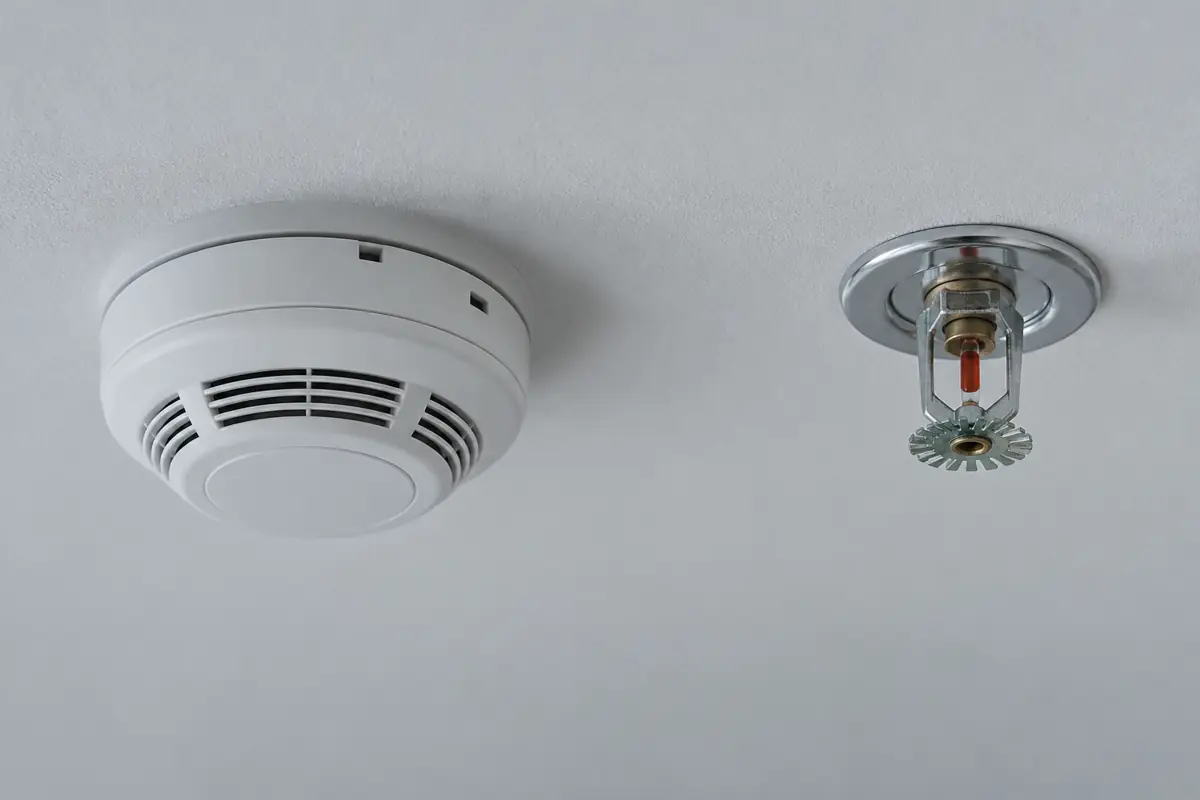
Building fire protection components account for 38 records across alarm panels, sprinklers, emergency lights and damper actuators. Sprinkler recalls carry the largest unit totals in the whole registry.
Sprinklers and fire pump components account for 11 records and 45,206,315 stated U.S. units, or 41.9% of all counted units (CPSC Recalls API). The Central Sprinkler O-ring program of July 19, 2001 covers 35 million sprinklers: 33 million wet units made 1989 to 2000, 2 million dry units and 167,000 Gem and Star units (CPSC recall 01-201).
The Central Sprinkler Omega recall of October 14, 1998 covers approximately 8.4 million sprinklers; CPSC alleged that 30 to 40 percent of Omegas removed for testing failed to activate and recorded 17 fires in which Omegas reportedly did not function, with over $4.3 million in property damage (CPSC recall 99-008). In the Star dry sprinkler recall of August 4, 1999, 67 percent of tested sprinklers failed to activate (CPSC Recalls API, record 99-152).
Fire alarm panels, pull stations and notification devices account for 20 records but only 78,961 U.S. units, because each record covers commercial system parts such as Gamewell-FCI, Notifier, Fire-Lite, Simplex, Bosch and Siemens control panels, audible bases, pull stations and sounders (CPSC Recalls API).
Emergency and exit lighting accounts for 6 records and 2,943,650 units. The Lithonia Quantum ELM and ELM2 recall of May 28, 2014 covers about 1.7 million fixtures after 29 reports of circuit boards overheating and fixtures melting or catching fire (CPSC recall 14-194). Siebe actuators used in fire and smoke dampers, up to 560,000 units, could jam and keep dampers from closing (CPSC Recalls API, record 03-003, October 2, 2002).
| Product type | Records | U.S. units (counted) | Largest single record | Largest record U.S. units | Years |
|---|---|---|---|---|---|
| Fire sprinklers and fire pump components | 11 | 45,206,315 | Central Sprinkler (2001) | 35,000,000 | 1998 to 2012 |
| Portable fire extinguishers | 10 | 43,951,900 | Kidde (2017) | 37,800,000 | 1977 to 2017 |
| Smoke alarms and smoke/CO combination alarms | 34 | 12,737,520 | Kidde (2016) | 3,600,000 | 1977 to 2026 |
| Emergency and exit lighting | 6 | 2,943,650 | Lithonia Lighting (Acuity Brands) (2014) | 1,700,000 | 2001 to 2014 |
| Carbon monoxide alarms | 8 | 1,435,103 | Kidde Safety (Nighthawk, Lifesaver) (1999) | 1,000,000 | 1995 to 2024 |
| Fire/smoke damper actuators | 1 | 560,000 | Invensys Building Systems (Siebe actuators) (2002) | 560,000 | 2002 to 2002 |
| Heat detectors and heat-activated alarms | 4 | 512,000 | Sure Signal Products (2015) | 375,000 | 1997 to 2020 |
| Emergency escape smoke hoods | 3 | 319,400 | Brookdale International Systems (EVAC-U8, EVAC+) (2006) | 290,000 | 2002 to 2006 |
| Cooktop and aerosol fire suppressors | 3 | 248,300 | The Colbra Group and distributors (FIRE CAP) (2000) | 136,000 | 2000 to 2019 |
| Fire alarm panels, pull stations and notification devices | 20 | 78,961 | Honeywell (System Sensor) (2024) | 29,000 | 1995 to 2024 |
| All product types | 100 | 107,993,149 | 1977 to 2026 |
Units are the U.S. figures CPSC states for each record, summed. The update 03-133 and the second BRK notice 77-083 are not added again; 77-001 states no unit count. Figures are often 'about' or 'up to'.
Source: [1] U.S. Consumer Product Safety Commission
Millions of units, sum of CPSC stated figures
Source: U.S. Consumer Product Safety Commission, Recalls API (NumberOfUnits field and release text), pulled 2026-10-26
Why the products were recalled: hazards in the CPSC record
Half of the 100 records describe a product that can fail to detect or alert to a fire. Failure to discharge or activate covers fewer records but most of the units.
Failure to detect or alert to fire is the primary hazard in 50 of 100 records (50.0%), covering 9,563,901 U.S. units (CPSC Recalls API, Hazards field).
Failure to discharge, activate or supply water is the primary hazard in 19 records but covers 88,690,515 U.S. units, because it includes the large extinguisher and sprinkler recalls.
Failure to detect or alert to carbon monoxide is the primary hazard in 9 records. Rupture, explosion or valve and nozzle separation, all in portable extinguishers, is the primary hazard in 4 records.
In 86 of 100 records (86.0%) the primary hazard is a product that may not work when needed: an alarm that stays silent, an extinguisher or sprinkler that does not discharge, a panel that does not signal, a light that does not illuminate or a damper that does not close (derived metric d2).
Primary hazard: The single hazard class assigned to each record from the CPSC Hazards field. Pre-2000 records often hold only a coded category such as 'Fire & Fire-Related Burn', so the class comes from the hazard sentence in the CPSC release text.
Number of records, 1977 to 2026
Source: U.S. Consumer Product Safety Commission, Recalls API (Hazards field), pulled 2026-10-26
| Primary hazard (from CPSC hazard text) | Records | Share of records | U.S. units (counted) |
|---|---|---|---|
| Fails to detect or alert to fire | 50 | 50.0% | 9,563,901 |
| Fails to discharge, activate or supply water | 19 | 19.0% | 88,690,515 |
| Fails to detect or alert to carbon monoxide | 9 | 9.0% | 1,424,553 |
| Rupture, explosion or valve/nozzle separation | 4 | 4.0% | 580,000 |
| Trouble signal or monitoring link failure | 4 | 4.0% | 9,240 |
| Device overheats (fire hazard) | 3 | 3.0% | 2,931,000 |
| Escape hood protection or claims defect | 3 | 3.0% | 319,400 |
| Battery drain or end-of-life signal defect | 3 | 3.0% | 3,765,890 |
| Emergency light fails to illuminate | 3 | 3.0% | 12,650 |
| Product can intensify a fire | 1 | 1.0% | 136,000 |
| Fire/smoke damper fails to close | 1 | 1.0% | 560,000 |
One primary hazard per record, classified from the official CPSC Hazards field (or the release text where the field holds only a coded category).
Source: [1] U.S. Consumer Product Safety Commission
Recall timeline by year and decade
In-scope records appear in 37 of the 50 calendar years from 1977 to 2026. The 2000s hold 40 records, the busiest decade, driven by commercial alarm panels and sprinklers.
The busiest single years are 2003 and 2014, with 9 records each, followed by 2006 with 8 (CPSC Recalls API).
The 2000s account for 40 of 100 records (40.0%), including 20 records for building fire protection systems. The 2020s, through October 2026, account for 12 records, of which 10 are smoke, CO or heat alarm records.
Records per calendar year (recalls, updates and CPSC warnings in the Recall API)
Source: U.S. Consumer Product Safety Commission, Recalls API, pulled 2026-10-26; Fire Life and Safety classification
Records per decade; 2020s runs to October 2026
Source: U.S. Consumer Product Safety Commission, Recalls API, pulled 2026-10-26; Fire Life and Safety classification
| Decade | Extinguishers and suppressors | Smoke, CO and heat alarms | Building fire protection systems | Escape smoke hoods | All records |
|---|---|---|---|---|---|
| 1970s | 1 | 3 | 0 | 0 | 4 |
| 1980s | 0 | 3 | 0 | 0 | 3 |
| 1990s | 1 | 8 | 3 | 0 | 12 |
| 2000s | 7 | 10 | 20 | 3 | 40 |
| 2010s | 4 | 12 | 13 | 0 | 29 |
| 2020s | 0 | 10 | 2 | 0 | 12 |
2020s covers 2020-01-01 to the API pull on 2026-10-26. Building fire protection systems = alarm panels and components, sprinklers and fire pump parts, emergency and exit lights, damper actuators.
Source: [1] U.S. Consumer Product Safety Commission
How the unit figures were parsed
CPSC states units as free text such as 'About 37.8 million (in addition, 2.7 million in Canada)'. U.S. and Canada figures were split, and blank fields on older records were filled from the release text.
Six records state Canada units in the NumberOfUnits field, adding up to 4,540,000 units that are excluded from all U.S. totals in this report (CPSC Recalls API).
Sixteen older records have a blank units field; their U.S. figure comes from the release text in the same API record, for example 'Approximately 3.5 million BRK Electronics wired-in (AC-powered) smoke detectors'. The full parse log is in the registry CSV (columns units_field, units_source and units_not_counted_reason).
| Date | Firm or brand | CPSC NumberOfUnits text | U.S. units (parsed) | Canada units (parsed, excluded from U.S. totals) |
|---|---|---|---|---|
| 2014-08-13 | UTC Fire & Security (ESL, Interlogix) | About 141,000 in U.S. and 13,000 in Canada | 141,000 | 13,000 |
| 2014-09-11 | Kidde | About 1.2 million in the United States and about 112,000 in Canada | 1,200,000 | 112,000 |
| 2015-02-12 | Kidde | About 4.6 million units in the U.S. and 175,000 in Canada | 4,600,000 | 175,000 |
| 2016-11-10 | Kidde | About 3.6 million (in addition 1.5 million were sold in Canada) | 3,600,000 | 1,500,000 |
| 2017-11-02 | Kidde | About 37.8 million (in addition, 2.7 million in Canada) | 37,800,000 | 2,700,000 |
| 2018-03-21 | Kidde | About 452,000 in the U.S. (In addition, about 40,000 were sold in Canada.) | 452,000 | 40,000 |
Rule: the first number in the CPSC NumberOfUnits field is the U.S. figure; a figure followed by 'in Canada' is held separately. The Kidde 18-022 recall page also lists 6,730 units in Mexico, which the API field omits.
Source: [1][4] U.S. Consumer Product Safety Commission; U.S. Consumer Product Safety Commission
How facilities check a model number against CPSC records
Recalled extinguishers and alarms are identified by model number and date code printed on the unit. Commercial properties typically meet recalls during routine service visits.
CPSC recall pages identify recalled units by model number and date code. The Kidde 18-022 page, for example, states that the model number is printed on the extinguisher label, that digits five through nine of the 10-digit date code give the day and year of manufacture, and that units made before 2007 carry no date code (CPSC recall 18-022).
- Read the brand, model number and date code from the unit label (extinguishers) or the back of the alarm (smoke and CO alarms).
- Search the brand or product name at cpsc.gov/Recalls, which offers keyword, date, hazard and category filters and a download of all recalls; CPSC says the data updates weekly.
- Open the matching recall page and compare the listed model numbers and date-code ranges with the label.
- For bulk checks, query the CPSC Recalls API with ProductName or RecallTitle (for example RecallTitle=extinguisher).
- Also search the Product Safety Warnings view on the same CPSC page: some recent smoke/CO alarm warnings do not appear in the recall API.
Workplaces with portable extinguishers fall under OSHA 29 CFR 1910.157(e), which requires monthly visual inspection and an annual maintenance check, with the annual date recorded and kept for one year (eCFR, 29 CFR 1910.157). That annual visit is when a service technician handles each unit and can compare labels with recall lists. See our fire extinguisher inspection page for the service schedule and our fire alarm inspection, fire sprinkler inspection and emergency lighting inspection pages for system equipment, as adopted by your state.
Several commercial recalls in the registry were run through installers and distributors rather than end users: the 2006 Tyco smoke detector recall (128,000 units) states that building owners and managers would be contacted, and the 2005 Kidde industrial extinguisher alert told service organizations to stop servicing affected units (CPSC Recalls API, records 06-550 and 05-589).
Recalls and CPSC warnings since 2020
Twelve records are dated 2020 to 2026, mostly smoke and combination alarms, and several were sold through online marketplaces. CPSC also issued smoke/CO detector warnings that sit outside the Recall API.
The largest recent record is the Three61 Samurai mini smoke alarm recall of January 16, 2025: about 328,000 units sold through HSN, 8 reports of failure to activate in smoke, and a CPSC smoke sensitivity test in which one tested detector failed to alert (CPSC recall 25-095).
The newest in-scope record is the Treatlife combination smoke/CO detector recall of June 25, 2026, covering about 20 units sold on Amazon.com (CPSC recall 26-582). Four of the 6 smoke-type records dated 2023 to 2026 name Amazon.com as the sales channel (derived metric d10).
| Date | Firm or brand (as named by CPSC) | Product type | Primary hazard | U.S. units | Record type |
|---|---|---|---|---|---|
| 2020-06-17 | Edwards | Heat detectors and heat-activated alarms | Fails to detect or alert to fire | 85,000 | Recall |
| 2021-02-24 | Potter Electric | Fire alarm panels, pull stations and notification devices | Fails to detect or alert to fire | 735 | Recall |
| 2021-05-06 | Kidde | Smoke alarms and smoke/CO combination alarms | Fails to detect or alert to fire | 226,000 | Recall |
| 2022-03-31 | Universal Security Instruments | Smoke alarms and smoke/CO combination alarms | Fails to detect or alert to carbon monoxide | 8,000 | Recall |
| 2023-05-18 | BQQZHZ (CPSC warning; sold on Amazon.com) | Smoke alarms and smoke/CO combination alarms | Fails to detect or alert to fire | 25,000 | CPSC warning |
| 2024-03-14 | Honeywell (System Sensor) | Fire alarm panels, pull stations and notification devices | Fails to detect or alert to fire | 29,000 | Recall |
| 2024-05-16 | Haikouhuidishangmaoyouxiangongsi (CHZHVAN) | Smoke alarms and smoke/CO combination alarms | Fails to detect or alert to fire | 6,800 | Recall |
| 2024-11-14 | New Cosmos USA (DeNova Detect) | Carbon monoxide alarms | Fails to detect or alert to carbon monoxide | 26,360 | Recall |
| 2025-01-16 | Three61 (Samurai) | Smoke alarms and smoke/CO combination alarms | Fails to detect or alert to fire | 328,000 | Recall |
| 2025-06-05 | Apollo America (sold by Vivint) | Smoke alarms and smoke/CO combination alarms | Fails to detect or alert to fire | 50,000 | Recall |
| 2026-02-12 | TIANJINSHIHAOWEIXINSHENGJIDIANANZHUANGGONGCHENG (LShome) | Smoke alarms and smoke/CO combination alarms | Fails to detect or alert to fire | 11,000 | Recall |
| 2026-06-25 | Treatlife Technology | Smoke alarms and smoke/CO combination alarms | Fails to detect or alert to fire | 20 | Recall |
CPSC product safety warnings published outside the Recall API (for example 24-292, 26-614 and 26-708) are not in this table.
Source: [1][12][13] U.S. Consumer Product Safety Commission; U.S. Consumer Product Safety Commission; U.S. Consumer Product Safety Commission
Counts and distributions
Share of records with failure to detect or alert to fire
Formularecords with that primary hazard / 100 in-scope records
Inputs: fact sheet hazard rows and row 4 (fact sheet rows)
Result: 50.0%
Half of all fire safety recall records are about detection or notification that may not happen.
Limitations: One primary hazard per record; classification is editorial and based on CPSC text.
Records where the product may not work when needed
Formula(fire alert + CO alert + discharge or activation + trouble or monitoring + illumination + damper failures) / 100
Inputs: fact sheet hazard rows and row 4 (fact sheet rows)
Result: 86.0%
Most recalls in this registry are not about the product causing harm but about it failing to protect during an emergency.
Limitations: Excludes end-of-life signal defects (3 records) although those also lead to silent alarms.
Concentration of units in the largest records
Formula37,800,000 / 107,993,149; (37,800,000 + 35,000,000) / 107,993,149
Inputs: fact sheet rows for Kidde 18-022, Central 01-201 and total units (fact sheet rows)
Result: 35.0% and 67.4%
Unit totals are dominated by two recalls; record counts give a better view of how often problems occur.
Limitations: Totals are sums of stated figures that are often approximate and can overlap.
Distinct extinguisher units, adjusted for overlap
Formula43,951,900 - 4,600,000 - 167,000
Inputs: extinguisher units row, Kidde 15-079 row, Kidde 09-151 row (fact sheet rows)
Result: 39,184,900
The distinct number of recalled extinguishers lies between 39.18 and 43.95 million.
Limitations: CPSC states model overlap, not unit overlap; the adjustment assumes every 2009 and 2015 unit is also inside the 2017 figure.
Median units per record: consumer alarms vs commercial alarm components
Formulamedian(stated U.S. units) by product type
Inputs: registry CSV, smoke alarm and fire alarm component records (fact sheet rows)
Result: 120,000 vs 1,550
Commercial fire alarm component recalls are small in units but numerous; each unit protects a whole building zone.
Limitations: Records without stated units are excluded from the medians.
Online marketplace share of recent smoke alarm records
Formularecords naming Amazon.com / smoke-type records dated 2023 to 2026
Inputs: table t6 (fact sheet rows)
Result: 4 of 6 (66.7%)
Recent smoke alarm actions concentrate on small sellers on marketplaces, alongside CPSC warnings outside the API.
Limitations: Six records is a small base; based on the sales channel named in the CPSC title.
Key findings
- The CPSC Recall API holds 100 U.S. records for fire extinguishers, smoke and CO alarms and related fire safety products between 1977 and 2026, out of 10,058 records in the API (0.99%).[1]
- The 100 records state about 108.0 million U.S. units in total (sum of CPSC figures, 1977 to 2026).[1]
- Ten portable fire extinguisher records state 43,951,900 U.S. units; between 39,184,900 and 43,951,900 are distinct, because the 2017 Kidde recall re-covers 2009 and 2015 models.[1][4]
- The Kidde plastic-handle extinguisher recall of November 2, 2017 covers about 37.8 million U.S. units, 2.7 million in Canada and 6,730 in Mexico, the largest record in the registry.[4]
- The Kidde 2017 record lists approximately 391 reports of failed activation or nozzle detachment, approximately 16 injuries and a 2014 death.[4]
- Sprinklers and fire pump components carry 45,206,315 U.S. units in 11 records, 41.9% of all counted units, led by the 35 million Central O-ring sprinklers of 2001.[1][6]
- CPSC alleged that 30 to 40 percent of Central Omega sprinklers removed for testing failed to activate (recall of October 14, 1998, 8.4 million units).[7]
- Smoke alarm and combination smoke/CO alarm recalls total 34 records and 12,737,520 U.S. units; CO-only alarms add 8 records and 1,435,103 units.[1]
- Failure to detect or alert to fire is the primary hazard in 50 of 100 records (50.0%).[1]
- In 86 of 100 records (86.0%) the product may not work when needed: no alarm, no discharge, no signal, no light or a damper that stays open.[1]
- Fire alarm panels, pull stations and notification devices make up 20 records but only 78,961 units; the median record covers 1,550 units against 120,000 for a smoke alarm record.[1]
- The 2000s are the busiest decade with 40 records; 2003 and 2014 are the busiest years with 9 each.[1]
- Ten of the 100 records name Kidde or Kidde Safety, the most for any single brand in the registry.[1]
- Four of the 6 smoke-type records dated 2023 to 2026 name Amazon.com as the sales channel.[1][13]
Executive summary
- The CPSC Recall API holds 100 records for fire extinguishers, smoke and CO alarms and other fire safety products, dated 1977-01-03 to 2026-06-25.
- Those records state about 108.0 million U.S. units; 4,540,000 further units sold in Canada are kept separate.
- Sprinklers and fire pump components (45.21 million units) and portable fire extinguishers (43.95 million) hold 89.16 million of the units between them.
- Smoke, combination and CO alarms are the largest group by count, with 42 records.
- Failure to detect or alert to fire is the primary hazard in 50 records; failure to discharge or activate covers 19 records but 88.69 million units.
- The 2017 Kidde extinguisher recall alone is 35.0% of counted units; with the 2001 Central Sprinkler O-ring program the two reach 67.4%.
- Recent records are mostly smoke and combination alarms, and CPSC has issued further smoke/CO detector warnings that the Recall API does not include.
Questions people ask
How do I know if my fire extinguisher is recalled?
Read the brand, model number and date code on the label and compare them with the model list on the matching CPSC recall page; search by brand at cpsc.gov/Recalls. The 2017 Kidde page notes that units made before 2007 carry no date code (CPSC recall 18-022).
What is the biggest fire extinguisher recall?
The Kidde plastic-handle and push-button extinguisher recall of November 2, 2017 is the largest in the CPSC record, at about 37.8 million U.S. units plus 2.7 million in Canada (CPSC recall 18-022).
Which smoke detectors have been recalled?
The CPSC Recall API lists 34 smoke alarm and combination smoke/CO records from 1977 to 2026; the registry above names each firm, product, hazard and date with a link to the CPSC page.
Are fire sprinkler heads recalled too?
Yes. Eleven sprinkler and fire pump component records cover 45,206,315 U.S. units, including 35 million Central O-ring sprinklers (2001) and 8.4 million Omega sprinklers (1998) (CPSC Recalls API).
Frequently asked questions
How many fire extinguisher recalls has the CPSC announced?
The CPSC Recall API lists 10 portable fire extinguisher records from 1977 to 2017, stating 43,951,900 U.S. units in total (pulled 2026-10-26).
How many smoke alarm recalls are there?
There are 34 smoke alarm and combination smoke/CO alarm records from 1977 to 2026, stating 12,737,520 U.S. units, plus 8 CO-only alarm records (CPSC Recalls API).
What is the most common reason fire safety products are recalled?
Failure to detect or alert to fire is the primary hazard in 50 of 100 records; failure to discharge, activate or supply water follows with 19 (CPSC Recalls API, 1977 to 2026).
How many Kidde extinguishers were recalled in 2017?
About 37.8 million in the U.S., plus 2.7 million in Canada and 6,730 in Mexico, covering 134 plastic-handle models made from 1973 to 2017 (CPSC recall 18-022, November 2, 2017).
Did the 2017 Kidde recall include earlier recalled extinguishers?
Yes. CPSC states that the 2017 recall includes models previously recalled in March 2009 (167,000 U.S. units) and February 2015 (4.6 million U.S. units).
How far back does the CPSC recall database go?
The Recall API pulled on 2026-10-26 returns 10,058 records dated 1973-06-08 to 2026-10-22; the earliest fire safety record in scope is the Bernzomatic foam extinguisher notice of January 3, 1977.
What was the largest fire sprinkler recall?
The Central Sprinkler O-ring program of July 19, 2001 covers 35 million sprinklers, including 33 million wet and 2 million dry units (CPSC recall 01-201).
Are CO detectors recalled for failing to alarm?
Yes. Failure to detect or alert to carbon monoxide is the primary hazard in 9 records, including about 1 million Kidde Safety CO alarms recalled on March 19, 1999 (CPSC recall 99-082).
How often must workplace fire extinguishers be serviced?
OSHA 29 CFR 1910.157(e) requires monthly visual inspection and an annual maintenance check, with the annual date recorded and kept for one year (eCFR, accessed 2026-10-26).
Does the CPSC recall API include every smoke alarm warning?
No. CPSC product safety warnings such as 24-292, 26-614 and 26-708 on combination smoke/CO detectors are published on cpsc.gov but were not in the Recall API pull of 2026-10-26.
Download the data
Every table in this report is available as a CSV under CC BY 4.0. The fact sheet lists each value with its source URL and access date.
- derived_metrics.csv (CSV)
- fact_sheet.csv (CSV)
- Registry: CPSC fire safety product recall records, 1977 to 2026 (CSV)
- CPSC fire safety product recall records and U.S. units by product type, 1977 to 2026 (CSV)
- Primary hazard named in the CPSC record, fire safety product recalls 1977 to 2026 (CSV)
- Fifteen largest fire safety product recall records by stated U.S. units (CSV)
- Fire safety product recall records by decade and product group (CSV)
- Records with units outside the United States: how the CPSC unit text was parsed (CSV)
- Fire safety product recall records dated 2020 to 2026 (CSV)
For journalists and researchers
If you cite only a few, cite these
- 100 CPSC fire safety product recall records, 1977 to 2026, stating about 108.0 million U.S. units.[1]
- 50 of 100 records: the product can fail to detect or alert to fire.[1]
- Kidde 2017: about 37.8 million U.S. fire extinguishers, the largest record.[4]
Most quotable statistics
- The CPSC recall database holds 100 records for fire extinguishers, smoke and CO alarms and other fire safety products from 1977 to 2026, stating about 108.0 million U.S. units.[1]
- Half of all U.S. fire safety product recall records since 1977 (50 of 100) involve a product that can fail to detect or alert to a fire.[1]
- In 86 of 100 fire safety recall records the product may not work when needed.[1]
- The 2017 Kidde fire extinguisher recall covers about 37.8 million U.S. units, 35.0% of all fire safety product units recalled through CPSC since 1977.[1][4]
- Sprinklers and fire pump components account for 41.9% of recalled fire safety units, led by 35 million Central O-ring sprinklers in 2001.[1][6]
- Commercial fire alarm component recalls are small: the median record covers 1,550 units, against 120,000 for a smoke alarm record.[1]
Press summary
A Fire Life and Safety review of the U.S. Consumer Product Safety Commission recall database finds 100 records for fire extinguishers, smoke and carbon monoxide alarms and other fire safety products between 1977 and 2026, stating about 108.0 million U.S. units. Fire extinguisher recalls account for 10 records and 43.95 million units, most of them from the 2017 Kidde recall of about 37.8 million units. Sprinkler recalls, led by 35 million Central O-ring sprinklers in 2001, account for 45.21 million units. Smoke, combination and CO alarms are the largest group by count, with 42 records. In 50 of the 100 records the product can fail to detect or alert to a fire, and in 86 the product may not work when needed. The full registry, with each record linked to its CPSC page, and the unit parsing rules are published as CSV under CC BY 4.0.
Suggested headlines
- CPSC records show 100 fire safety product recalls since 1977, covering about 108.0 million U.S. units
- Half of fire safety recalls involve alarms or detectors that can fail to alert to fire
- One Kidde fire extinguisher recall makes up 35.0% of recalled fire safety units
- Sprinklers and extinguishers hold 89.16 million of 108.0 million recalled fire safety units
- Recent smoke alarm recalls center on small marketplace sellers: 4 of 6 since 2023 name Amazon.com
How to cite this report
Fire Life and Safety. (2026). Fire Extinguisher Recalls and Smoke Alarm Recalls: 100 CPSC Records, 1977 to 2026. Retrieved from https://firelifeandsafety.com/reports/fire-extinguisher-and-smoke-alarm-recalls/
Reuse license
Data and tables are licensed CC BY 4.0. Attribution: “Source: Fire Life and Safety, Fire Extinguisher Recalls and Smoke Alarm Recalls: 100 CPSC Records, 1977 to 2026” with a link to this page.
Methodology
Source selection: the primary dataset is a full pull of the CPSC Recalls API (https://www.saferproducts.gov/RestWebServices/Recall?format=json) on 2026-10-26, which returned 10,058 records dated 1973-06-08 to 2026-10-22. The API documentation page does not state date coverage, so coverage is reported from the data. Filtered queries (RecallTitle, ProductName, RecallDescription) were tested and return narrower sets; an unfiltered pull was used so that no record depended on one keyword.
Inclusion: records were found by keyword scans of the Title, Products.Name and Description fields (extinguisher, smoke alarm or detector, carbon monoxide alarm or detector, fire alarm, heat detector, sprinkler, fire suppression, escape hood, exit sign, emergency light, pull station, damper, and fire safety brand names), then reviewed by hand. Included: portable extinguishers, cooktop and aerosol suppressors, smoke, combination and CO alarms, heat detectors, fire alarm panels and system components, sprinklers and fire pump components, escape smoke hoods, emergency and exit lights, and fire/smoke damper actuators. Excluded records and reasons are listed in excluded.md (for example lawn sprinklers, voltage detectors, security-only panels and emergency call pendants).
De-duplication: records were de-duplicated by RecallNumber and by URL; 03-502 repeats 03-003 (same page, date and units) and was dropped. Updates (03-133), expansions (07-018), a second notice (77-083) and a civil penalty notice (78-089) stay in the registry as separate agency records, and their units are counted only once.
Units: the first number in the NumberOfUnits field is taken as the U.S. figure; a number followed by 'in Canada' is held separately and excluded from U.S. totals; 'million' is multiplied out and qualifiers such as 'about', 'approximately', 'up to' and 'more than' are dropped. Where the field is blank (16 older records), the figure comes from the release text in the same API record. 20-037 states 9,300 pairs and is counted as 9,300. The Mexico figure for 18-022 comes from the recall page.
Dates: registry dates are the API RecallDate except where the CPSC recall page or release text gives a different date: 77-001 (API 1997-01-03, page 1977-01-03), 01-201 (API 2001-01-13, page 2001-07-19), 99-082 (API 1999-03-24, page 1999-03-19) and 96-061 (API 1996-01-16, release text 1996-01-19). Eleven recall pages and three warning pages were opened to spot-check API fields.
Hazards: each record carries one primary hazard class assigned from the official CPSC Hazards field; for records where that field holds only a coded category, the hazard sentence in the release text was used. Secondary hazards (for example nozzle detachment in 18-022) are noted in the registry but not counted.
Limitations: unit figures are stated estimates and can overlap between recalls; record counts include four CPSC warnings and five renewed notices, updates, expansions or penalty notices tied to recalls; CPSC product safety warnings published outside the Recall API since 2024 are not in the registry; vehicle-mounted extinguisher recalls handled by NHTSA are not covered; scope boundaries are editorial. Last updated 2026-10-26.
This report presents published data with its limitations. It is not legal, engineering, financial or investment advice. Requirements depend on the code edition your state and local fire marshal have adopted; confirm with your authority having jurisdiction.
Sources, ranked by quality
Tier 1: primary and official sources (18)
- [1] U.S. Consumer Product Safety Commission. CPSC Recalls API (Recall Retrieval Web Service), full JSON pull of 10,058 records. Recall dates 1973-06-08 to 2026-10-22. Accessed 2026-10-26.
- [2] U.S. Consumer Product Safety Commission. CPSC Recalls Application Program Interface (API) Information. Documentation, accessed 2026-10-26. Accessed 2026-10-26.
- [3] U.S. Consumer Product Safety Commission. Recalls and Product Safety Warnings search. Updated weekly; accessed 2026-10-26. Accessed 2026-10-26.
- [4] U.S. Consumer Product Safety Commission. Kidde Recalls Fire Extinguishers with Plastic Handles Due to Failure to Discharge and Nozzle Detachment; One Death Reported (18-022). 2017-11-02. Accessed 2026-10-26.
- [5] U.S. Consumer Product Safety Commission. Kidde Recalls Disposable Plastic Fire Extinguishers Due to Failure to Discharge (15-079). 2015-02-12. Accessed 2026-10-26.
- [6] U.S. Consumer Product Safety Commission. CPSC, Central Sprinkler Company Announce Voluntary Recall To Replace O-Ring Fire Sprinklers (01-201). 2001-07-19. Accessed 2026-10-26.
- [7] U.S. Consumer Product Safety Commission. CPSC, Central Sprinkler Recall Omega Fire Sprinklers; Settle Lawsuit (99-008). 1998-10-14. Accessed 2026-10-26.
- [8] U.S. Consumer Product Safety Commission. BRK Recalls Some Wired-In Smoke Detectors Because Of Potential Alarm Failure (92-130). 1992-09-04. Accessed 2026-10-26.
- [9] U.S. Consumer Product Safety Commission. Kidde Recalls Combination Smoke/CO Alarms Due to Alarm Failure (17-031). 2016-11-10. Accessed 2026-10-26.
- [10] U.S. Consumer Product Safety Commission. Lithonia Lighting Recalls Emergency Lights Due to Fire Hazard (14-194). 2014-05-28. Accessed 2026-10-26.
- [11] U.S. Consumer Product Safety Commission. CPSC, Kidde Safety Announce Recall of Carbon Monoxide Alarms (99-082). 1999-03-19. Accessed 2026-10-26.
- [12] U.S. Consumer Product Safety Commission. Three61 Recalls Samurai Mini Smoke Alarms Due to Failure to Alert Consumers to a Fire; Sold Exclusively by HSN (25-095). 2025-01-16. Accessed 2026-10-26.
- [13] U.S. Consumer Product Safety Commission. Combination Smoke and Carbon Monoxide (CO) Detectors Recalled; Sold Exclusively on Amazon.com by Treatlife Technology (26-582). 2026-06-25. Accessed 2026-10-26.
- [14] U.S. Consumer Product Safety Commission. CPSC Renews Recall Warning On Certain Outdated Fire Extinguishers (Bernzomatic, 77-001). 1977-01-03. Accessed 2026-10-26.
- [15] U.S. Consumer Product Safety Commission. CPSC Warns Consumers to Stop Using JNHCD Combination Smoke and Carbon Monoxide Detectors Immediately (26-614). 2026-07-09. Accessed 2026-10-26.
- [16] U.S. Consumer Product Safety Commission. CPSC Warns Consumers to Stop Using TJTFJS Combination Smoke and Carbon Monoxide Detectors Immediately (26-708). 2026-08-20. Accessed 2026-10-26.
- [17] U.S. Consumer Product Safety Commission. CPSC Warns Consumers to Immediately Stop Using Juzhiann, YANLOYZW, JIKAIDA and Yieryi Combination Smoke and Carbon Monoxide Detectors (24-292). 2024-07-03. Accessed 2026-10-26.
- [18] Occupational Safety and Health Administration via eCFR. 29 CFR 1910.157, Portable fire extinguishers (paragraph (e), inspection, maintenance and testing). eCFR text as of 2026-10-01. Accessed 2026-10-26.