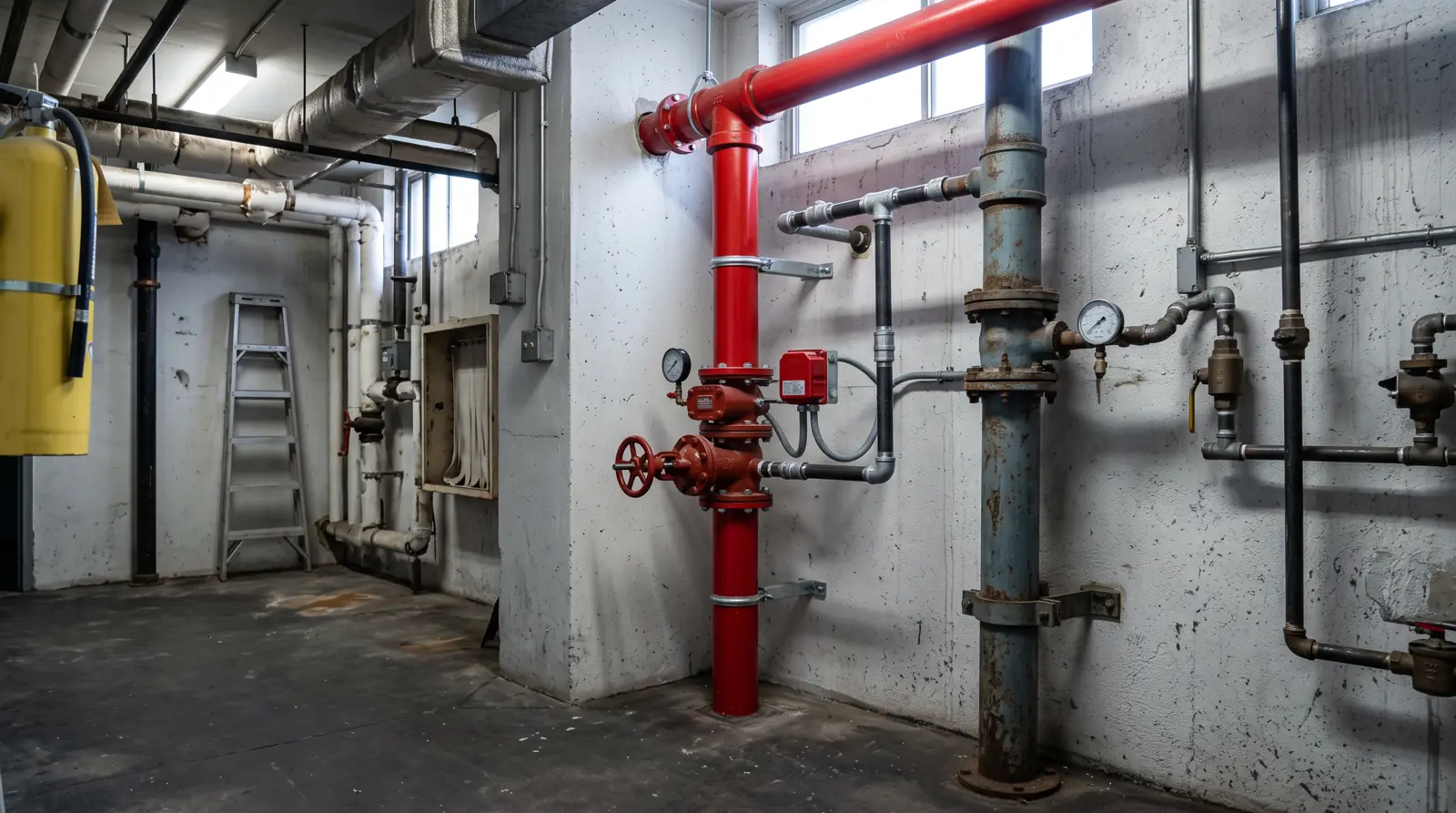
High Rise Sprinkler Retrofit Laws in the 50 Largest U.S. Cities
- Primary data
- Fire Life and Safety registry of high-rise sprinkler retrofit rules, coded from ordinances, codes and statutes
- Data period
- Rules adopted 1981 to 2026; status as of 2026-11-01
- Latest release used
- 2026-11-01
- Next release
- Quarterly re-check
- Geography
- 50 largest U.S. cities (Census Vintage 2024) and their states
- Sources
- 39 (28 Tier 1)
As of November 1, 2026, 13 of the 50 largest U.S. cities have a high rise sprinkler retrofit mandate, and 9 of them reach residential towers. Florida, Massachusetts and Washington require retrofits statewide; Texas, Nevada, Minnesota and Maryland have narrower rules. The median rule gave owners 12.1 years to finish.
Registry of high-rise sprinkler retrofit rules reaching the 50 largest U.S. cities
Checked quarterly, and after each code adoption cycle or deadline. Last checked 2026-11-01. Entries are neutral records of public data; each links to its source record.
| Jurisdiction | Retrofit rule and deadline | Date | Evidence | Source |
|---|---|---|---|---|
| New York City, NY | mandate: Local Law 26 of 2004 (NYC Admin. Code 27-929.1 and 27-228.5, 1968 Building Code); final deadline 2019-07-01 | 2004-10-22 | law text + agency record | Record |
| Los Angeles, CA | mandate: Ordinances 163,836 (eff. 1988-08-21) and 165,319 (eff. 1989-11); LAMC 91.8604 (Building Code Chapter 86); final deadline 3 years after order (extensions to 11 years) | 1988-08-21 | agency record (LAFD) | Record |
| Chicago, IL | mandate: High Rise Life Safety Ordinance: Municipal Code 13-196-205 (sprinklers) and 13-196-206 (Life Safety Evaluation); final deadline 2017-01-01 | 2004-12 | ordinance text + agency record | Record |
| Houston, TX | mandate: Houston Fire Code Appendix J, Automatic Sprinkler Systems in Existing High-Rise Buildings (amended 2005-11-22); final deadline 2017-12-31 | 2005-11-22 | code text + agency record | Record |
| Philadelphia, PA | mandate: City ordinance signed by Mayor W. Wilson Goode (reported); ordinance text not opened; final deadline 1997 | 1991 (reported) | reported (ordinance not opened) | Record |
| San Antonio, TX | mandate: Ordinance 2015-11-12-0946 adopting amended IFC Appendix M (City Code 11-32, 11-40); final deadline 2028-01-01 | 2015-11-12 | ordinance text | Record |
| San Jose, CA | mandate: 1983 city requirement (reported); ordinance text not opened; final deadline completed | 1983 (reported) | reported (ordinance not opened) | Record |
| San Francisco, CA | mandate: Ordinance 377-93 (commercial and hotels); File 22-0038 (2022) and 2025 SF Fire Code 1103.5.4 (residential, Ord. 39-26); final deadline 2035-01-01 (residential) | 1993 (377-93); 2022 (residential) | code text + agency record | Record |
| Seattle, WA | mandate: 2021 Seattle Fire Code Section 1103.5.4 (from the 2021 International Fire Code); final deadline 12 years after notice | 2021 code edition (state code effective 2024-03-15) | agency record (SFD council briefing) | Record |
| Massachusetts (statewide; applies in Boston) | mandate: M.G.L. c. 148, s. 26A1/2; final deadline 1998-03-30 | not stated in the statute text | statute text (archived copy) | Record |
Show all 17 records
| Jurisdiction | Retrofit rule and deadline | Date | Evidence | Source |
|---|---|---|---|---|
| Florida (statewide; applies in Jacksonville, Miami, Tampa) | mandate: Florida Fire Prevention Code (NFPA 101 as adopted) plus Fla. Stat. 718.112(2)(n) and 719.1055 (condominium and cooperative opt-out); final deadline 2027-01-01 | 2000 (State Fire Marshal adoption of NFPA standards) | statute text + legislative analysis | Record |
| Washington (statewide) | mandate: 2021 Washington State Fire Code (WAC 51-54A adopting IFC 2021), Section 1103.5.4 not amended; final deadline 12 years after notice | 2024-03-15 (effective) | code text (state amendment pages) | Record |
| Texas (one county class; applies in San Antonio) | limited: Tex. Health and Safety Code 766.051 to 766.056 (H.B. 3089, 2015); final deadline 2027-09-01 | 2015-09-01 | statute text (mirror) | Record |
| Nevada (statewide; applies in Las Vegas) | limited: NRS 477.150 (added 1981); final deadline not stated | 1981 | statute text (archived copy) | Record |
| Minnesota (statewide; applies in Minneapolis) | limited: Minn. Stat. 299F.48 (1Sp2021 c 10 art 3 s 5); final deadline 2033-08-01 | 2021 | statute text | Record |
| Maryland (statewide; applies in Baltimore) | limited: State Fire Prevention Code (COMAR 29.06.01, NFPA 101 2024 as amended); final deadline 12 years after notice | 2018 determination; amended provision in force 2026 | legislative fiscal note + reporting | Record |
| San Diego, CA | repealed: San Diego Municipal Code 55.0903 (adopted 1991; repealed 2015 per SF BLA); final deadline repealed | 1991 | agency record + government analysis | Record |
Where high rise sprinkler retrofit laws stand in the 50 largest cities
13 of the 50 largest cities sit under a retrofit mandate, 3 more have a narrow rule, and 31 cannot be settled from the documents we could open, mostly because the 2021 and 2024 model fire codes carry a retrofit clause whose local adoption we could not confirm.
Number of cities by status, as checked on 2026-11-01
Source: Fire Life and Safety coding of ordinances, codes and statutes; U.S. Census Bureau Vintage 2024 city ranking
We ranked incorporated places by the Census Bureau's July 1, 2024 estimates and checked each city for a rule that forces existing high-rise buildings to add automatic sprinklers. 13 cities (26%) have one on the books: New York, Los Angeles, Chicago, Houston, Philadelphia, San Antonio, Jacksonville, San Jose, San Francisco, Seattle, Boston, Miami and Tampa. Four of those (Jacksonville, Miami, Tampa and Boston) are covered by state law rather than a city ordinance.
Three cities fall under narrower state rules: Las Vegas (Nevada requires corridor sprinklers in buildings over 55 feet), Minneapolis (Minnesota covers public housing towers only) and Baltimore (Maryland's code runs a 12-year clock from a fire official's notice, and the state said in 2024 it would not enforce its general retrofit determination). San Diego repealed its rule in 2015. Indianapolis and Washington, D.C. use fire codes based on the 2012 and 2015 International Fire Code, which have no mandatory retrofit section in the body of the code, and we found no local ordinance.
High-rise building: In the codes reviewed here, a building with an occupied floor more than 75 feet above the lowest level of fire department vehicle access. Chicago uses 80 feet, Massachusetts 70 feet, New York City's office rule 100 feet and Nevada's corridor rule 55 feet.
Most of the 31 unclear cities sit in states whose current fire code is based on the 2021 or 2024 International Fire Code. Section 1103.5.4 of those editions requires existing high-rises over 120 feet, or between 75 and 120 feet without protected stairs or smoke detection, to retrofit within 12 years of a written notice. Whether a city kept, amended or deleted that section is set in local adoption ordinances that the major municipal code hosts did not serve to our fetcher. Our fire code adoption tracker lists the edition each state uses.
Show all 50 rows
| Rank | City | State | Population (July 1, 2024) | Status | What the rule covers / why unclear | What we searched |
|---|---|---|---|---|---|---|
| 1 | New York | New York | 8,478,072 | mandate | Commercial only | Local Law 26 text; DOB bulletin 2017-017; DOB testimony 2019 |
| 2 | Los Angeles | California | 3,878,704 | mandate | Commercial only; residential proposal pending | LAFD ordinance page; LADBS/LAFD report CF 20-0146 |
| 3 | Chicago | Illinois | 2,721,308 | mandate | Commercial sprinklers; residential evaluation | Ordinance text and DOB/CFD documents (archived); city LSE dataset |
| 4 | Houston | Texas | 2,390,125 | mandate | Commercial and residential | Fire Code Appendix J (archived); HFD standards page |
| 5 | Phoenix | Arizona | 1,673,164 | unclear | Arizona statewide code is IFC 2018 (no 1103.5.4); city code edition and amendments not verified | Municipal code not opened (Municode and American Legal returned HTTP 403 to our fetcher); SF BLA 2026 survey; AP 2017 survey; our web searches 2026-11-01 |
| 6 | Philadelphia | Pennsylvania | 1,573,916 | mandate | Commercial only (reported; ordinance not opened) | AP 2017 citing L&I; Firehouse 2021; American Legal returned HTTP 403 to our fetcher |
| 7 | San Antonio | Texas | 1,526,656 | mandate | Commercial and residential | Ordinance 2015-11-12-0946; Tex. HSC 766 |
| 8 | San Diego | California | 1,404,452 | repealed | Repealed 2015 (SF BLA); 2025 CFC prints IFC 1103.5.4, local adoption not verified | IBA report 09-05; SF BLA 2026 |
| 9 | Dallas | Texas | 1,326,087 | unclear | No retrofit for older residential towers reported in 2017 (AP citing NFSA); current local fire code amendments not verified | AP 2017; SF BLA 2026 survey; AP 2017 survey; our web searches 2026-11-01 |
| 10 | Jacksonville | Florida | 1,009,833 | mandate | Residential (state law) | Fla. Stat. 718.112, 719.1055, 633.208; House staff analysis |
| 11 | Fort Worth | Texas | 1,008,106 | unclear | Texas has no statewide fire code; local IFC edition and amendments not verified | SF BLA 2026 survey; AP 2017 survey; our web searches 2026-11-01 |
| 12 | San Jose | California | 997,368 | mandate | Commercial and residential (reported; completed) | AP 2017 quoting deputy fire marshal; SF BLA 2026 |
| 13 | Austin | Texas | 993,588 | unclear | Texas has no statewide fire code; local IFC edition and amendments not verified | SF BLA 2026 survey; AP 2017 survey; our web searches 2026-11-01 |
| 14 | Charlotte | North Carolina | 943,476 | unclear | North Carolina Fire Code is IFC-based; whether the edition in force carries 1103.5.4 not verified | SF BLA 2026 survey; AP 2017 survey; our web searches 2026-11-01 |
| 15 | Columbus | Ohio | 933,263 | unclear | An Ohio Fire Code rule effective 2025-11-20 appears to modify IFC 1103.5.4 (search result); rule text could not be opened | codes.ohio.gov (connection refused); SF BLA 2026 survey; AP 2017 survey; our web searches 2026-11-01 |
| 16 | Indianapolis | Indiana | 891,484 | no mandate found | Indiana Fire Code is based on IFC 2012, which has no mandatory high-rise retrofit section in the body of the code; no local ordinance found | Fire code adoption tracker; SF BLA 2026 survey; AP 2017 survey; our web searches 2026-11-01 |
| 17 | San Francisco | California | 827,526 | mandate | Commercial (1993) and residential (2035) | SFFD AB 2.08; SF Fire Code 1103.5; SF BLA 2026 |
| 18 | Seattle | Washington | 780,995 | mandate | All occupancies meeting 1103.5.4 criteria, notice-triggered | SFD 2021 code briefing; WA amendment pages |
| 19 | Denver | Colorado | 729,019 | unclear | Colorado has no confirmed statewide code; Denver fire code amendments not verified | Municipal code not opened (Municode and American Legal returned HTTP 403 to our fetcher); SF BLA 2026 survey; AP 2017 survey; our web searches 2026-11-01 |
| 20 | Oklahoma City | Oklahoma | 712,919 | unclear | Oklahoma adopted IFC 2024 statewide (2026-09-14 rule), which contains 1103.5.4; local amendments not verified | Fire code adoption tracker; SF BLA 2026 survey; AP 2017 survey; our web searches 2026-11-01 |
| 21 | Nashville-Davidson | Tennessee | 704,963 | unclear | Tennessee adopted IFC 2021 statewide; local amendments to 1103.5.4 not verified | Fire code adoption tracker; SF BLA 2026 survey; AP 2017 survey; our web searches 2026-11-01 |
| 22 | Washington | District of Columbia | 702,250 | no mandate found | DC Fire Code is based on IFC 2015, which has no mandatory high-rise retrofit section in the body of the code (Section 1103.5.4 arrived in 2021); no DC ordinance found | Fire code adoption tracker; SF BLA 2026 survey; AP 2017 survey; our web searches 2026-11-01 |
| 23 | El Paso | Texas | 681,723 | unclear | Texas has no statewide fire code; local IFC edition and amendments not verified | SF BLA 2026 survey; AP 2017 survey; our web searches 2026-11-01 |
| 24 | Las Vegas | Nevada | 678,922 | limited | Corridor sprinklers in buildings over 55 ft (state law) | NRS 477 (archived copy) |
| 25 | Boston | Massachusetts | 673,458 | mandate | Commercial and rental residential (state law) | M.G.L. c. 148 s. 26A1/2 (archived copy) |
| 26 | Detroit | Michigan | 645,705 | unclear | Michigan rules adopt NFPA 1 (2006 edition named); existing high-rise provisions in that edition not verified | Fire code adoption tracker; SF BLA 2026 survey; AP 2017 survey; our web searches 2026-11-01 |
| 27 | Louisville/Jefferson County | Kentucky | 640,796 | unclear | Kentucky adopts NFPA 101 (2018); existing high-rise provisions in that edition not verified | Fire code adoption tracker; SF BLA 2026 survey; AP 2017 survey; our web searches 2026-11-01 |
| 28 | Portland | Oregon | 635,749 | unclear | 2025 Oregon Fire Code is based on IFC 2024; treatment of 1103.5.4 not verified | Fire code adoption tracker; SF BLA 2026 survey; AP 2017 survey; our web searches 2026-11-01 |
| 29 | Memphis | Tennessee | 610,919 | unclear | Tennessee adopted IFC 2021 statewide; local amendments to 1103.5.4 not verified | Fire code adoption tracker; SF BLA 2026 survey; AP 2017 survey; our web searches 2026-11-01 |
| 30 | Baltimore | Maryland | 568,271 | limited | Apartment high-rises, 12 years after an AHJ notice; general determination not enforced since 2024 | DLS fiscal note HB 149 (2026); Lerch Early 2024 |
| 31 | Milwaukee | Wisconsin | 563,531 | unclear | Wisconsin adopts NFPA 1 (2012 edition named); existing high-rise provisions not verified | Fire code adoption tracker; SF BLA 2026 survey; AP 2017 survey; our web searches 2026-11-01 |
| 32 | Albuquerque | New Mexico | 560,326 | unclear | New Mexico adopted IFC 2021 statewide; treatment of 1103.5.4 not verified | Fire code adoption tracker; SF BLA 2026 survey; AP 2017 survey; our web searches 2026-11-01 |
| 33 | Tucson | Arizona | 554,013 | unclear | Arizona statewide code is IFC 2018; city code edition and amendments not verified | SF BLA 2026 survey; AP 2017 survey; our web searches 2026-11-01 |
| 34 | Fresno | California | 550,105 | unclear | 2025 California Fire Code prints IFC 1103.5.4; state or local adoption not verified | 2025 CFC Chapter 11 (mirror); SF BLA 2026 survey; AP 2017 survey; our web searches 2026-11-01 |
| 35 | Sacramento | California | 535,798 | unclear | 2025 California Fire Code prints IFC 1103.5.4; state or local adoption not verified | 2025 CFC Chapter 11 (mirror); SF BLA 2026 survey; AP 2017 survey; our web searches 2026-11-01 |
| 36 | Atlanta | Georgia | 520,070 | unclear | Georgia minimum standards adopt IFC 2024, which contains 1103.5.4; state and local amendments not verified | Fire code adoption tracker; SF BLA 2026 survey; AP 2017 survey; our web searches 2026-11-01 |
| 37 | Mesa | Arizona | 517,151 | unclear | Arizona statewide code is IFC 2018; city code edition and amendments not verified | SF BLA 2026 survey; AP 2017 survey; our web searches 2026-11-01 |
| 38 | Kansas City | Missouri | 516,032 | unclear | Missouri has no confirmed statewide code; city amendments not verified | SF BLA 2026 survey; AP 2017 survey; our web searches 2026-11-01 |
| 39 | Raleigh | North Carolina | 499,825 | unclear | North Carolina Fire Code is IFC-based; whether the edition in force carries 1103.5.4 not verified | SF BLA 2026 survey; AP 2017 survey; our web searches 2026-11-01 |
| 40 | Colorado Springs | Colorado | 493,554 | unclear | Colorado has no confirmed statewide code; city amendments not verified | SF BLA 2026 survey; AP 2017 survey; our web searches 2026-11-01 |
| 41 | Omaha | Nebraska | 489,265 | unclear | Nebraska adopts NFPA 1 and NFPA 101 (2019); existing high-rise provisions not verified | Fire code adoption tracker; SF BLA 2026 survey; AP 2017 survey; our web searches 2026-11-01 |
| 42 | Miami | Florida | 487,014 | mandate | Residential (state law) | Fla. Stat. 718.112, 719.1055, 633.208; House staff analysis |
| 43 | Virginia Beach | Virginia | 454,808 | unclear | Virginia Statewide Fire Prevention Code 2021 (IFC-based); treatment of 1103.5.4 not verified | Fire code adoption tracker; SF BLA 2026 survey; AP 2017 survey; our web searches 2026-11-01 |
| 44 | Long Beach | California | 450,901 | unclear | 2025 California Fire Code prints IFC 1103.5.4; state or local adoption not verified | 2025 CFC Chapter 11 (mirror); SF BLA 2026 survey; AP 2017 survey; our web searches 2026-11-01 |
| 45 | Oakland | California | 443,554 | unclear | 2025 California Fire Code prints IFC 1103.5.4; state or local adoption not verified | 2025 CFC Chapter 11 (mirror); SF BLA 2026 survey; AP 2017 survey; our web searches 2026-11-01 |
| 46 | Minneapolis | Minnesota | 428,579 | limited | Public housing high-rises only, by 2033 (state law) | Minn. Stat. 299F.48 |
| 47 | Bakersfield | California | 417,468 | unclear | 2025 California Fire Code prints IFC 1103.5.4; state or local adoption not verified | 2025 CFC Chapter 11 (mirror); SF BLA 2026 survey; AP 2017 survey; our web searches 2026-11-01 |
| 48 | Tulsa | Oklahoma | 415,154 | unclear | Oklahoma adopted IFC 2024 statewide, which contains 1103.5.4; local amendments not verified | Fire code adoption tracker; SF BLA 2026 survey; AP 2017 survey; our web searches 2026-11-01 |
| 49 | Tampa | Florida | 414,547 | mandate | Residential (state law) | Fla. Stat. 718.112, 719.1055, 633.208; House staff analysis |
| 50 | Arlington | Texas | 403,672 | unclear | Texas has no statewide fire code; local IFC edition and amendments not verified | SF BLA 2026 survey; AP 2017 survey; our web searches 2026-11-01 |
Population is the Census Vintage 2024 estimate for July 1, 2024. Unclear means a model-code provision may apply but we could not confirm local adoption or amendments.
The retrofit rules, jurisdiction by jurisdiction
Each row below is coded from the ordinance, code or statute text, except Philadelphia and San Jose, where only government analysis and news reports could be opened.
| Jurisdiction | Status | Rule | Adopted | Residential towers | Offices / commercial | Current final deadline | Evidence |
|---|---|---|---|---|---|---|---|
| New York City, NY | mandate | Local Law 26 of 2004 (NYC Admin. Code 27-929.1 and 27-228.5, 1968 Building Code) | 2004-10-22 | no | yes | 2019-07-01 | law text + agency record |
| Los Angeles, CA | mandate | Ordinances 163,836 (eff. 1988-08-21) and 165,319 (eff. 1989-11); LAMC 91.8604 (Building Code Chapter 86) | 1988-08-21 | no (residential retrofit proposal pending, Council File 20-0146) | yes | 3 years after order (extensions to 11 years) | agency record (LAFD) |
| Chicago, IL | mandate | High Rise Life Safety Ordinance: Municipal Code 13-196-205 (sprinklers) and 13-196-206 (Life Safety Evaluation) | 2004-12 | evaluation only (Life Safety Evaluation, sprinklers optional) | yes | 2017-01-01 | ordinance text + agency record |
| Houston, TX | mandate | Houston Fire Code Appendix J, Automatic Sprinkler Systems in Existing High-Rise Buildings (amended 2005-11-22) | 2005-11-22 | yes (individually owned units exempt) | yes | 2017-12-31 | code text + agency record |
| Philadelphia, PA | mandate | City ordinance signed by Mayor W. Wilson Goode (reported); ordinance text not opened | 1991 (reported) | no | yes | 1997 | reported (ordinance not opened) |
| San Antonio, TX | mandate | Ordinance 2015-11-12-0946 adopting amended IFC Appendix M (City Code 11-32, 11-40) | 2015-11-12 | yes (individually owned units exempt) | yes | 2028-01-01 | ordinance text |
| San Jose, CA | mandate | 1983 city requirement (reported); ordinance text not opened | 1983 (reported) | yes | yes | completed | reported (ordinance not opened) |
| San Francisco, CA | mandate | Ordinance 377-93 (commercial and hotels); File 22-0038 (2022) and 2025 SF Fire Code 1103.5.4 (residential, Ord. 39-26) | 1993 (377-93); 2022 (residential) | yes (from 2022; deadline 2035) | yes (1993 ordinance) | 2035-01-01 (residential) | code text + agency record |
| Seattle, WA | mandate | 2021 Seattle Fire Code Section 1103.5.4 (from the 2021 International Fire Code) | 2021 code edition (state code effective 2024-03-15) | yes | yes | 12 years after notice | agency record (SFD council briefing) |
| Massachusetts (statewide; applies in Boston) | mandate | M.G.L. c. 148, s. 26A1/2 | not stated in the statute text | yes (rental; condominiums exempt) | yes | 1998-03-30 | statute text (archived copy) |
| Florida (statewide; applies in Jacksonville, Miami, Tampa) | mandate | Florida Fire Prevention Code (NFPA 101 as adopted) plus Fla. Stat. 718.112(2)(n) and 719.1055 (condominium and cooperative opt-out) | 2000 (State Fire Marshal adoption of NFPA standards) | yes (condominium opt-out to an engineered life safety system) | not verified | 2027-01-01 | statute text + legislative analysis |
| Washington (statewide) | mandate | 2021 Washington State Fire Code (WAC 51-54A adopting IFC 2021), Section 1103.5.4 not amended | 2024-03-15 (effective) | yes | yes | 12 years after notice | code text (state amendment pages) |
| Texas (one county class; applies in San Antonio) | limited | Tex. Health and Safety Code 766.051 to 766.056 (H.B. 3089, 2015) | 2015-09-01 | yes (narrow class) | no | 2027-09-01 | statute text (mirror) |
| Nevada (statewide; applies in Las Vegas) | limited | NRS 477.150 (added 1981) | 1981 | partial (corridors) | partial (corridors) | not stated | statute text (archived copy) |
| Minnesota (statewide; applies in Minneapolis) | limited | Minn. Stat. 299F.48 (1Sp2021 c 10 art 3 s 5) | 2021 | yes (public housing only) | no | 2033-08-01 | statute text |
| Maryland (statewide; applies in Baltimore) | limited | State Fire Prevention Code (COMAR 29.06.01, NFPA 101 2024 as amended) | 2018 determination; amended provision in force 2026 | yes (notice-triggered) | no | 12 years after notice | legislative fiscal note + reporting |
| San Diego, CA | repealed | San Diego Municipal Code 55.0903 (adopted 1991; repealed 2015 per SF BLA) | 1991 | yes (until repeal) | yes (until repeal) | repealed | agency record + government analysis |
Full coded fields, including scope, extensions, alternatives and triggers, are in registry.csv.
Source: [2][5][7][12][14][16][24][25][21] New York City Department of Buildings; Los Angeles Fire Department; City of Chicago; City of Houston; City of San Antonio; San Francisco Board of Supervisors, Budget and Legislative Analyst; Massachusetts Legislature; Florida Legislature; Washington State Building Code Council
New York City's Local Law 26 of 2004 required offices 100 feet or taller to be fully sprinklered by July 1, 2019. The Department of Buildings tied it to a recommendation of the World Trade Center Building Code Task Force formed after September 11, 2001. Chicago's 2004 ordinance phased commercial sprinklers in thirds by 2009, 2013 and 2017, and let residential towers pass a scored Life Safety Evaluation instead.
Houston's Fire Code Appendix J and San Antonio's 2015 version of IFC Appendix M both use the same four steps: letter of intent, water supply to every floor, half the floors, then the whole building. Both exempt individually owned dwelling units. Los Angeles counts its clock from the service of a Fire/Life Safety Order on pre-1974 high-rises other than residential buildings.
Offices first, apartment towers later
10 of the 13 mandates cover offices and other commercial towers, 9 cover at least some residential towers, and 4 cover offices only.
Ranked by population, the 13 mandate cities hold 25,759,522 of the 51,058,184 people in the 50 largest cities, or 50.5%. New York alone accounts for 8,478,072. Cities with a residential sprinkler mandate hold 17.8% of that population, against 46.7% for cities with a commercial mandate. The gap comes from New York, Los Angeles, Chicago and Philadelphia, which retrofitted offices but not apartment towers.
- Offices only: New York City, Los Angeles, Chicago (residential towers may use a Life Safety Evaluation) and Philadelphia (reported).
- Residential only: Jacksonville, Miami and Tampa, through Florida's fire code for residential buildings 75 feet or taller.
- Both: Houston, San Antonio, San Francisco, Seattle, Boston (Massachusetts law) and San Jose (reported).
- Condominium carve-outs: Houston and San Antonio exempt individually owned units, Massachusetts exempts condominiums, and Florida lets owners vote to replace sprinklers with an engineered life safety system.
The split matters for property managers. An owner of a 1960s apartment tower in Chicago or New York faces no sprinkler deadline, while the same tower in Houston had to be complete by December 31, 2017. Our guides for apartment and HOA buildings and office buildings cover the inspection duties that apply once a system is in.
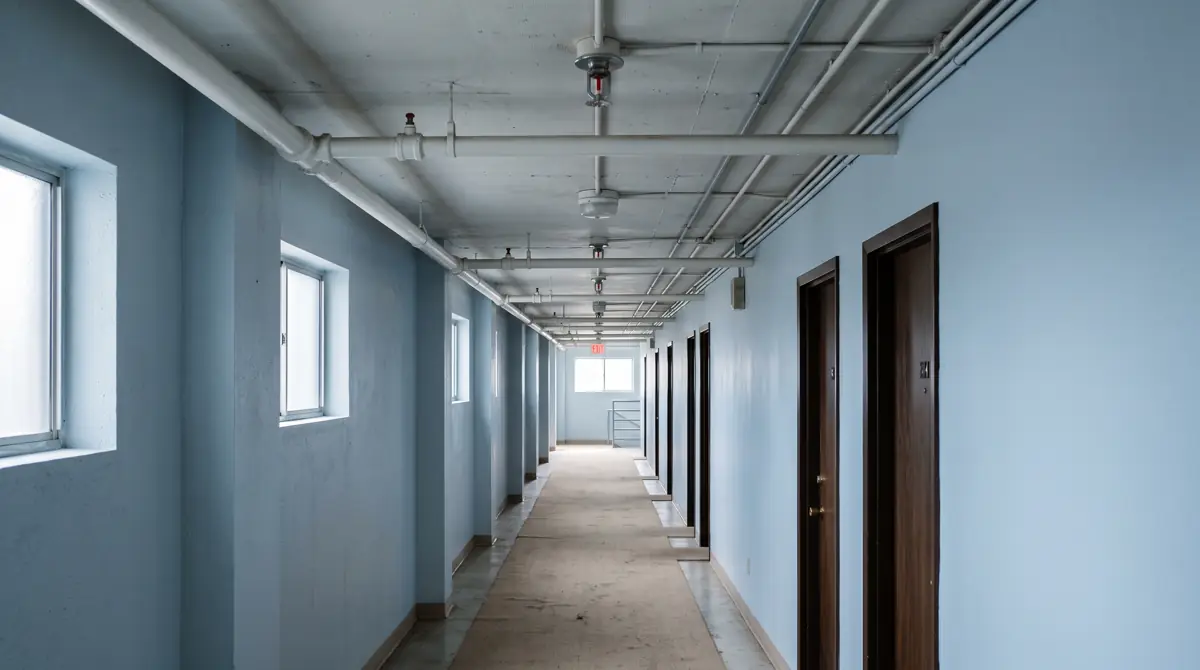
Twelve years is the default clock
The median rule gave owners 12.1 years from adoption to the final deadline, and 5 of 10 fixed-date rules gave 12.0 to 12.1 years.
Original deadline as first written
Source: Fire Life and Safety from ordinance, code and statute texts (see table)
Chicago, Houston, San Antonio, the Texas statute and Minnesota all landed on a 12-year schedule, the same span written into IFC Section 1103.5.4 and the top of the eight-to-twelve-year range the International Association of Fire Chiefs called reasonable in 2010. New York City gave 14.7 years. San Francisco's 2022 residential rule gave 6.0 years, the shortest, until the 2026 amendments stretched it to 2035.
Extensions change the picture for residential rules. Florida first barred enforcement before the end of 2014, then moved that date to January 1, 2020 and, in the current statute, January 1, 2024; condominiums now face a final inspection by January 1, 2027, about 12.0 years later than the original date. San Francisco added 7 years in 2026. The median window measured to current deadlines is still 12.1 years because most commercial rules were never extended.
| Rule | Adopted | Original final deadline | Current final deadline | Years to original deadline | Years to current deadline | Precision |
|---|---|---|---|---|---|---|
| New York City (offices) | 2004-10-22 | 2019-07-01 | 2019-07-01 | 14.7 | 14.7 | Exact dates |
| Chicago (commercial) | 2004-12 | 2017-01-01 | 2017-01-01 | 12.0 | 12.0 | Month of passage |
| Houston (all high-rises) | 2005-11-22 | 2017-12-31 | 2017-12-31 | 12.1 | 12.1 | Exact dates |
| San Antonio (all high-rises) | 2015-11-12 | 2028-01-01 | 2028-01-01 | 12.1 | 12.1 | Passage to year 12 after 2016-01-01 effective date |
| San Francisco (1993 commercial) | 1993 | 2006-02-15 | 2006-02-15 | 13.0 | 13.0 | Year level |
| San Francisco (residential) | 2022 | 2028-01-01 | 2035-01-01 | 6.0 | 13.0 | Year level |
| Florida (residential, statewide) | 2000 | 2014-12-31 | 2027-01-01 | 15.0 | 27.0 | Year level (end-2014 counted as 2015); original = earliest enforcement date set in 2003 |
| Texas HSC 766 (narrow residential class) | 2015-09-01 | 2027-09-01 | 2027-09-01 | 12.0 | 12.0 | Exact dates |
| Minnesota public housing | 2021 | 2033-08-01 | 2033-08-01 | 12.0 | 12.0 | Year level |
| Maryland apartments (as first published) | 2018 | 2033-01-01 | 12 years after notice | 15.0 | Year level; now notice-based |
Year-level rows use the calendar year when the adoption month is not documented. Notice-based rules (Seattle, Washington, Los Angeles) are excluded.
Source: [2][7][12][14][16][28][15][31][32] New York City Department of Buildings; City of Chicago; City of Houston; City of San Antonio; San Francisco Board of Supervisors, Budget and Legislative Analyst; Florida House of Representatives; Texas Legislature via Public.Law; Minnesota Revisor of Statutes; Maryland Department of Legislative Services
Deadlines that fall due between 2026 and 2035
Three final deadlines fall between now and the end of 2030: Florida condominiums (January 1, 2027), the Texas residential class (September 1, 2027) and San Antonio (January 1, 2028 by the ordinance's own count).
| Rule | Date | Milestone | Status on 2026-11-01 |
|---|---|---|---|
| Florida condominium high-rises | 2026-01-01 | Permits issued (sprinklers or engineered life safety system) | Passed |
| Florida condominium high-rises | 2027-01-01 | Final inspection passed | Open |
| Texas HSC 766 residential class | 2027-09-01 | Sprinklers on all floors (section expires 2028-09-01) | Open |
| San Antonio | 2028-01-01 | Sprinklers on all floors (year 12 after 2016-01-01); SF BLA reports October 2030 | Open |
| San Francisco residential | 2032-01-01 | Permit applications filed | Open |
| Minnesota public housing high-rises | 2033-08-01 | Sprinklers fully operational | Open |
| San Francisco residential | 2034-01-01 | Water supply and riser installed | Open |
| San Francisco residential | 2035-01-01 | Full system complete; R-2 exception expires | Open |
| Seattle and Washington State | 12 years after notice | Retrofit complete (schedule due 365 days after notice) | Open, notice-based |
| Maryland apartment high-rises | 12 years after notice | Retrofit complete unless egress requirements met | Open, notice-based |
Status as of 2026-11-01.
Source: [29][15][14][18][31][20][32] Becker, Florida Condo and HOA Law Blog; Texas Legislature via Public.Law; City of San Antonio; GoCodebook; Minnesota Revisor of Statutes; Seattle Fire Department; Maryland Department of Legislative Services
The San Antonio ordinance sets the last step at 12 years after its January 1, 2016 effective date. The San Francisco Budget and Legislative Analyst reported in August 2026 that full compliance is due by October 2030; we show both because the later date was not in the ordinance text we opened.
Seattle and the rest of Washington State have no fixed date. The 2021 state fire code, effective March 15, 2024, keeps IFC Section 1103.5.4, so the clock starts when the fire code official sends a written notice. The Seattle Fire Department told its council that notices would follow a data analysis of affected buildings. Maryland's amended code works the same way.
What cities have published about compliance
Few jurisdictions publish compliance counts. New York and Chicago did, and both show deadlines passing with many buildings still out of compliance.
Office buildings 100 feet or taller
Source: NYC Department of Buildings testimony to the City Council, 2019-11-20
Four months after New York City's July 1, 2019 deadline, 368 of 1,308 covered office buildings (28.1%) had certified compliance. The Department of Buildings had approved 22 of 112 extension requests (19.6%) and issued 1,088 violations in September 2019, equal to 83.2% of covered buildings.
733 buildings in the city file, last updated 2015-04-17
Source: City of Chicago Data Portal, Life Safety Evaluations (Deprecated 2015); counts by Fire Life and Safety
Chicago's own residential file, last updated April 17, 2015, lists 733 buildings. We counted 410 (55.9%) with a failed inspection result, 141 passed and 79 sprinklered, so 220 buildings (30.0%) had passed or sprinklered three years after the 2012 compliance date. 86 owners (11.7%) said they would install full sprinklers instead of evaluation work. By February 2017, NBC5 reported from city records that 510 of 731 residential buildings (69.8%) were in full compliance and at least 20 commercial buildings had missed the January 1, 2017 sprinkler deadline.
| Inspection status (city file, last updated 2015-04-17) | Buildings | Share of 733 (%) |
|---|---|---|
| Failed inspection | 410 | 55.9 |
| Passed inspection | 141 | 19.2 |
| Sprinklered | 79 | 10.8 |
| Fire department review incomplete | 42 | 5.7 |
| In court | 40 | 5.5 |
| LSE not required | 12 | 1.6 |
| Blank, demolished or empty lot | 9 | 1.2 |
Counted by Fire Life and Safety from the city CSV (733 rows; spelling variants merged). The city marks the file outdated after 2015.
Source: [10] City of Chicago Data Portal
Elsewhere the published record is thin. The San Francisco analyst reported that Houston buildings met the 2017 deadline and that San Antonio's first building complied in 2018. San Francisco's fire department counts 129 residential high-rises under its new rule, 51 of them condominiums. Florida's condominium regulator had received certificates from 19 completed retrofits by its 2009 report. Hotel rules differ again; see our report on hotel fire safety compliance.
| Jurisdiction | Measure | Value | As of | Source |
|---|---|---|---|---|
| New York City | Office buildings covered by LL26 | 1,308 | 2019-11-20 | NYC DOB testimony |
| New York City | Buildings certified compliant | 368 | 2019-11-20 | NYC DOB testimony |
| New York City | Extension applications / approved | 112 / 22 | 2019-11-20 | NYC DOB testimony |
| New York City | DOB violations issued for non-compliance | 1,088 | 2019-09 | NYC DOB testimony |
| Chicago | Pre-1975 high-rises at adoption (commercial / residential) | 1,300 (200 / 1,100) | 2004 | City summary of ordinance |
| Chicago | Residential buildings required to upgrade / in full compliance | 731 / 510 | 2017-02-15 | NBC5 Investigates (city records) |
| Chicago | Residential buildings choosing full sprinklers | 86 | 2017-02-15 | NBC5 Investigates (city records) |
| Chicago | Commercial buildings past the 2017 sprinkler deadline | at least 20 | 2017-02-15 | NBC5 Investigates (city records) |
| Houston | Compliance with 2017 deadline | achieved; condominium units exempt | 2026-08-03 | SF Budget and Legislative Analyst |
| San Antonio | First building in compliance | 2018 | 2026-08-03 | SF Budget and Legislative Analyst |
| San Francisco | Residential high-rises affected (condominium / rental) | 129 (51 / 78) | 2026-08-03 | SF Budget and Legislative Analyst citing SFFD |
| Los Angeles | Unsprinklered residential high-rises | 55 (2022); 53 (December 2024) | 2022-10-31; 2026-08-03 | LADBS/LAFD report; SF BLA |
| San Jose | High-rises affected / compliant | 11 / 11 | 2017-07-23 | AP (deputy fire marshal) |
| Florida | Certificates of completed condominium retrofits received by DBPR since 2004 | 19 | 2009 report (cited 2019) | Florida House staff analysis |
| Philadelphia | Nonresidential buildings affected | about 300 | 2021-02-19 | Firehouse |
| San Diego | City Administration Building floors sprinklered | 5 of 15 plus basement | 2009-01-29 | San Diego IBA report 09-05 |
Values are copied as published; we did not re-count them except in the Chicago table below.
Source: [4][8][11][16][6][35][28][36][19] New York City Department of Buildings; City of Chicago; NBC5 Chicago; San Francisco Board of Supervisors, Budget and Legislative Analyst; City of Los Angeles; Associated Press via PBS NewsHour; Florida House of Representatives; Firehouse; City of San Diego Independent Budget Analyst
Statewide rules and the model-code route
Three states require full retrofits statewide (Florida, Massachusetts and Washington) and four have narrower rules (Texas, Nevada, Minnesota and Maryland).
| State | Status | Rule | Scope | Current final deadline | URL opened |
|---|---|---|---|---|---|
| Massachusetts (statewide; applies in Boston) | mandate | M.G.L. c. 148, s. 26A1/2 | Buildings over 70 ft built before 1975-01-01; condominiums (c. 183A), hospital patient rooms, libraries and houses of worship exempt | 1998-03-30 | https://malegislature.gov/Laws/GeneralLaws/PartI/TitleXX/Chapter148/Section26A1~2 |
| Florida (statewide; applies in Jacksonville, Miami, Tampa) | mandate | Florida Fire Prevention Code (NFPA 101 as adopted) plus Fla. Stat. 718.112(2)(n) and 719.1055 (condominium and cooperative opt-out) | Existing residential buildings 75 ft or taller; units with exterior exit access exempt; condominium owners may vote to forgo sprinklers but must then install an engineered life safety system | 2027-01-01 | http://www.leg.state.fl.us/statutes/index.cfm?App_mode=Display_Statute&URL=0700-0799/0718/Sections/0718.112.html |
| Washington (statewide) | mandate | 2021 Washington State Fire Code (WAC 51-54A adopting IFC 2021), Section 1103.5.4 not amended | As IFC 1103.5.4: high-rises over 120 ft, or 75 to 120 ft lacking rated stairs or alarm smoke detection | 12 years after notice | https://sbcc.wa.gov/sites/default/files/2024-03/2021IFC_InsertPages2ndPrint_03012024.pdf |
| Texas (one county class; applies in San Antonio) | limited | Tex. Health and Safety Code 766.051 to 766.056 (H.B. 3089, 2015) | Residential buildings 75 ft or taller in a county over 1.5 million where over 70% live in one city, if at least half the residents are elderly or have a disability or mobility impairment | 2027-09-01 | https://statutes.capitol.texas.gov/Docs/HS/htm/HS.766.htm |
| Nevada (statewide; applies in Las Vegas) | limited | NRS 477.150 (added 1981) | Hotels, motels, offices, apartments and condominiums with occupied floors over 55 ft: sprinklers in exit corridors and above each room door to the corridor (not full coverage) | not stated | https://www.leg.state.nv.us/NRS/NRS-477.html |
| Minnesota (statewide; applies in Minneapolis) | limited | Minn. Stat. 299F.48 (1Sp2021 c 10 art 3 s 5) | Federally financed public housing owned by housing authorities with a floor 75 ft or more above fire department access | 2033-08-01 | https://www.revisor.mn.gov/statutes/cite/299F/full |
| Maryland (statewide; applies in Baltimore) | limited | State Fire Prevention Code (COMAR 29.06.01, NFPA 101 2024 as amended) | Existing high-rise apartment buildings without sprinklers unless egress requirements are met | 12 years after notice | https://mgaleg.maryland.gov/2026RS/fnotes/bil_0009/hb0149.pdf |
| California | unclear | 2025 California Fire Code Chapter 11 (prints IFC Section 1103.5.4) | Whether 1103.5.4 is in force statewide or only where a city adopts it was not confirmed | n/a | https://gocodebook.com/library/us/ca/ca-fire-code/chapter-11-construction-requirements-for-existing-buildings/section-1103-fire-safety-requirements-for-existing-buildings |
| Ohio | unclear | OAC 1301:7-7-11 (Ohio Fire Code, Chapter 11) | A version effective 2025-11-20 appears to modify IFC 1103.5.4; the rule text could not be opened | n/a | https://codes.ohio.gov/ohio-administrative-code/rule-1301:7-7-11 |
States not listed were not individually searched for a statute; see the coverage table for how each city's state code was treated.
Source: [24][25][21][15][30][31][32][23] Massachusetts Legislature; Florida Legislature; Washington State Building Code Council; Texas Legislature via Public.Law; Nevada Legislature; Minnesota Revisor of Statutes; Maryland Department of Legislative Services; GoCodebook (California Building Standards Commission text)
Massachusetts law covers buildings over 70 feet built before 1975, exempts condominiums, and set a final date of March 30, 1998. Florida's requirement comes from its fire prevention code for residential buildings 75 feet or taller, with condominium and cooperative opt-outs in statute. Texas limits its 2015 statute to residential towers in a county of more than 1.5 million people where over 70% live in one city, and only where at least half the residents are elderly or have a disability.
The model codes now point toward retrofit. IFC Section 1103.5.4 entered the 2021 edition; the IAFC's 2010 position said the IFC then had no such requirement. Maryland's legislative analysts describe the 2024 NFPA 101 as requiring sprinklers in existing high-rise apartment buildings by January 1, 2033 unless egress conditions are met. States and cities can delete or amend either clause, which is why the coverage table marks many cities unclear rather than covered. For the sprinkler inspection duties that follow installation, see fire sprinkler inspections.
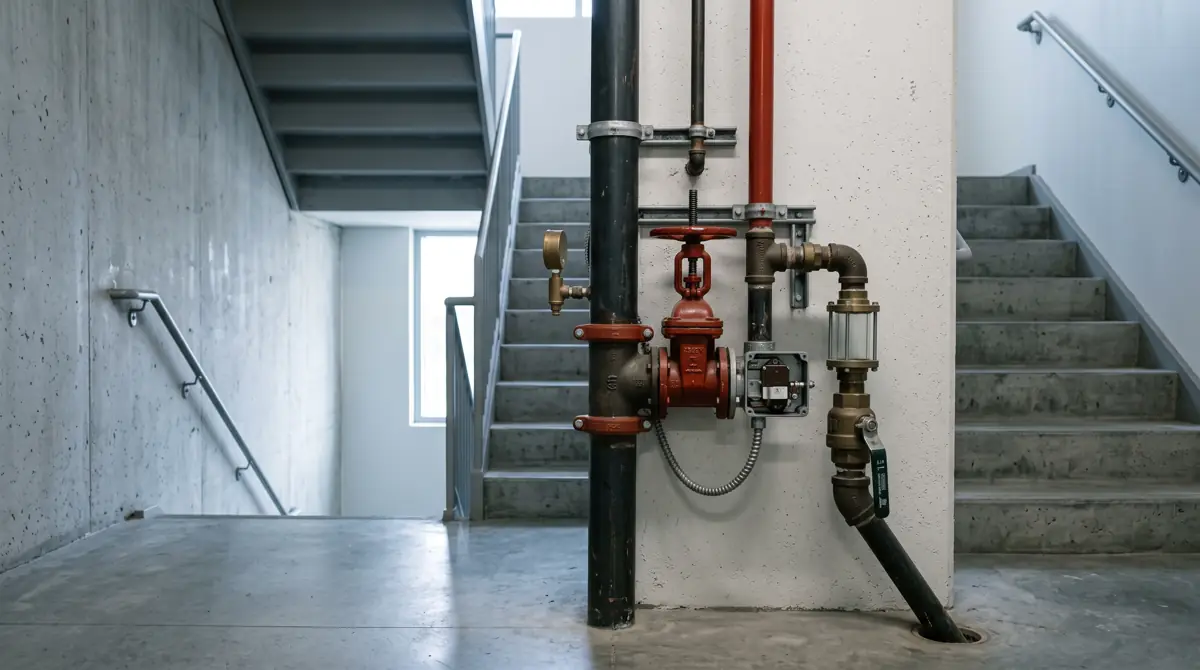
Four decades of adoptions
Retrofit rules arrived in waves: Western and Northeastern cities in the 1980s and 1990s, the largest office markets in the 2000s, and residential rules since 2015.
Rules reaching the 50 largest cities, by decade of adoption
Source: Fire Life and Safety registry (16 rules, including two reported and one repealed)
Of the 16 rules in our timeline, 4 date from the 2000s and 6 from 2015 or later. The recent rules are almost all residential: San Antonio and Texas (2015), Maryland's 2018 determination, Minnesota public housing (2021), San Francisco residential (2022) and the Washington State code (2024). Only a few jurisdictions name a triggering event in their own documents; New York's Department of Buildings cites its post-September 11 task force, and San Francisco's analyst cites 145 fires since 2011 in residential towers not covered by earlier rules.
| Rule | Year adopted | Decade |
|---|---|---|
| Nevada NRS 477.150 | 1981 | 1980s |
| San Jose (reported) | 1983 | 1980s |
| Los Angeles | 1988 | 1980s |
| Philadelphia (reported) | 1991 | 1990s |
| San Diego (repealed 2015) | 1991 | 1990s |
| San Francisco 377-93 | 1993 | 1990s |
| Florida fire code | 2000 | 2000s |
| New York City LL26 | 2004 | 2000s |
| Chicago | 2004 | 2000s |
| Houston | 2005 | 2000s |
| San Antonio | 2015 | 2010s |
| Texas HSC 766 | 2015 | 2010s |
| Maryland determination | 2018 | 2010s |
| Minnesota 299F.48 | 2021 | 2020s |
| San Francisco residential | 2022 | 2020s |
| Washington / Seattle (IFC 2021) | 2024 | 2020s |
Reported years for Philadelphia and San Jose.
Source: [30][35][5][36][19][17][28][2][9][12][14][15][33][31][16][21] Nevada Legislature; Associated Press via PBS NewsHour; Los Angeles Fire Department; Firehouse; City of San Diego Independent Budget Analyst; San Francisco Fire Department; Florida House of Representatives; New York City Department of Buildings; City of Chicago Department of Buildings; City of Houston; City of San Antonio; Texas Legislature via Public.Law; Lerch Early and Brewer; Minnesota Revisor of Statutes; San Francisco Board of Supervisors, Budget and Legislative Analyst; Washington State Building Code Council
Counts and distributions
Share of the 50 largest cities with a retrofit mandate
Formulacities with status mandate / 50 x 100
Inputs: coverage table t2 (50 rows); registry rows (fact sheet rows)
Result: 13 cities, 26%
About one in four large cities has a retrofit rule on the books, counting state laws that apply inside the city.
Limitations: Includes two cities (Philadelphia, San Jose) confirmed only by reporting; 31 unclear cities are not counted.
Residential versus commercial reach
Formulacount of mandate cities covering residential towers; count covering commercial towers
Inputs: registry fields residential and commercial (fact sheet rows)
Result: 9 residential (18%), 10 commercial (20%), 4 offices only
The biggest office markets retrofitted offices but left apartment towers to evaluations or nothing.
Limitations: Chicago residential towers are coded as evaluation only, not as a residential sprinkler mandate.
Population-weighted coverage
Formulasum of 2024 population in mandate cities / sum for all 50 x 100
Inputs: Census Vintage 2024 rows 1 to 50 (fact sheet rows)
Result: 50.5% (all mandates); 17.8% (residential); 46.7% (commercial)
Half of the big-city population lives under some retrofit rule, but fewer than one in five lives in a city whose rule reaches apartment towers.
Limitations: Population is a proxy; building stock and tower counts differ widely between cities.
Median compliance window
Formulamedian(final deadline year minus adoption year) over fixed-date rules
Inputs: table t4 (10 rules) (fact sheet rows)
Result: 12.1 years to original deadlines; 12.1 years to current deadlines
Twelve years is the standard span, matching the model code and the IAFC's recommended upper bound.
Limitations: Several rows are year-level; notice-based rules are excluded.
Open deadlines 2026 to 2030
Formulacount of final deadlines dated 2026-11-01 to 2030-12-31
Inputs: table t5 (fact sheet rows)
Result: 3 (Florida, Texas class, San Antonio)
Most active pressure on owners through 2030 sits in Florida and Texas.
Limitations: San Antonio's date differs between the ordinance (2028) and the SF analyst's report (2030).
Chicago residential evaluation outcomes (our count)
Formulainspection status counts / 733
Inputs: City of Chicago LSE file (2015) (fact sheet rows)
Result: 55.9% failed; 30.0% passed or sprinklered
Three years after the 2012 date, most evaluated residential towers had not passed.
Limitations: The city warns that many reports failed at first because of a new reporting process; the file stopped updating in 2015.
Key findings
- 13 of the 50 largest U.S. cities (26%) have a high rise sprinkler retrofit mandate as of November 1, 2026.[1][2][5][7][12]
- 9 of the 50 largest cities (18%) require at least some existing residential towers to add sprinklers.[12][14][16][20][24][25]
- 10 of the 50 largest cities (20%) require existing commercial high-rises to add sprinklers; 4 of those cover offices only.[2][5][7][36]
- Mandate cities hold 50.5% of the 51,058,184 residents of the 50 largest cities (Census, July 1, 2024).[1]
- The median retrofit rule gave 12.1 years from adoption to the final deadline across 10 fixed-date rules.[2][7][12][14][15][31]
- New York City's Local Law 26 covered 1,308 office buildings; 368 (28.1%) had certified compliance by November 20, 2019.[4]
- New York City's Department of Buildings issued 1,088 violations in September 2019 and approved 22 of 112 extension requests.[4]
- In Chicago's 2015 residential Life Safety Evaluation file, 410 of 733 buildings (55.9%) carried a failed inspection result.[10]
- NBC5 reported in February 2017 that 510 of 731 Chicago residential high-rises (69.8%) were in full compliance.[11]
- Florida condominiums face a final inspection deadline of January 1, 2027, after the earliest enforcement date moved from the end of 2014 to 2020 and then 2024.[25][28][29]
- San Francisco counts 129 residential high-rises under its retrofit rule, 51 of them condominiums (39.5%), with full systems due January 1, 2035.[16][18]
- Washington State's 2021 fire code, effective March 15, 2024, keeps IFC Section 1103.5.4, a 12-year retrofit clock that starts with a written notice.[21][20]
- Texas requires sprinklers on all floors by September 1, 2027 in a narrow class of residential towers where at least half the residents are elderly or disabled.[15]
- Minnesota requires public housing high-rises to have operational sprinklers by August 1, 2033.[31]
- San Diego repealed its 1991 high-rise retrofit rule in 2015 after four deadline extensions.[16][19]
Executive summary
- 13 of the 50 largest cities (26%) have a high rise sprinkler retrofit mandate; 4 of them are covered through Florida or Massachusetts state law.
- 9 mandate cities reach residential towers; New York, Los Angeles, Chicago and Philadelphia retrofitted offices only.
- The 13 mandate cities hold 50.5% of the population of the 50 largest cities; residential sprinkler mandates reach cities holding 17.8%.
- Florida, Massachusetts and Washington require retrofits statewide; Texas, Nevada, Minnesota and Maryland have narrower rules.
- The median rule gave 12.1 years from adoption to the final deadline, and 5 of 10 fixed-date rules gave 12.0 to 12.1 years.
- Three final deadlines fall before the end of 2030: Florida condominiums (January 1, 2027), the Texas residential class (September 1, 2027) and San Antonio (2028).
- 31 cities are unclear, mostly because the 2021 and 2024 model fire codes include a notice-based retrofit clause whose local adoption we could not confirm.
Questions people ask
Do old high-rise apartment buildings have to install sprinklers?
Only in some places. In the 50 largest cities, 9 require at least some existing residential towers to add sprinklers, including Houston, San Antonio, San Francisco, Seattle, Boston and the three Florida cities. New York City, Los Angeles and Chicago do not require sprinklers in older apartment towers.
What is the deadline for the Florida high-rise sprinkler retrofit?
Florida condominium associations must pass final inspection of sprinklers or an engineered life safety system by January 1, 2027, with permits due by January 1, 2026, as reported from the Florida Fire Prevention Code. Fla. Stat. 718.112(2)(n) bars local deadlines before January 1, 2024.
Does the International Fire Code require existing high-rises to be sprinklered?
Since the 2021 edition, Section 1103.5.4 requires existing high-rises over 120 feet, or 75 to 120 feet without protected stairs or smoke detection, to retrofit within 12 years of a written notice, where Appendix M is not adopted. Each state or city may amend it.
Which buildings were covered by NYC Local Law 26?
Office buildings and Occupancy Group E buildings 100 feet or taller that existed on October 22, 2004. Sprinklers were due by July 1, 2019.
Frequently asked questions
How many large U.S. cities require high-rise sprinkler retrofits?
13 of the 50 largest cities (26%) have a mandate as of November 1, 2026, counting state laws that apply inside the city.
Which states require existing high-rises to be sprinklered statewide?
Florida (residential buildings 75 feet or taller), Massachusetts (buildings over 70 feet built before 1975) and Washington (IFC Section 1103.5.4, notice-based). Texas, Nevada, Minnesota and Maryland have narrower rules.
Does Chicago require residential high-rises to add sprinklers?
No. Chicago's 2004 ordinance required commercial high-rises over 80 feet to be sprinklered by January 1, 2017, but residential towers could instead pass a Life Safety Evaluation, with work due by January 1, 2012.
Does Los Angeles require older apartment towers to add sprinklers?
Not yet. Ordinances from 1988 and 1989 cover pre-1974 high-rises other than residential buildings. A residential ordinance has been under study since 2021; LADBS counted 55 affected residential buildings in 2022.
What did Houston require?
Houston Fire Code Appendix J required every high-rise existing on December 31, 2005 to be fully sprinklered by December 31, 2017, except individually owned dwelling units.
How long do owners usually get to retrofit?
The median across 10 fixed-date rules is 12.1 years from adoption to the final deadline; 5 of the 10 gave 12.0 to 12.1 years.
What is an engineered life safety system?
Florida's alternative to full sprinklers: a combination of partial sprinklers, smoke detection, smoke control and compartmentation, evaluated with the NFPA 101A board-and-care method under Fla. Stat. 633.208(5).
How many New York City office buildings met the Local Law 26 deadline?
368 of 1,308 had certified compliance by November 20, 2019, according to the Department of Buildings, which issued 1,088 violations in September 2019.
When does San Francisco's residential retrofit deadline fall?
Permit applications are due by January 1, 2032, water supply and risers by January 1, 2034 and full systems by January 1, 2035.
Did any city repeal its retrofit rule?
Yes. San Diego adopted its rule in 1991, extended the deadline four times, and repealed it in 2015, according to the San Francisco Budget and Legislative Analyst.
Download the data
Every table in this report is available as a CSV under CC BY 4.0. The fact sheet lists each value with its source URL and access date.
- derived_metrics.csv (CSV)
- fact_sheet.csv (CSV)
- Registry of high-rise sprinkler retrofit rules reaching the 50 largest U.S. cities (CSV)
- t1_registry.csv (CSV)
- t2_coverage.csv (CSV)
- t3_compliance.csv (CSV)
- t4_windows.csv (CSV)
- t5_deadlines.csv (CSV)
- t6_timeline.csv (CSV)
- t7_chicago_lse.csv (CSV)
- t8_states.csv (CSV)
For journalists and researchers
If you cite only a few, cite these
- 13 of the 50 largest U.S. cities (26%) have a high-rise sprinkler retrofit mandate; 9 reach residential towers.[1][12][16]
- The median rule gave 12.1 years from adoption to the final deadline.[2][7][12][14]
- Three states require full retrofits statewide: Florida, Massachusetts and Washington.[24][25][21]
Most quotable statistics
- 13 of the 50 largest U.S. cities have a high-rise sprinkler retrofit mandate as of November 1, 2026 (Fire Life and Safety registry).[1][2][12]
- Only 9 of the 50 largest U.S. cities require any existing residential towers to add sprinklers.[12][14][16][25]
- The median high-rise retrofit rule gave owners 12.1 years from adoption to the final deadline.[2][7][12][14]
- 368 of 1,308 New York City office towers had certified sprinkler compliance four months after the July 1, 2019 deadline.[4]
- In Chicago's 2015 file, 410 of 733 evaluated residential high-rises carried a failed inspection result.[10]
- Florida condominium high-rises must pass final sprinkler or life safety inspections by January 1, 2027.[25][29]
Press summary
A Fire Life and Safety registry finds that 13 of the 50 largest U.S. cities require existing high-rise buildings to add automatic sprinklers as of November 1, 2026. Nine of those rules reach residential towers; New York City, Los Angeles, Chicago and Philadelphia retrofitted offices only. Florida, Massachusetts and Washington require retrofits statewide, while Texas, Nevada, Minnesota and Maryland have narrower rules. The median rule gave owners 12.1 years from adoption to the final deadline. Published compliance data are scarce: New York City reported 368 of 1,308 covered office buildings certified four months after its 2019 deadline, and a Chicago city file from 2015 shows 410 of 733 residential towers with a failed evaluation result. Three final deadlines fall before 2031, led by Florida condominiums on January 1, 2027. For 31 cities the status is unclear because recent model fire codes include a retrofit clause that local governments may keep or delete. Each rule links to the text we opened.
Suggested headlines
- 13 of the 50 Largest U.S. Cities Require High-Rise Sprinkler Retrofits
- Big Cities Sprinklered Their Office Towers, Not Their Apartment Towers
- Twelve Years: The Standard Clock for High-Rise Sprinkler Retrofits
- Florida Condo Towers Face a January 1, 2027 Sprinkler Deadline
- Four Months After NYC's Deadline, 368 of 1,308 Office Towers Had Certified Sprinklers
How to cite this report
Fire Life and Safety. (2026). High Rise Sprinkler Retrofit Laws in the 50 Largest U.S. Cities. Retrieved from https://firelifeandsafety.com/reports/high-rise-sprinkler-retrofit-laws/
Reuse license
Data and tables are licensed CC BY 4.0. Attribution: “Source: Fire Life and Safety, High Rise Sprinkler Retrofit Laws in the 50 Largest U.S. Cities” with a link to this page.
Methodology
Scope. We ranked incorporated places (Census summary level 162) by the Vintage 2024 estimate for July 1, 2024 and took the top 50. Consolidated city-counties (Nashville, Louisville, Indianapolis) use the balance figure. Urban Honolulu is a Census-designated place and therefore not in the list; its retrofit rule (Ordinance 18-14, Bill 37 of 2021) is noted in registry.csv for comparison only.
What counts as a mandate. A rule that requires existing high-rise buildings, of any use, to install automatic sprinklers by a date or within a set time after notice. Rules that only require sprinklers at sale, at substantial renovation or in new construction do not count. A limited rule covers a narrow class (public housing, a resident-profile class) or requires only partial sprinklers (Nevada's corridor rule). A city counts as covered when a state law applies inside it.
Sources and verification. Every mandate row cites the ordinance, code or statute text or an official agency record we opened on 2026-11-01. Municode, American Legal and several city sites returned HTTP 403 or refused connections; we did not try to bypass those blocks and instead used Internet Archive captures of the official pages (Chicago, Houston, Massachusetts, Nevada, San Francisco) and code mirrors (Texas statute, San Francisco and California fire codes), marked as such. Philadelphia and San Jose are counted as mandates on the strength of AP, Firehouse and San Francisco Budget and Legislative Analyst reporting and are labeled reported.
Unclear and no mandate found. The 2021 and 2024 International Fire Code (Section 1103.5.4) and the 2024 NFPA 101 contain retrofit provisions for existing high-rises. Where a city's state or local code is based on those editions and we could not open the local amendments, we marked the city unclear rather than covered. No mandate found means the code edition in force predates the provision and no local ordinance surfaced in the SF BLA 2026 survey, the AP 2017 survey or our searches. State code editions come from our fire code adoption tracker (checked 2026-10-19).
Conflicts. Where sources disagreed we report both: San Antonio's final date is 2028 by the ordinance text and October 2030 in the SF analyst's report; the SF analyst gives San Jose's ordinance as both 1983 and 1985 (AP says 1983). Florida's current phasing dates come from a law-firm summary of the fire code and are corroborated by the SF analyst; the statute itself sets only the earliest enforcement date.
Derived metrics. Shares use 50 cities as the denominator. Population shares sum July 1, 2024 estimates. Compliance windows subtract adoption from the final deadline using exact dates where documented and calendar years otherwise; notice-based rules are excluded. The Chicago table is our count of the city's 733-row file with spelling variants merged. All formulas are in derived_metrics.csv and scripts/build_data.py.
Triggers. We list an event as the trigger only when the jurisdiction's own document names it (New York City's DOB testimony; the San Francisco analyst's account of the 2022 ordinance). Reporting that ties Chicago's or Philadelphia's rules to particular fires is not used as the trigger field.
Not legal advice. This registry summarizes ordinances, codes and statutes as published on the dates opened. It is not legal advice. Retrofit duties depend on the code edition and local amendments your state and authority having jurisdiction have adopted, on notices served on a specific building, and on exemptions; confirm with your fire marshal, building department or an attorney. Last updated 2026-11-01.
This report presents published data with its limitations. It is not legal, engineering, financial or investment advice. Requirements depend on the code edition your state and local fire marshal have adopted; confirm with your authority having jurisdiction.
Sources, ranked by quality
Tier 1: primary and official sources (28)
- [1] U.S. Census Bureau. City and Town Population Totals: 2020-2024 (SUB-EST2024). July 1, 2024 estimates (Vintage 2024). Accessed 2026-11-01.
- [2] New York City Department of Buildings. Local Law 26 of 2004 (text). Enacted 2004. Accessed 2026-11-01.
- [3] New York City Department of Buildings. Buildings Bulletin 2017-017: Local Law 26 of 2004. Issued 2017-12-29. Accessed 2026-11-01.
- [4] New York City Department of Buildings. Testimony: Sprinkler Systems in High-Rise Office Buildings. 2019-11-20. Accessed 2026-11-01.
- [5] Los Angeles Fire Department. High-Rise Retrofit Ordinances #163836 and #165319. Ordinances effective 1988 and 1989. Accessed 2026-11-01.
- [6] City of Los Angeles. LADBS and LAFD report back, Council File 20-0146 (residential high-rise sprinkler retrofit). 2022-10-31. Accessed 2026-11-01.
- [7] City of Chicago. Substitute ordinance amending Chapter 13-196 (sections 13-196-203 to 13-196-207), archived copy. Ordinance of 2004; Internet Archive capture 2025-03-20. Accessed 2026-11-01.
- [8] City of Chicago. Summary of the Key Provisions of the Life Safety and High Rise Ordinance, archived copy. 2004; capture 2025-03-24. Accessed 2026-11-01.
- [9] City of Chicago Department of Buildings. Guidelines for RFQs to perform Life Safety Evaluations; LSE FAQ, archived copies. December 2005; captures 2025. Accessed 2026-11-01.
- [10] City of Chicago Data Portal. Life Safety Evaluations (Deprecated 2015), dataset qqqh-hgyw. Last data update 2015-04-17. Accessed 2026-11-01.
- [12] City of Houston. Houston Fire Code Appendix J: Automatic Sprinkler Systems in Existing High-Rise Buildings, archived copy. Amended 2005-11-22; capture 2025-09-04. Accessed 2026-11-01.
- [13] Houston Fire Department. Houston Fire Marshal Office: Standards and Codes, archived copy. Capture 2025-11-06. Accessed 2026-11-01.
- [14] City of San Antonio. Ordinance 2015-11-12-0946 adopting IFC Appendix M as amended. Passed 2015-11-12; effective 2016-01-01. Accessed 2026-11-01.
- [16] San Francisco Board of Supervisors, Budget and Legislative Analyst. Policy Analysis Report: High Rise Fire Sprinkler Retrofit Ordinance Cost Estimates. 2026-08-03. Accessed 2026-11-01.
- [17] San Francisco Fire Department. SFFD Administrative Bulletin 2.08: Retroactive Sprinkler Installation for High-Rise Buildings, archived copy. Capture 2026-07-13. Accessed 2026-11-01.
- [19] City of San Diego Independent Budget Analyst. IBA Report 09-05: Fire Sprinkler Retrofitting for High-Rise Buildings. 2009-01-29. Accessed 2026-11-01.
- [20] Seattle Fire Department. 2021 Seattle Fire Code Significant Changes (council briefing). 2021 code cycle. Accessed 2026-11-01.
- [21] Washington State Building Code Council. Washington State Amendments to the 2021 International Fire Code (WAC 51-54A). Effective 2024-03-15. Accessed 2026-11-01.
- [22] Corpus Christi Fire Department. Letter to business owners: existing high-rise requirements in the 2021 IFC. 2023-08-01. Accessed 2026-11-01.
- [24] Massachusetts Legislature. Massachusetts General Laws c. 148, s. 26A1/2, archived copy. Capture 2025-03-02. Accessed 2026-11-01.
- [25] Florida Legislature. Florida Statutes 718.112 (bylaws; firesafety). 2026 Florida Statutes. Accessed 2026-11-01.
- [26] Florida Legislature. Florida Statutes 719.1055 (cooperatives). 2026 Florida Statutes. Accessed 2026-11-01.
- [27] Florida Legislature. Florida Statutes 633.208 (minimum firesafety standards). 2026 Florida Statutes. Accessed 2026-11-01.
- [28] Florida House of Representatives. House of Representatives Staff Analysis, HB 647 (2019). 2019-03-26. Accessed 2026-11-01.
- [30] Nevada Legislature. Nevada Revised Statutes chapter 477, archived copy. Capture 2026-10-06. Accessed 2026-11-01.
- [31] Minnesota Revisor of Statutes. Minnesota Statutes chapter 299F (section 299F.48). 2025 statutes as published 2026. Accessed 2026-11-01.
- [32] Maryland Department of Legislative Services. Fiscal and Policy Note, HB 149 (2026 Session), enrolled. 2026-04-16. Accessed 2026-11-01.
- [34] City and County of Honolulu. Bill 37 (2021), CD2, Relating to Fire Safety. 2021. Accessed 2026-11-01.
Tier 2: trade bodies, market research, company data (5)
- [15] Texas Legislature via Public.Law. Texas Health and Safety Code 766.051 to 766.056 (official site https://statutes.capitol.texas.gov/Docs/HS/htm/HS.766.htm; text read from Public.Law mirror). H.B. 3089 (2015), amended 2023. Accessed 2026-11-01.
- [18] GoCodebook. San Francisco Fire Code 1103.5 [For SF] Sprinkler Systems (mirror of codified text, Ord. 39-26). Text as of 2026-10-23. Accessed 2026-11-01.
- [23] GoCodebook (California Building Standards Commission text). 2025 California Fire Code, Section 1103 (mirror). Effective 2026-01-01. Accessed 2026-11-01.
- [37] International Association of Fire Chiefs. Position: Fire Sprinkler Retrofit of Existing High-Rise Buildings. Adopted 2010-11-05. Accessed 2026-11-01.
- [38] Fire Life and Safety. Fire Code Adoption by State (state model code and edition used for coverage notes). Checked 2026-10-19. Accessed 2026-11-01.
Tier 3: journalism and expert commentary (6)
- [11] NBC5 Chicago. 14 Years After 69 West Washington: Fire Reforms Are Still Incomplete. 2017-02-15. Accessed 2026-11-01.
- [29] Becker, Florida Condo and HOA Law Blog. Fire Sprinkler and ELSS Deadlines Extended by Florida Fire Prevention Code. 2024-10-29. Accessed 2026-11-01.
- [33] Lerch Early and Brewer. Maryland Sprinkler Retrofit Mandate Will Not Be Enforced. 2024-02-02. Accessed 2026-11-01.
- [35] Associated Press via PBS NewsHour. Few U.S. cities mandate sprinklers in old residential towers. 2017-07-23. Accessed 2026-11-01.
- [36] Firehouse. One Meridian Plaza: 30 Years Later. 2021-02-19. Accessed 2026-11-01.
- [39] GrowSF. Sprinkler retrofit mandate may be delayed. 2026-02-26. Accessed 2026-11-01.