Fire Pump Inspection Checklist: Weekly Run to Annual Flow Test
A fire pump inspection checklist starts with a weekly visual check of the pump room and a no-flow (churn) run, which NFPA 25 sets at about 10 minutes for electric pumps and 30 minutes for diesel pumps. Once a year a qualified contractor flow tests the pump at no flow, rated flow and 150 percent of rated flow. Your state's adopted edition decides whether electric pumps may run monthly instead of weekly.
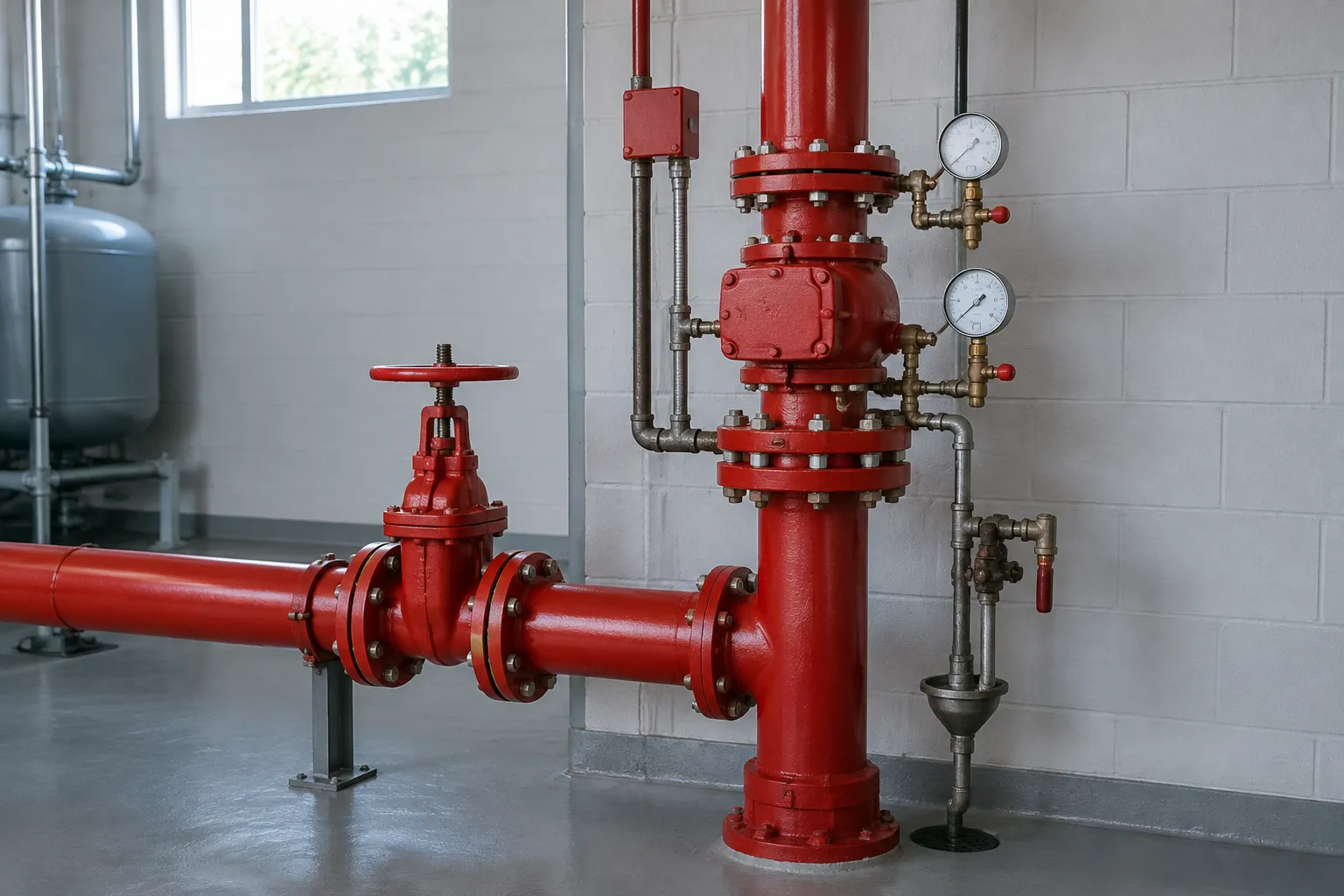
Fire pumps inspection, testing and maintenance
Weekly fire pump inspection
The weekly check is a walk-through of the pump house or room. It catches a pump that is off, a tripped controller or a dead battery before you need it. A fire protection company summary of NFPA 25 lists a weekly visual inspection of the pump house, pump system and electrical system for both diesel and electric pumps.
- Check the pump room is heated, ventilated, dry and clear of storage.
- Look at the controller: power-on light and transfer switch lights show normal.
- Read suction and discharge pressure gauges and write them down.
- Check pump packing, leaks and the area around the pump for water.
- Diesel pump: check fuel, oil and coolant levels and read battery voltage and charge current.
- Check that valves on the suction and discharge sides are open and sealed.
Churn runs and the annual flow test
The no-flow or churn run starts the pump and lets it run without discharging water. Summaries of NFPA 25 give at least 30 minutes for diesel engines at rated speed and at least 10 minutes for electric motors. Diesel pumps run weekly. A 2014-edition summary says electric pumps may run monthly except in certain conditions, so your edition and your fire marshal decide.
Once a year the pump is flowed at three points: no flow, rated capacity and 150 percent of rated capacity. The contractor records suction and discharge pressure, speed, voltage and amperage and compares them with earlier tests.
- Run the pump at no flow for the full time and watch for overheating, noise or leaks.
- Diesel pump: run at least 30 minutes; electric pump: at least 10 minutes.
- Record start pressure, run pressure, voltage or engine speed and run time.
- Book the annual flow test with a qualified contractor and tell your monitoring company.
- Compare annual results with the prior test and the pump's nameplate curve.
- Test pressure relief and circulation relief valves with the pump test.
Maintenance between tests
Pump maintenance is mostly keeping the room, power and fuel ready. Replace batteries on the manufacturer’s schedule, keep the diesel tank full, and fix any deficiency found in a run right away. If the pump is out of service it is an impairment: tag it, notify the fire department and your insurer, and plan interim protection.
- Keep the diesel fuel tank at the level the manufacturer or contractor specifies.
- Replace batteries and check charger operation on schedule.
- Lubricate and adjust packing as the manufacturer requires.
- Fix deficiencies found during a run before the next scheduled run.
- Report any impairment to the fire department, insurer and monitoring company.
Run logs and test reports
Write each weekly or monthly run in a log: date, run time, pressures, readings and who ran it. File the annual flow test report with the curve compared to earlier tests. Retention follows your edition and fire marshal. Keep the longer period if sources conflict.
- Keep the weekly run log with pressures, readings and initials.
- Keep each annual flow test report and compare to the last one.
- Keep controller and battery service records.
- Record impairments with start and end times and who was notified.
- Keep the pump's nameplate data and test curve with the log.
What the inspector checks
- Weekly run log with recent dated entries.
- Pump room heated, clear and open to the inspector.
- Controller lights normal and no alarm conditions.
- Annual flow test report with the three test points.
- Diesel fuel level and battery condition.
- Valves open and sealed on suction and discharge piping.
- Impairment tags and notification log if the pump is out of service.
Fire pump test frequency table
| Frequency | Task |
|---|---|
| Weekly | Visual check of pump room, pump and electrical system; diesel no-flow run of 30 minutes or more; controller and battery readings |
| Weekly or monthly | Electric pump no-flow run of 10 minutes or more; monthly allowed in some editions and conditions |
| Annual | Flow test at no flow, rated flow and 150 percent of rated flow; pressure relief valve tests |
NFPA 25 covers testing and maintenance of installed pumps. NFPA 20 covers how pumps are installed.
Fire pumps: common questions
How often should a fire pump be run?
Diesel pumps weekly. Electric pumps weekly, or monthly where your edition allows it and no exception applies. Your fire marshal confirms which applies.
How long is a fire pump churn test?
Summaries of NFPA 25 give at least 30 minutes for diesel engines and at least 10 minutes for electric motors.
What is the annual fire pump flow test?
The pump is run at no flow, at its rated flow and at 150 percent of rated flow while pressure, speed and electrical readings are recorded.
Who can run the weekly fire pump test?
Trained owner staff often do the weekly run. The annual flow test needs a contractor with calibrated test equipment. Your state may set licensing rules.
What is the difference between NFPA 20 and NFPA 25 for pumps?
NFPA 20 covers installation of stationary fire pumps. NFPA 25 covers inspection, testing and maintenance after they are installed.
Do I need to tell anyone before running the pump?
Tell your monitoring company if the test can send an alarm, and tell the fire department before a full flow test that discharges water outdoors.
What if the pump fails the test?
Treat it as an impairment: tag it, notify the fire department and insurer, and have a qualified contractor repair it and retest.
Requirements depend on the code edition your state and local fire marshal have adopted. Confirm with your authority having jurisdiction.
Sources
- NFPA 25 standard page, NFPA
- NFPA 20 standard page, NFPA
- Fire Pump Inspection and Testing, Koorsen Fire and Security
- NFPA 25 Highlights, Risk Logic
- Campus Fire Safety Bulletin, New York State Department of State
- Sprinkler and fire pump scope with NFPA 25 tables, East Bay Municipal Utility District